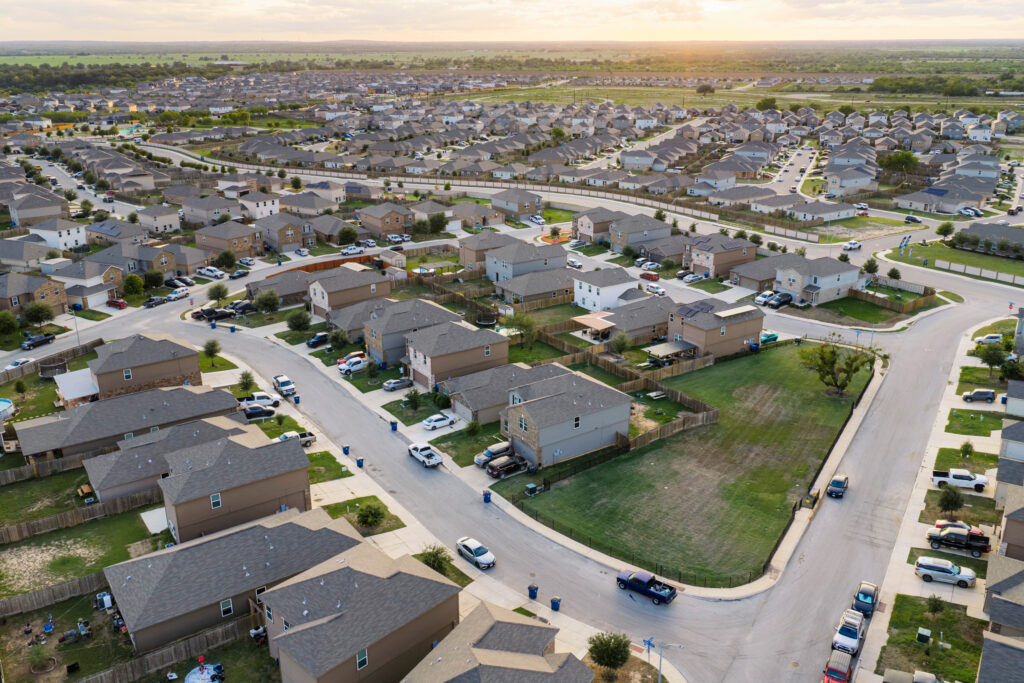
SAN ANTONIO, Texas—Suburbs have emerged in Texas where oil pump jacks once operated.
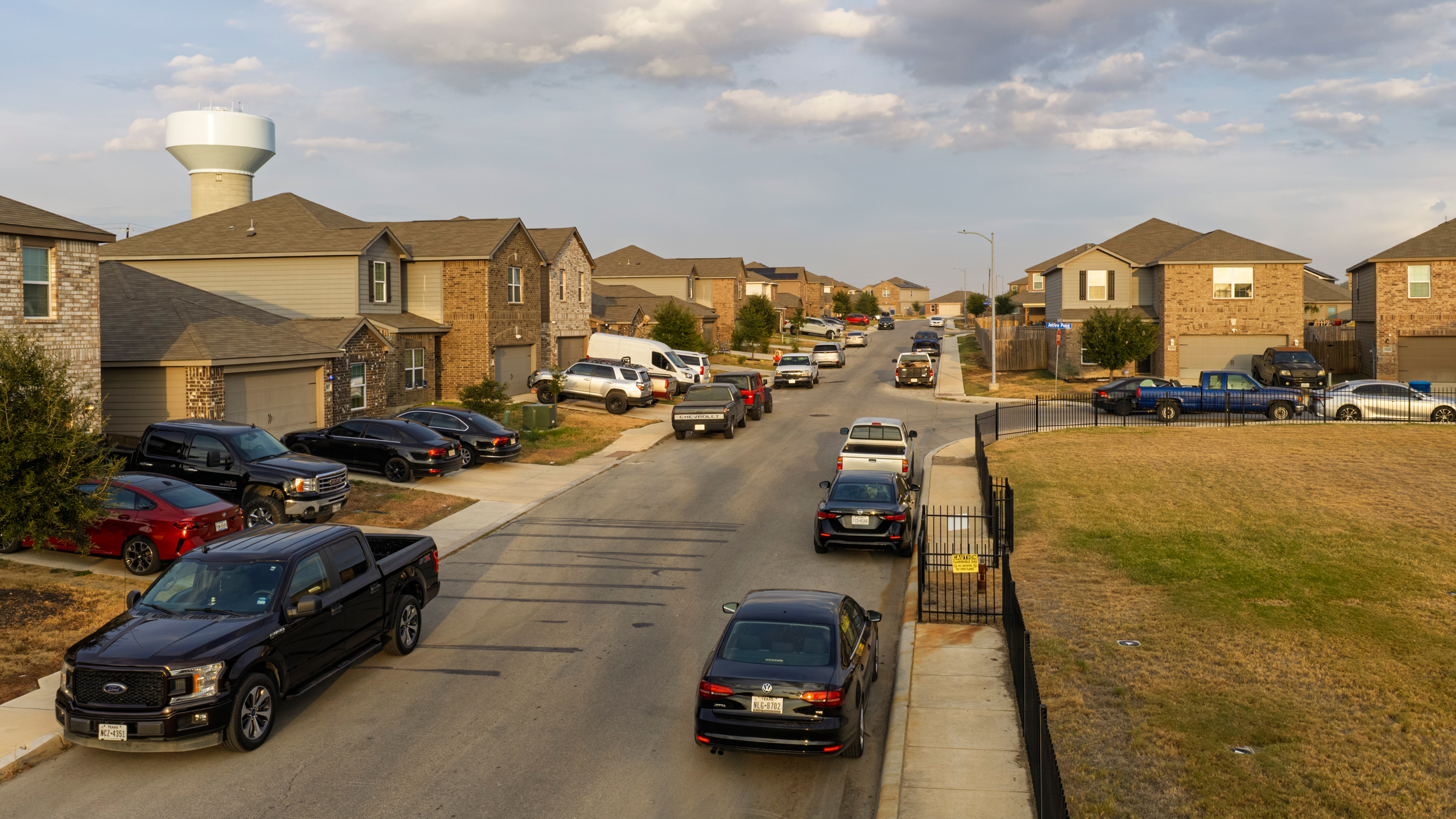
In the Preserve at Medina, a residential area in southwest San Antonio, students disembarked from a school bus on a hot afternoon. One child walked near a street with a plugged oil well surrounded by a black metal fence.
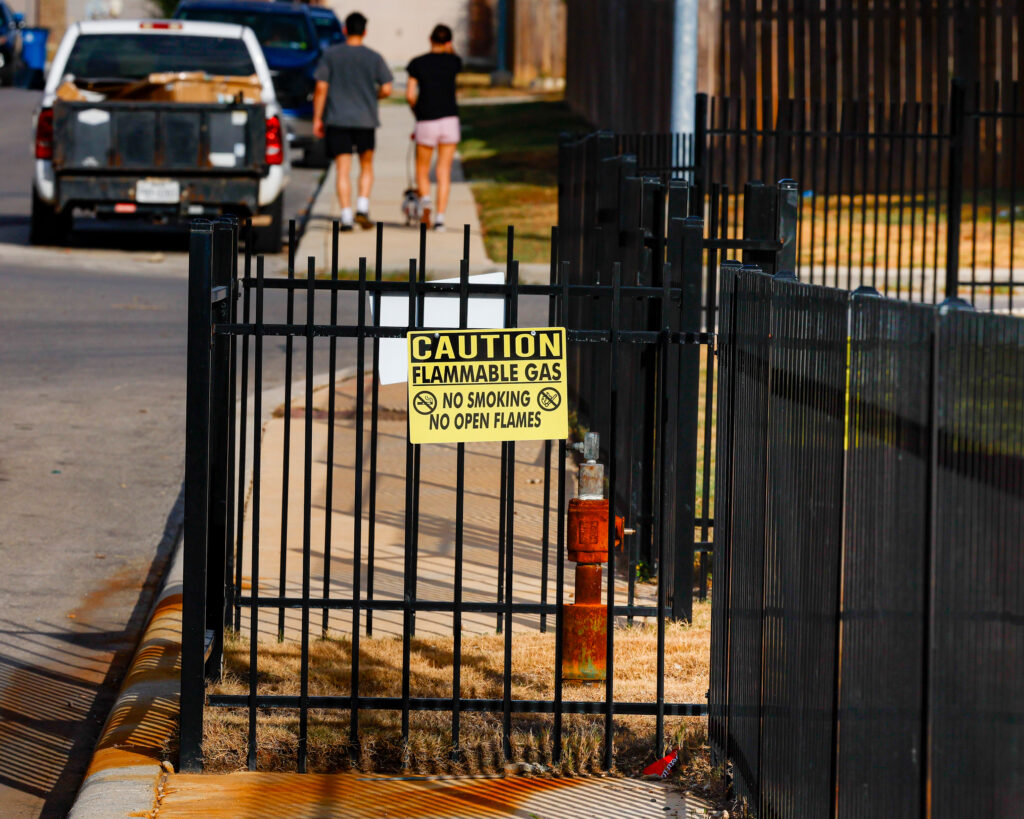
A sign warned: “CAUTION flammable gas.”
A faint rotten egg smell lingered due to low hydrogen sulfide levels leaking from the well, with only a fence separating the child from the site.
The Thompson Callaway Spears #1 well has been inactive since it was plugged in 2006. Yet, it continues to trouble Texas regulators and residents. The state has replugged it five times, but gas leaks persist. Since residential development began around the well in the early 2020s, complaints have increased.
Monitoring detected methane and hydrogen sulfide near the well. In June, contractors informed the Railroad Commission, overseeing the state’s oil and gas industry, about methane plumes moving through the soil towards homes, posing explosion risks.
“We were unaware when we moved here,” said resident Krystal Solis. “No one informed us.”
Plugged wells are generally safe, but several in Texas have failed catastrophically, including at a Baptist church in Grandfalls. Across regions like Canada and Southern California, legacy wells are linked to leaks, fires, and explosions in residential zones.
Homebuyers often remain unaware of old wells prior to purchasing properties. Texas lacks statewide laws on construction around plugged wells, and developers are not required to disclose these wells, leading residents to unknowingly live near potential hazards.
Laura Lopez from the Texas Commission on Environmental Quality, which handles air pollution regulation, stated that detected hydrogen sulfide levels could cause odors and health issues like headaches and nausea.
Developers of the area and homebuilders D.R. Horton and LGI Homes did not comment.
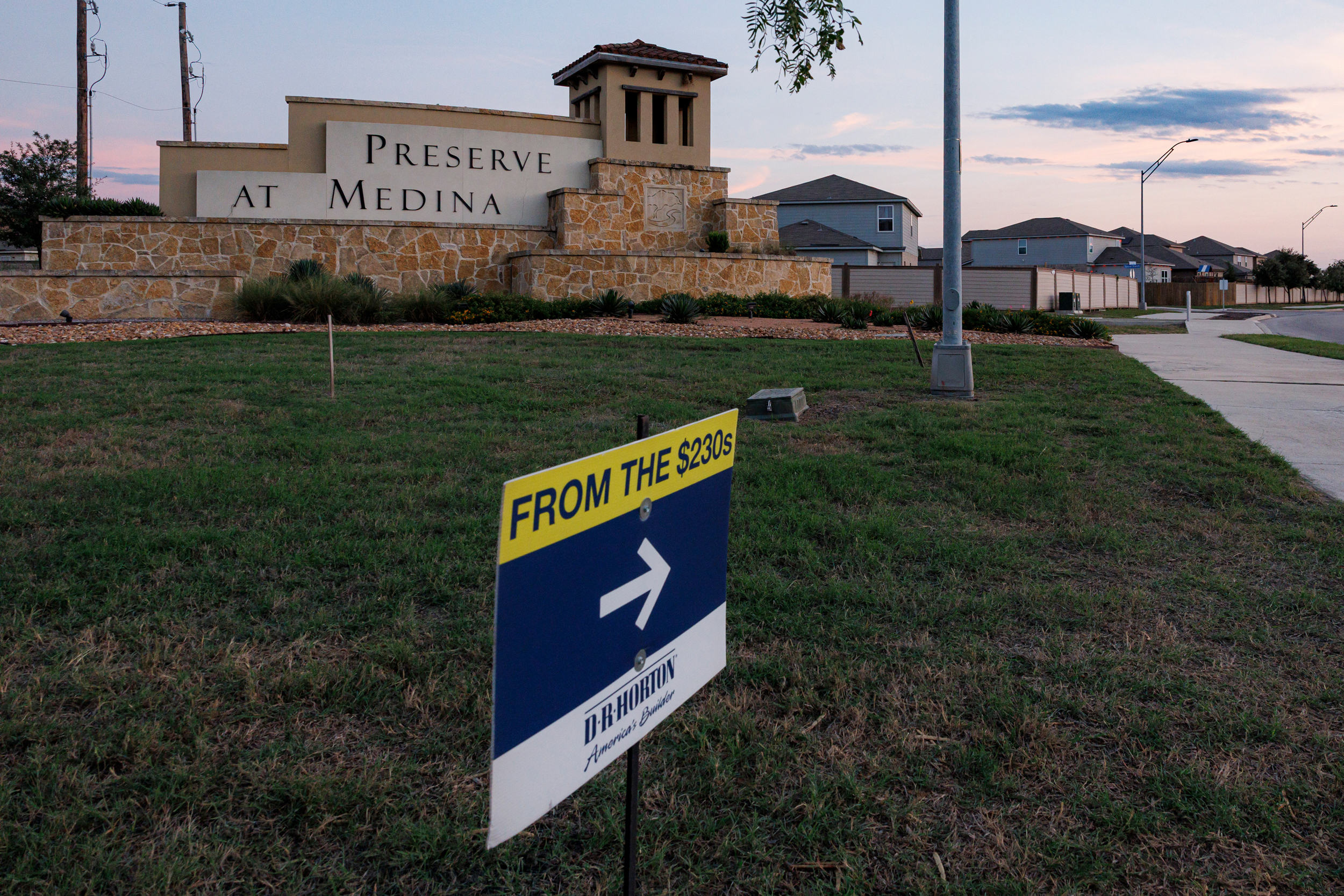
“The well will be replugged using a new strategy and materials,” said Bryce Dubee, Railroad Commission spokesman. “This operation is under review.”
Dubee mentioned joint inspections confirmed gas emissions from the well. “Regular monitoring of the area is ongoing,” he added.
Old Oilfields Cause Fresh Problems
The Austin Chalk formation, known for its oil and gas, was where J.D. Collins drilled the Thompson Callaway Spears #1 well in 1955, on San Antonio’s rural edge. Ownership changed over decades, and by the early 2000s, oil production declined. Rainer Energy sold the lease to Arben Oil, then to Black Jack Services. February 2004 marked the last reported oil flow.
Black Jack Services sealed the well in 2006.
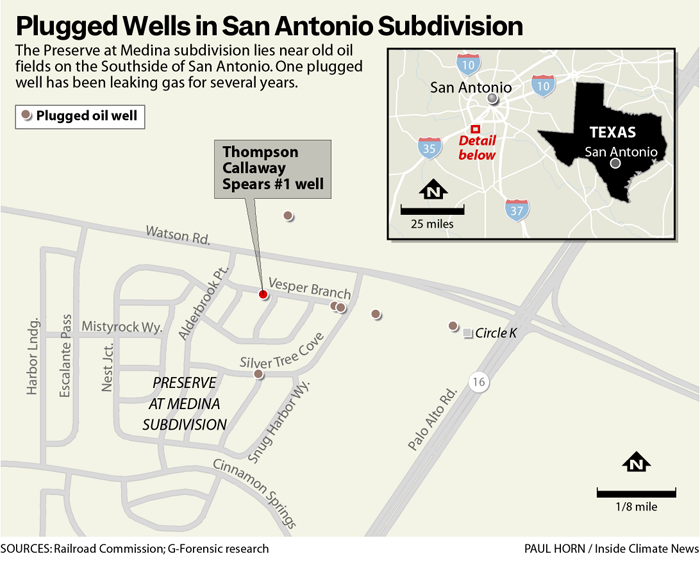
In 2006, Toyota launched a plant in San Antonio’s South Side, and development gradually encroached on the rural area along the Medina River. The well was forgotten until 2019, when development began at Preserve at Medina.
Gas leakage was discovered by developers in 2019, as per Railroad Commission documents. Inspectors confirmed the presence of hydrogen sulfide and methane in April. The commission replugged the well later that year. Black Jack Services, in delinquent status, left the state to cover costs.
A staff report initially suggested the issue was resolved.
However, problems persisted.
This subdivision’s proximity to plugged wells—there are at least three more in the area—reflects a wider trend. From Pittsburgh to Los Angeles, residential projects sit atop old wells.
Blake Scott, of Waste Analytics, says, “People buy property without knowing it’s near a plugged well.”
Both plugged and unplugged wells have caused issues. An explosion in Wheatley, Ontario, injured 20 due to hydrogen sulfide from a nearby legacy well. In Trinidad, Colo., a house explosion was attributed to methane from an abandoned well. In Newport Beach, Calif., homes were evacuated in 2025 after a methane leak from a 1920s-era well.
Earlier this year, a plugged well failed at a Baptist church in Grandfalls, causing flooding with toxic wastewater.
“Plugged well failures seem rare,” said Adam Peltz of the Environmental Defense Fund. “But occurrences are uncertain.”
Peltz advises homebuyers to conduct due diligence. “This is a nationwide issue.”
Julie Range of Commission Shift advocates for mandatory disclosure of oil and gas activities, arguing it could prevent family distress.
Plugging Costs and Complaints Rack Up
Construction continued at the Preserve at Medina post-replugging in 2019. Houses began appearing on streets like Mint Patch and Mistyrock.
In 2021, inspectors returned, finding the well still leaking. Contractors replugged it in January 2022. A welder discovered a flammable methane leak during the process and refused to continue. The well was replugged again in August.
Residents had started moving into nearby homes, with the well’s plot left vacant. The local homeowners association owns the plot.
The state plugged the well for a fifth time in May 2023, but complaints persisted.

Amanda and Anthony Pacheco, among the neighborhood’s first residents, moved in July 2021. Attracted by the area’s rural setting, they were unaware of the well issues.
“We were thrilled to qualify,” Amanda Pacheco said. “But we didn’t know the issues.”
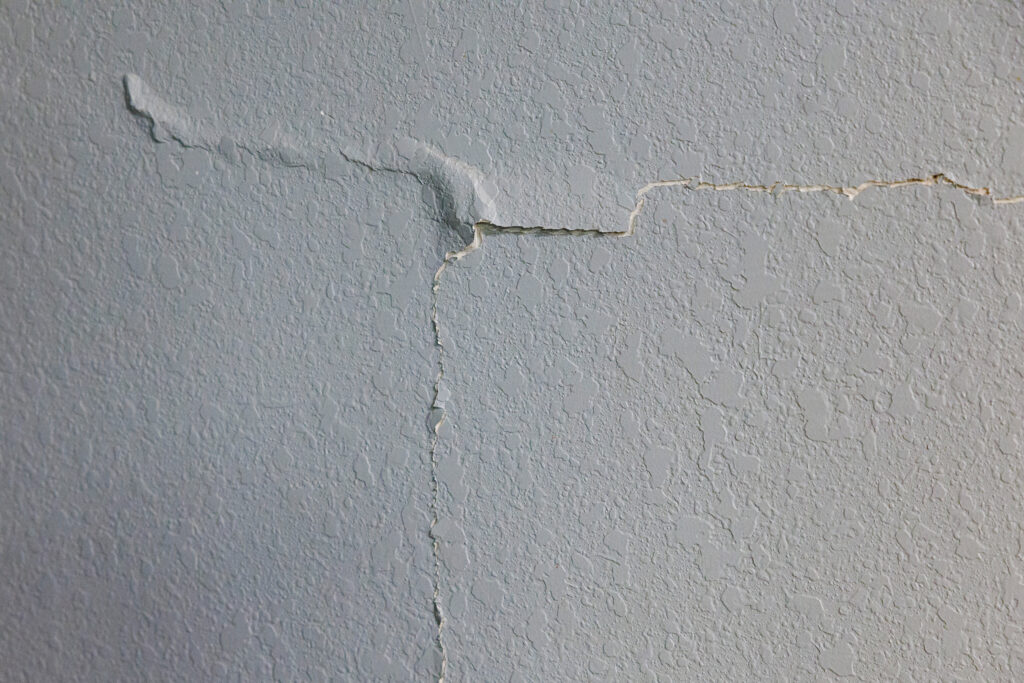
She mentioned that some days it “reeks” in her home, located near the well, and expressed concern over potential fire hazards from cigarettes. Replugging activities in 2024 caused house vibrations, and she noticed concrete foundation cracks.
Pacheco stated that knowledge of the well would have deterred their purchase. State and local laws do not mandate disclosure of plugged well locations to potential buyers.
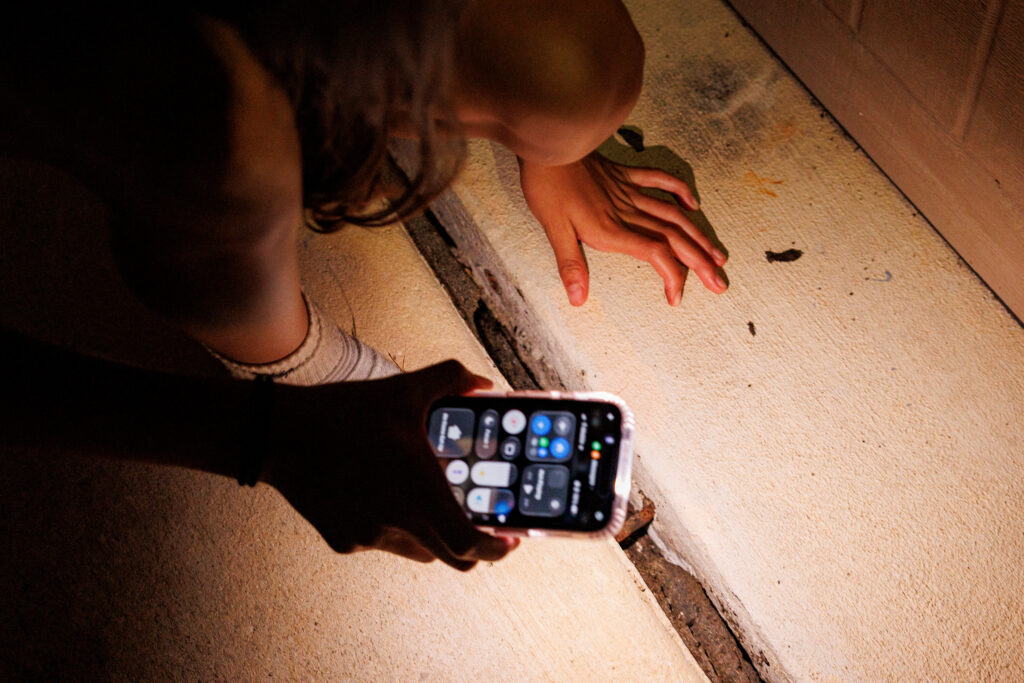
Krystal Solis moved to the neighborhood with her family in September 2023. Their home is downwind and within 60 feet of the well.
She began experiencing headaches from fumes in 2024 and noticed orange staining from bubbling liquid around the well after rain.
Information from local utilities and homeowners association was lacking. A Railroad Commission vehicle eventually clarified the well’s oversight.
“This well resurfaced, and we’re seeking new contractors for replugging,” emailed Travis Baer, the Railroad Commission’s district director, in October 2024. Another plugging occurred in November.
The state spent over $1 million on repeated plugging operations.
This story is funded by readers like you.
Our nonprofit newsroom provides award-winning climate coverage free of charge. Please donate now to support our work.
The Railroad Commission handles oil and gas well plugging. TCEQ oversees air pollution, including methane and hydrogen sulfide emissions. Complaints were received before and after the 2024 plugging.
In October 2025, TCEQ queried whether the well would be plugged again.
“We are monitoring and evaluating data,” Baer replied. “We will decide on a permanent solution soon.”
The Railroad Commission installed a permanent fence and warning sign around the plot in 2025.
Solis noted that the fence offered some improvement but remained concerned. On New Year’s Eve 2026, a neighborhood firework briefly ignited the well.
Solis said regulators have yet to clarify if her family is at risk.
“I just need to know if it’s dangerous,” she said.
Few Limits on Construction Near Old Wells
Blake Scott suggests neither the oil and gas nor real estate sectors have incentives to disclose old well locations to homeowners.
“Developments are knowingly built on such sites,” he said, “without any obligation to inform.”
Since the 1800s, thousands of wells have been drilled in Texas, many abandoned or poorly plugged.
Locating old wells is challenging due to inaccurate records. An analysis by oilfield surveyor Jackie Portsmouth indicated the Thompson Callaway Spears #1 well is mislocated by 110 feet on the Railroad Commission GIS map.
No surface markers indicate plugged wells. Inside Climate News found no markers at Preserve at Medina’s other well sites.
Scott mentioned New Mexico as the only state banning construction on plugged wells without regulatory approval.
Texas counties can’t adopt building codes. The 2015 HB 40 law restricts city regulations on oil and gas activities to surface-level ones deemed “commercially reasonable.”
Yet, several cities impose restrictions. Fort Worth bans construction over or within five feet of abandoned wells, and Midland prohibits building on them.
San Antonio lacks ordinances on plugged wells, deferring questions to the Railroad Commission. Bexar County officials declined to comment.
Gas Exposure and Unanswered Questions
Monitoring by TCEQ and the Railroad Commission detected hydrogen sulfide, volatile organic compounds, and methane leaking at the Thompson Callaway Spears #1 wellhead and nearby soil. Gas emissions at the wellhead exceed safe limits, risking combustion.
TCEQ said 2023 and 2025 investigations found volatile organic compounds at non-threatening levels for short-term health. Hydrogen sulfide odors could indirectly affect health.
The Railroad Commission identified gas migration along the well’s exterior.
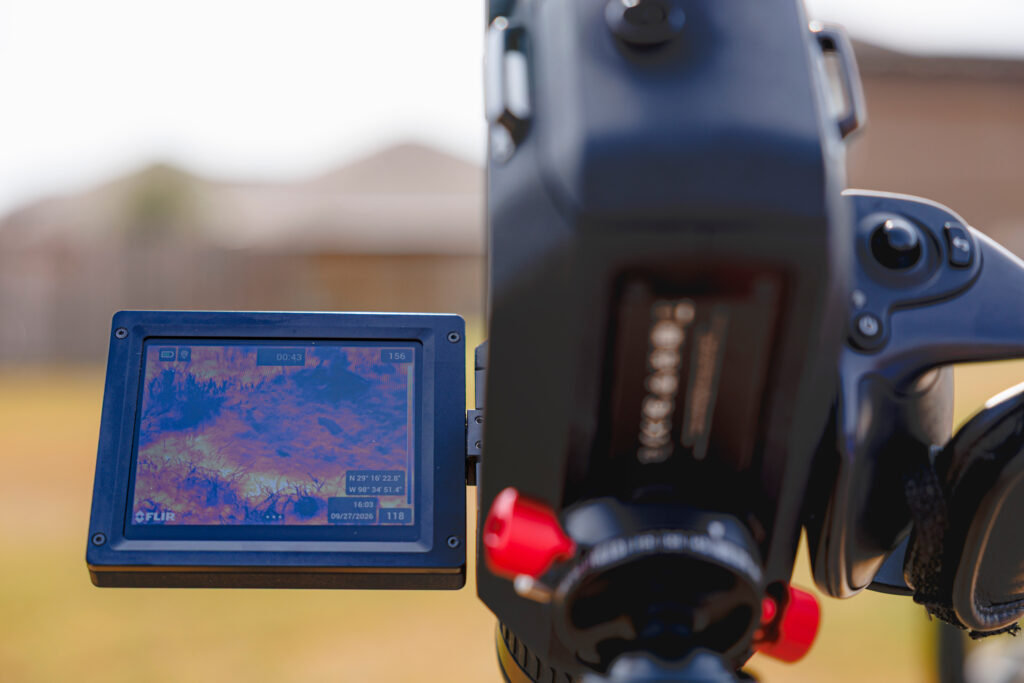
James Tim Doty of TCDH Consulting, an ex-TCEQ monitor, visited the site in September using thermal cameras to document hydrocarbon leaks from the wellhead and ground.

Gunnar Schade of Texas A&M University, who reviewed monitoring data, warned about high gas concentrations near the wellhead, suggesting brief exposure without protection.
Kleinfelder, an engineering firm, reported in June 2026 that methane plumes in the soil were moving toward houses. The firm highlighted that heating and ventilation systems might draw methane indoors, posing explosion risks.
“The matter is under evaluation,” said RRC spokesman Dubee, emphasizing a commitment to public safety.
The Railroad Commission prepared to plug the well again in October.
Solis and Pacheco were unaware of methane in the soil. Solis, troubled by fumes and headaches, seeks clear information from regulators.
“If it’s dangerous, we will relocate,” she said.
Original Story at insideclimatenews.org