From our collaborating partner “Living on Earth,” public radio’s environmental news magazine, an interview by host Steve Curwood with journalist Isabel Hilton.
China Takes the Lead in Climate Policy as U.S. Withdraws
In the wake of the U.S. withdrawing from the United Nations climate negotiations in 2025, China has stepped into a dominant role, setting ambitious targets for emissions reduction and positioning itself as a leader in the global push towards renewable energy. While the United States holds the title of the largest historic emitter of greenhouse gases, China currently leads in present-day emissions.
China’s new leadership in climate negotiations is underscored by its significant economic strides, particularly in clean technology. As the U.S. experiences slower economic growth coupled with higher inflation, analysis from Carbon Brief indicates that clean energy technologies, such as solar power and electric vehicles, contributed to over a third of China’s GDP growth in 2025.
China’s Role in Global Energy Transition
According to Isabel Hilton, founder of Dialogue Earth, “China remains committed to climate negotiations” and is leveraging its position as the world’s largest supplier of low-carbon technologies. Despite its continued construction of coal plants, driven by concerns over energy security, China prioritizes renewables and only uses coal as a backup.
Hilton explains the rationale behind China’s dual approach: “We’ve seen a huge growth in electrification in China… but we still have the anxiety of what happens if there is a drought and there’s no more hydropower?” China’s coal dependency is further complicated by economic reliance in coal-heavy provinces, making a rapid transition challenging.
Driving Force Behind China’s Renewable Energy Surge
China’s shift towards renewable energy was partly motivated by severe air pollution and a need to modernize its economy. Hilton notes that China’s strategy was to “combine industrial ambition, economic ambition and scientific realism” to lead in clean technologies like wind, solar, and nuclear power.
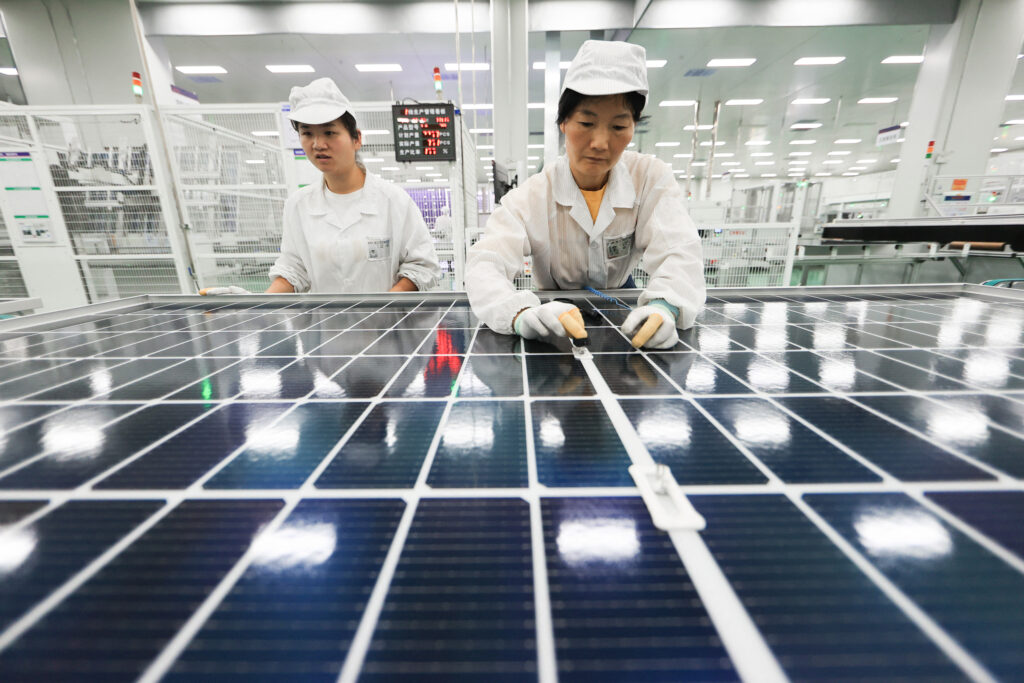
As a result, China now dominates numerous technology sectors crucial for the renewable energy transition, lowering costs and making renewable electricity cheaper than fossil fuels. This shift places China in a strong competitive position against the United States, which has historically fluctuated in its climate commitments.
Global Trade and Security Implications
China’s influence extends beyond technology to international trade, as seen in its agreement with Canada to reduce tariffs on Chinese electric vehicles. However, this raises concerns about geopolitical and security implications, especially given China’s control over critical minerals essential for renewable technologies.
Hilton points out the security risks associated with intelligent technologies, such as electric vehicles, which could potentially be controlled remotely. “There are all sorts of security concerns about these technologies,” she states, emphasizing the strategic importance of securing supply chains and technological infrastructure.
Challenges and Opportunities in U.S.-China Relations
The ongoing evolution of global energy and technology landscapes presents both challenges and opportunities for U.S.-China relations. While China’s investments have driven down the cost of renewable technologies worldwide, the U.S. faces the risk of falling behind if it continues to turn away from clean energy advancements.
Hilton suggests that China’s reputation as a responsible climate player has improved, due in part to its massive renewable energy installations and technology exports, which offer developing countries an alternative to fossil fuels.
Original Story at insideclimatenews.org