Originally featured in the award-winning weekly climate action newsletter, Imagine.
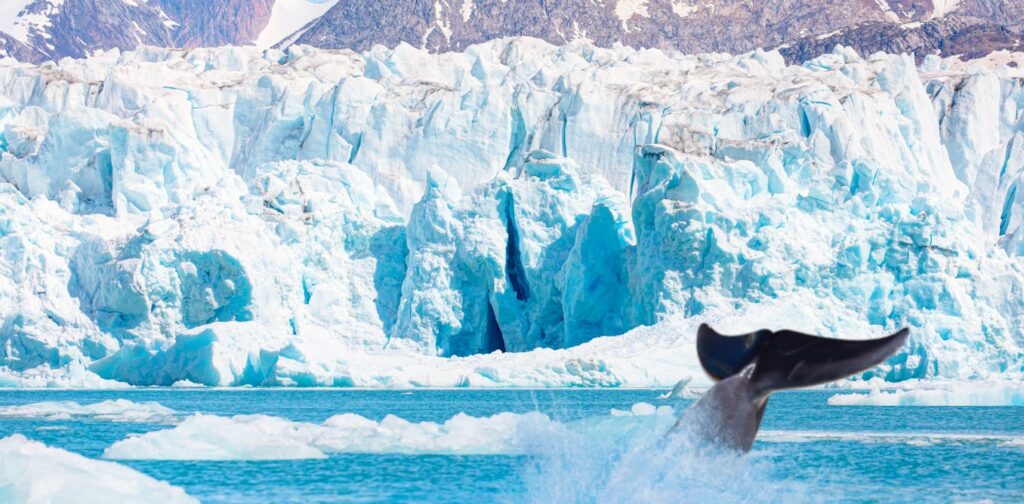
Greenland presents a breathtaking landscape that challenges comprehension from the air. “Observing Greenland from a helicopter,” described Durham glaciologist Tom Chudley, “the main problem is one of comprehending scale. I thought we were skimming low over the waves of a fjord, before … realising what I suspected were floating shards of ice were in fact icebergs the size of office blocks.” This vivid account underlines the dramatic changes occurring in Greenland, where Chudley’s research indicates the ice sheet is not merely melting but falling apart.
As glaciers crack and meltwater channels deepen, the geopolitical landscape shifts. The Mercator projection on many world maps may exaggerate Greenland’s size, making it appear near the size of Africa. In truth, Greenland is comparable to the Democratic Republic of the Congo. Despite its actual size, Greenland’s role in climate science is significant. The publication, The Conversation, has extensively covered topics ranging from melting ice to climate-changing microbes and the genetic adaptation of polar bears.
Read more:
The Greenland ice sheet is falling apart – new study
Geopolitical Concerns
The political climate in Greenland that enables scientific research is increasingly precarious. Martin Siegert, a glaciologist at the University of Exeter, highlights this vulnerability in his piece on why Greenland is indispensable to global climate science. Unlike Antarctica, which is protected by international treaties, Greenland’s openness to research relies solely on its political stability.
He warns, “Its openness to research therefore depends not on international law, but on Greenland’s continued political stability and openness – all of which may be threatened by US control.” The potential melting of the ice sheet could significantly impact global sea levels, raising them by about seven meters.
Read more:
Why Greenland is indispensable to global climate science
Resource Extraction Challenges
While Greenland is rich in natural resources, the path to profiting from them is fraught with logistical difficulties. Lukas Slothuus from the University of Sussex explores this in his analysis of Greenland’s vast natural resources. He points out that the lack of infrastructure, such as roads and deep-water ports, makes resource extraction economically challenging.
Slothuus explains that unlike regions with established infrastructure, Greenland would require substantial investments to extract minerals and oil. This economic reality may drive a focus on harvesting “critical minerals” essential for renewable energy technologies, rather than traditional fossil fuels.
Read more:
Why Greenland’s vast natural resources won’t necessarily translate into huge profits
Looking ahead, Greenland’s strategic importance will likely escalate. Caroline Kennedy-Pipe, from Loughborough University, forecasts a significant military build-up in the Arctic. As climate change opens new shipping routes, the region becomes increasingly crucial for military and geopolitical strategies.
In light of these developments, the fragile ice sheet remains a critical concern, as pointed out by the glaciologist in his aerial observations.
For feedback or inquiries, please contact The Conversation’s environment team at imagine@theconversation.com.
Want to stay updated on climate change news?
Subscribe to our weekly newsletter for updates.
Original Story at theconversation.com