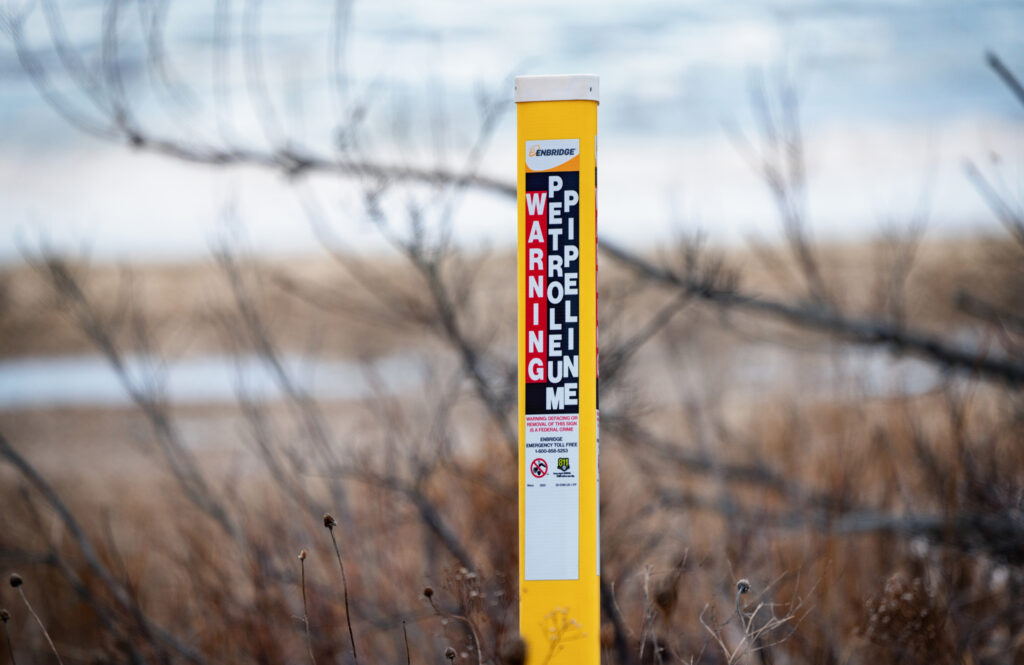
Environmental groups are challenging the U.S. Army Corps of Engineers, claiming it failed to adequately assess climate change impacts and greenhouse gas emissions in its review of Michigan’s Line 5 oil pipeline project.
On May 30, the Corps’ Detroit district released a draft environmental impact statement (EIS) for the Enbridge Energy Line 5 Tunnel Project. The project involves constructing a 3.6-mile tunnel under the Straits of Mackinac to house a replacement segment of Line 5, which transports 540,000 barrels daily of oil and natural gas liquids.
Experts from the Environmental Law and Policy Center (ELPC) and the Michigan Climate Action Network (MiCAN) criticized the draft EIS for not adequately considering climate change and potential project harms in their comments submitted on June 30.
ELPC Associate Attorney Ellis Walton explained that the Corps omitted considerations of greenhouse gas emissions and climate impacts, citing adherence to a recent executive order issued by President Trump. Walton argued that the National Environmental Policy Act (NEPA) requires a thorough review of foreseeable climate impacts associated with major federal actions.
Changes to environmental rules, including NEPA, issued by various federal departments in June, were intended to simplify and expedite environmental reviews, according to a White House statement.
A recent U.S. Supreme Court decision grants federal agencies more discretion in NEPA reviews, prompting concerns from environmental groups about potential negative impacts on environmental quality.
Enbridge spokesperson Ryan Duffy emphasized the importance of public input during the ongoing comment process. White House Deputy Press Secretary Anna Kelly stated the project is part of efforts to enhance energy security and economic growth while protecting resources.
The Corps, however, removed discussions on greenhouse gas emissions and climate change from the draft EIS, following the executive order. It stated greenhouse gas emissions, climate change, and environmental justice are “Not Applicable” due to the executive order.
Denise Keele, executive director of MiCAN, argued that the energy crisis cited in the executive order is not genuine, highlighting climate change’s potential environmental and health impacts instead. Keele expressed concern that the project could set a precedent for bypassing NEPA requirements.
The Line 5 project has faced scrutiny over the years, with Michigan Gov. Gretchen Whitmer attempting to revoke its operating permit in 2020. Meanwhile, Michigan Attorney General Dana Nessel’s ongoing lawsuit challenges the validity of the pipeline’s initial permit.
Keele noted Michigan’s focus on renewable energy, aiming for 60% of electricity from renewables by 2030, arguing that continuing with Line 5 contradicts these goals.
“`
Original Story at insideclimatenews.org