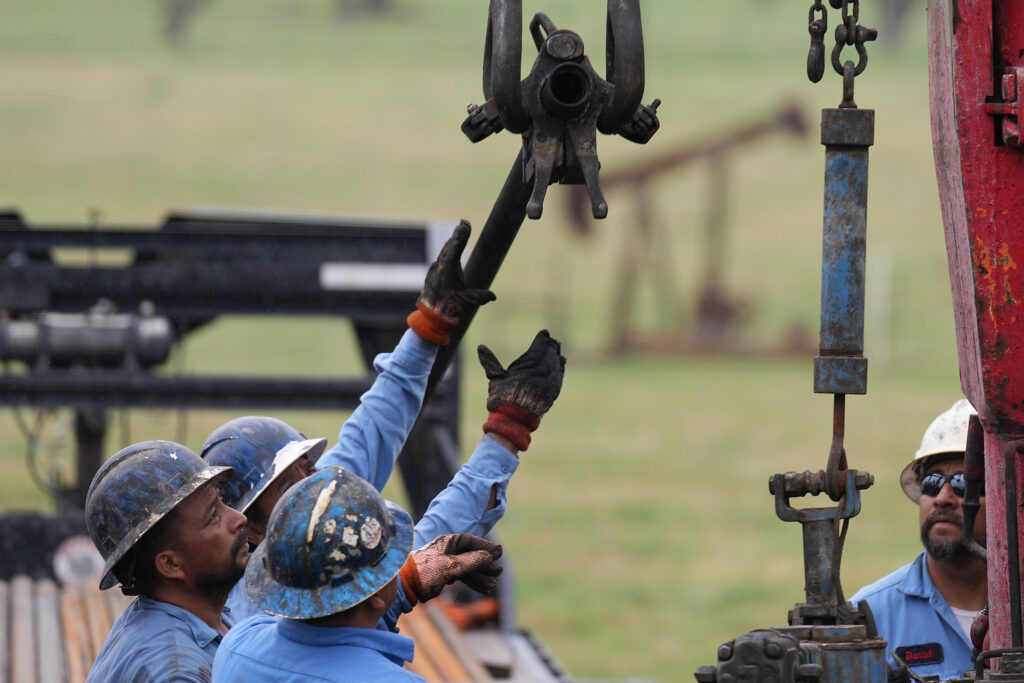
Texas plans to allocate additional funds for plugging inactive oil and gas wells in 2026 and 2027 due to rising costs. The state will provide a one-time $100 million boost to the Railroad Commission’s State Managed Well Plugging Program, marking the largest single legislative appropriation for this purpose. This funding is supplementary to regular state and federal budgets for well plugging.
Orphaned wells, which are inactive and have no operator, have become a significant issue. The Railroad Commission sought extra funds last year after several costly well blowouts. Federal funding from the Infrastructure Investment and Jobs Act complements the state’s efforts.
Despite increased funding, Texas struggles to address the growing number of orphaned wells. Advocates call for policy changes to ensure more wells are plugged by operators. The Railroad Commission faces complex challenges, including well blowouts in the Permian Basin that release salty water geysers. Commissioner Christi Craddick stated that two recent blowouts cost $9 million to plug, with average costs rising over 50% between 2019 and 2023 to $30,000 per well.
The commission’s elected officials praised the legislative support for well plugging funds. Craddick emphasized the Legislature’s role in maintaining Texas’ energy industry while regulating responsibly. Virginia Palacios of Commission Shift acknowledged the funding’s role in reducing orphaned wells and preventing environmental hazards. However, she advocated for stronger policies to prevent wells from becoming orphaned.
Texas Has Almost 9,000 Orphan Wells to Plug
As of May, 8,925 orphan wells were reported in Texas. The Railroad Commission’s program plugged 1,012 wells in 2024, meeting its goal, with over 700 more plugged through federal funds. However, this has not kept pace with the number of new orphan wells.
Emergency well situations have strained resources, with costly and unpredictable blowouts in the Permian Basin. In some cases, the commission lacked prior documentation of blowouts, requiring urgent responses. Craddick noted the need for funds to manage these emergencies, which often prove costlier than standard plugging jobs.
The commission plans to use some funding for non-emergency high-priority wells, including offshore locations and areas with high hydrogen sulfide levels. This preventative approach aims to mitigate risks before they escalate.
The Railroad Commission aims to plug 1,700 wells annually, or 20% of known orphan wells, during the budget cycle. Additional funds are allocated for data systems to track wastewater, complete mapping studies of wells with high hydrogen sulfide, and establish a team to ensure injected fluids remain within disposal formations.
Colin Leyden from the Environmental Defense Fund expressed approval of Texas’ efforts to address idle wells but emphasized the need for changes in operator behavior. Schuyler Wight, a rancher in the Permian Basin, criticized the $100 million fund as insufficient, warning of future orphan well increases without broader legislative understanding of the issue’s scope.
New Law Addresses Inactive Wells
Aside from orphan wells, Texas has 150,000 inactive wells, defined as those without production reports for over 12 months. Companies often receive extensions, allowing wells to remain unplugged indefinitely, potentially becoming orphaned wells. This issue affects states such as California and Pennsylvania.
SB 1150, passed in the recent session, mandates plugging of wells inactive for 15 years or more. The Railroad Commission will draft rules to implement these requirements. Leyden noted that the bill alone won’t resolve the issue but will gradually increase operational responsibility. Palacios acknowledged the legislation as progress but highlighted loopholes needing closure to ensure the law effectively prevents pollution.
Original Story at insideclimatenews.org