Climate Finance: Challenges and Stalled Progress at the Frontlines
The latest climate summit spotlighted the continued struggles of nations most vulnerable to climate change, as financial pledges from wealthier countries fell short once again. The glaring absence of fossil fuel discussions in the text was overshadowed by these finance shortfalls, sparking justified anger among affected countries.
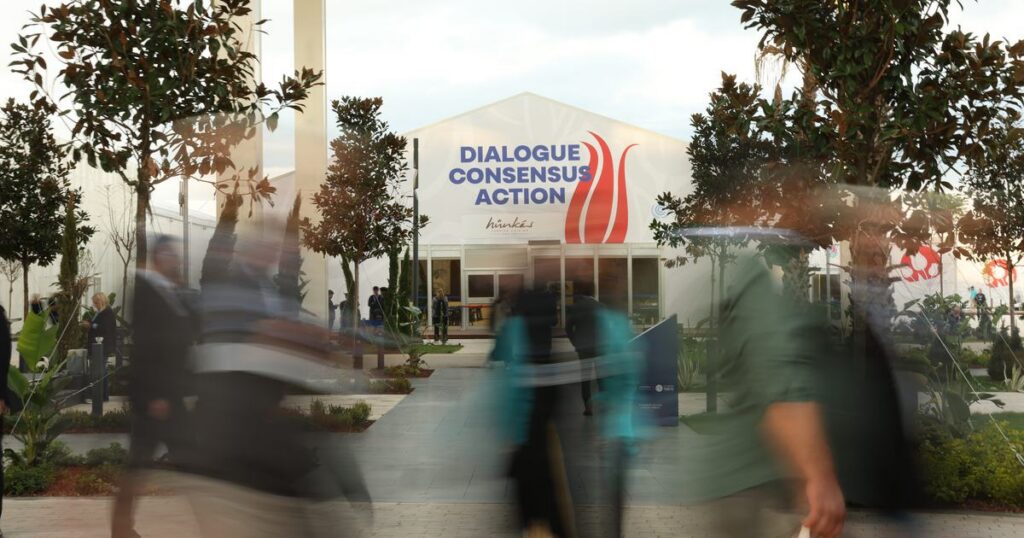
This year’s climate conference, hosted by the “Western European and Others Group” (WEOG), took place in a somewhat unexpected location, considering the geographic positions of Türkiye and Australia. These conferences, occurring every five years, are pivotal moments for developed nations to commit to long-term financial support for climate diplomacy. Recent gatherings in Glasgow (2021) and Paris (2015) set the stage for such pledges.
Unfortunately, financial commitments were lackluster this time. Australia did not take a leading role, and the US has withdrawn its support. European nations, grappling with increased defense spending, also held back. Despite an agreement in 2024 to a New Collective Quantified Goal aiming to mobilize at least $300 billion annually by 2035, reluctance to provide fresh pledges was evident.
A major point of discussion was the effort to provide clarity on last year’s “call for efforts” to triple adaptation finance by 2035. Developed countries did not agree on a starting point for this tripling, and while the draft decision outlined a process for establishing a baseline and tracking system, it remained unadopted.
Prior to COP31, Australia announced a declaration and action plan for improving access to climate finance for Small Island Developing States (SIDS) and Least Developed Countries (LDCs). However, dissatisfaction with the process and content of the declaration left these groups frustrated. Without substantial support from SIDS, LDCs, or other finance providers, Australia was forced to modify the event, opting to introduce an advisory group rather than listing signatories. Australia’s follow-up on the access agenda remains to be seen.
States affected by fragility and conflict (FCAS) faced even greater challenges. The draft decision’s focus on readiness, institutional capacity, and implementation presumed stable political environments and functioning institutions, conditions that many such countries lack.
Ignoring the realities of FCAS risks exacerbating the fragility penalty in climate finance. In 2022, FCAS received less than 10% of international climate finance, despite being home to nearly 2 billion people. Bilateral and multilateral finance providers have the opportunity and responsibility to adopt a differentiated approach to risk, access, and delivery.
To regain trust, developed nations should arrive at COP32 in Ethiopia prepared to demonstrate their plans for providing predictable and accessible climate finance towards collective targets, alongside ambitious mitigation and adaptation actions. Newly wealthy and high-emitting countries like the Czech Republic, South Korea, and Singapore should also consider voluntarily outlining their climate finance strategies.
While additional funds won’t alter the obstructive behavior of petrostates, they can enhance global climate ambition and foster cross-border cooperation, especially where investments align with national interests. The question remains, how did coalitions for action manifest in Antalya?
Original Story at odi.org