Amidst ongoing discussions at international climate conferences, a stark reality is emerging: the world may need to resort to removing greenhouse gases from the atmosphere, in addition to curbing emissions, to combat climate change effectively.
Although this approach involves a hefty financial commitment, estimated in the tens of trillions, and relies on technology not yet fully developed, experts indicate it’s becoming a necessary strategy. This urgency stems from the expectation that global temperatures will surpass the safety limits set during the 2015 Paris climate agreement, a sentiment echoed by scientists and United Nations officials.
Earlier in the year, a revealing United Nations report confirmed the planet will likely breach the 1.5 degrees Celsius (2.7 degrees Fahrenheit) temperature limit since preindustrial times, set by the Paris agreement. Though this threshold is assessed over decades, recent data shows alarming trends. Notably, October recorded the highest global temperature deviation from preindustrial levels, reaching 1.8 degrees Celsius (3.2 degrees Fahrenheit) above average, as per Berkeley Earth scientists. They further predict 2026 could surpass 2024 as the hottest year on record.
The COP31 climate conference, held in Turkey, is poised to acknowledge the failure to prevent surpassing the 1.5-degree warming mark. Draft statements from the conference suggest the necessity for both drastic emission reductions and carbon removal efforts to return to safer temperature levels. Carbon dioxide, mainly from fossil fuels, is a primary contributor to global warming.
“Carbon removal is the magic eraser we’re left with when we’ve busted the world’s carbon budget, such as the 1.5C target,” stated Rob Jackson, a climate scientist from Stanford University, via email. However, he questioned whether achieving the required billion-ton scale of carbon removal is feasible.
Hundreds of Billions of Tons Must Be Removed
UN Environment Program Director Inger Andersen emphasized that a staggering 320 billion metric tons of carbon dioxide need to be extracted from the atmosphere this century to mitigate temperature rises. This figure equates to eight years of current global emissions.
Zeke Hausfather, a climate scientist with Berkeley Earth, quantified the cost of reducing each tenth of a degree Celsius (0.18 degrees Fahrenheit) through carbon removal at approximately $22 trillion. Even with optimistic scenarios predicting a maximum increase of two- or three-tenths of a degree Celsius above the Paris limit, costs could soar to $44 trillion to $66 trillion by the century’s end.
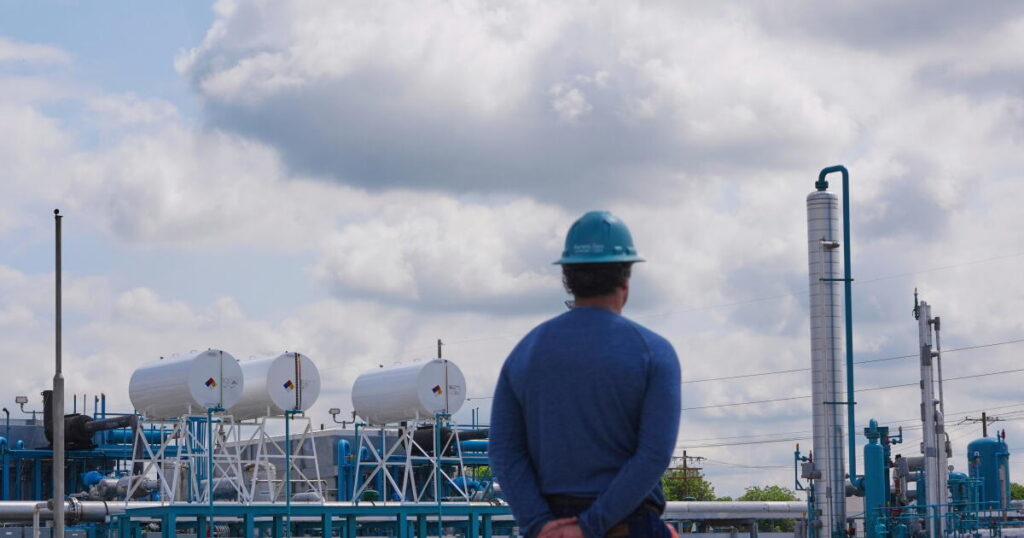
While nature-based solutions like tree planting have removed up to 2 billion metric tons of carbon dioxide over the past decade, Andersen noted this is insufficient. Mechanical methods, such as large-scale carbon-sucking devices, are being piloted. These technologies currently remove carbon dioxide at a rate equivalent to what fossil-fuel plants emit every half-hour, according to Johan Rockstrom of the Potsdam Institute for Climate Impacts Research.
This approach differs from carbon capture and storage technologies used by industries to limit their emissions, and climate talks are expected to promote both methods.
Pollution Cuts First and Foremost, Then Removal
Bill Hare, CEO of Climate Analytics, stressed that while carbon removal is essential, it should follow significant emissions reductions. Without policy changes, the world risks reaching a 2.7 degrees Celsius increase by 2100, a scenario that carbon removal alone cannot rectify.
Andersen stressed the importance of addressing carbon removal, stating, “because there really are no good outcomes above 1.5 degrees.” She highlighted the intensification of weather extremes as warming continues.
She and others clarified that carbon removal, also known as negative emissions, should complement rather than replace aggressive emission cuts. Denmark’s Environment Minister, Samira Nawa, underscored, “We need deep emission reductions. That is, and will always remain, the most important tool at our disposal.” Denmark aims to achieve a 110% reduction in emissions, exceeding net-zero goals by removing more carbon than natural processes alone.
Denmark, alongside Ethiopia, is spearheading the new Group of Negative Emitters coalition, focusing on these goals.
Balancing Bad News and Hope
Experts acknowledge the difficult position humanity faces due to delayed emission reductions, emphasizing the increasing reliance on carbon removal technologies.
Melanie Robinson from the World Resources Institute highlighted the necessity of embracing net-negative emissions to meet the 1.5 degrees C target. Despite acknowledging the challenges, Rockstrom emphasized the need to maintain 1.5°C as the safe temperature target, given the potential dangers of exceeding it.
Original Story at www.latimes.com