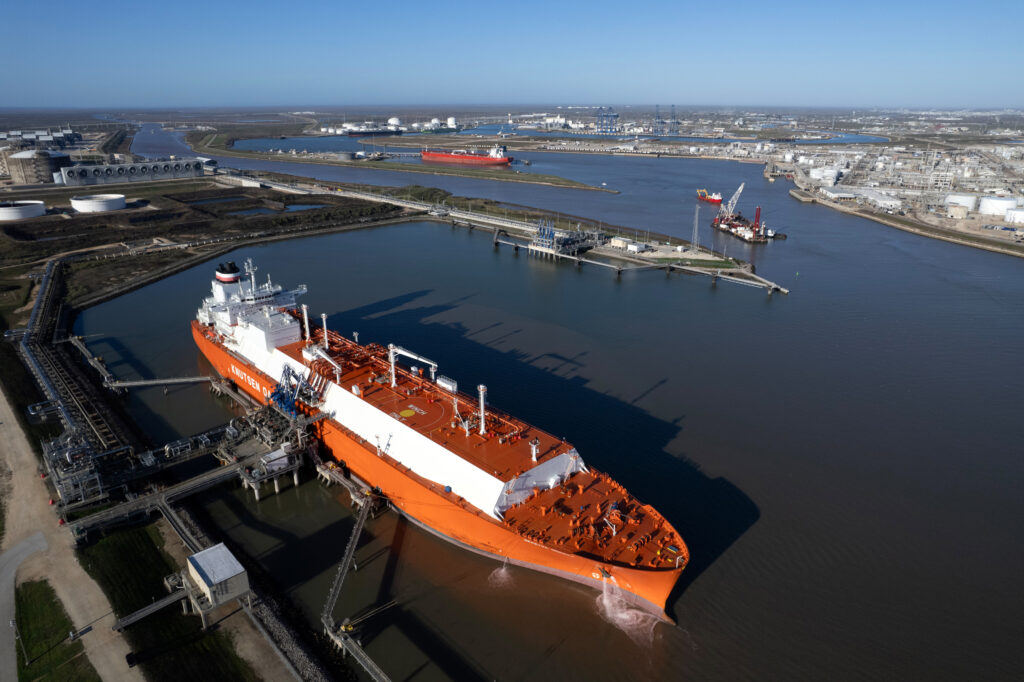
U.S. natural gas exports are climbing, with new legislation in Congress potentially accelerating this trend. A proposed bill aims to reform federal permitting for diverse projects, potentially leading to more pipeline construction, which could direct significant amounts of gas overseas.
The demand for liquefied natural gas (LNG), a key driver of U.S. gas production, is rapidly growing, having reached a record high this summer. By 2040, LNG exports are projected to nearly double.
The Bipartisan American Affordability and Jobs Act could increase LNG exports by an additional 8-15%, according to Rhodium Group’s analysis.
Proponents of the bill argue it could lower climate pollution by advancing renewable energy and transmission, yet some environmental groups warn it might boost fossil fuel development.
Ben King from Rhodium Group noted that LNG would benefit the most from the bill, predicting a rise in pipeline projects aimed at exports.
Mariam Al-Shamma from the Bipartisan Policy Center emphasized the challenges of building interstate gas pipelines, essential for LNG export without affecting domestic supply.
The bill would limit states’ and tribes’ ability to alter or reject necessary pipeline permits, curtailing legal challenges that have previously hindered projects in the Northeast and Appalachia.
Beyond pipelines, the bill might increase gas available for export by reducing U.S. demand as wind and solar energy could capture more of the rising electric demand, according to Rhodium’s findings.
The global climate impact of increased LNG exports is uncertain. If replacing coal, they might reduce emissions, but if replacing renewables or driving new demand, they could increase pollution. Exports replacing Russian or Middle Eastern gas may not change emissions significantly.
Some climate advocates caution that the bill may lock in approved LNG exports. The U.S. Department of Energy authorized nearly 56 billion cubic feet per day for export, about 40% of current U.S. production, but only two-thirds are operational or under construction.
During the Trump administration, billions were spent to boost LNG exports, using them as trade negotiation leverage.
In 2024, the Biden administration paused new gas export approvals but the new bill could prevent future administrations from similar actions.
The bill introduces a standard for judicial review, allowing companies to sue if permits are modified or revoked. Agencies must show “clear and convincing evidence” for actions. Failing that, the government could incur penalties related to construction or operational costs.
If an agency’s permit denial or delay is deemed unjust, penalties could reach 100% of expected costs. LNG terminals, which require substantial investment, may deter agencies from altering permits once built.
Jeremy Symons, of the Center for Energy & Environmental Analysis, criticized the bill’s project certainty provisions as overly favorable to industry, potentially overriding the Department of Energy’s public interest mandate under the Natural Gas Act.
Al-Shamma believes the bill won’t prevent the Energy Department from exercising its authority, as modifications for compliance with applicable laws remain possible.
Despite permitting debates, permits may not constrain LNG exports since some approved projects lack investment. Thus, permit certainty provisions might have limited effect.
LNG exports rose by nearly 25 percent in the first half of the year and are expected to continue increasing, regardless of legislative changes.
Original Story at insideclimatenews.org