This article is part of a new Carnegie series called “India’s Unfinished Demographic Dividend.” India’s demographic transition should be a historic advantage, but structural constraints are limiting its potential. This series examines the key barriers that could cap India’s growth trajectory—and the pathways to unlocking its demographic potential. The first two articles in the series are available here and here.
India’s Climate Challenges: Navigating an Unpredictable Future
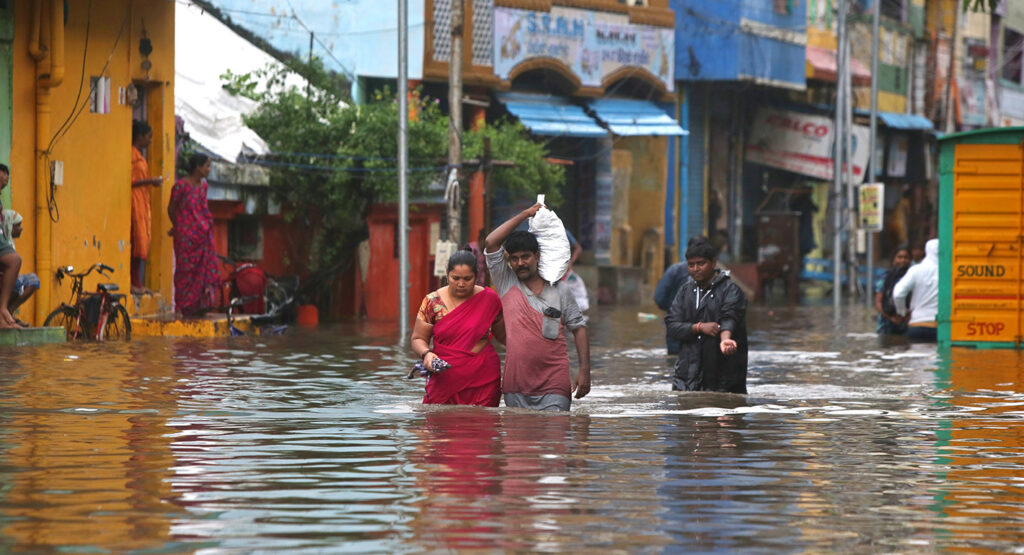
In July 2026, Mumbai faced severe disruptions in its transportation infrastructure due to intense monsoon rains, resulting in tragic fatalities. The city experienced an unprecedented 90 percent of its typical July rainfall in just four days. This extreme weather event was starkly contrasted by a severe water shortage merely a month prior, with water reservoirs at a critically low capacity, highlighting the growing unpredictability in climate patterns across India.
The volatility in weather is not exclusive to Mumbai. Across India, monsoon patterns are being altered by El Niño, leading to substantial economic and human costs. The frequent occurrence of unseasonal weather, such as intense rains, floods, and prolonged droughts, is placing considerable strain on India’s infrastructure, particularly in urban areas. According to the National Disaster Management Authority, the annual damage from monsoons alone costs the Indian economy between ₹30,000 and ₹50,000 crore.
A recent report from India’s Sixteenth Finance Commission, which advises on the allocation of tax revenues, highlighted a critical flaw in disaster management funding. The new Disaster Risk Index used to distribute funds is skewed towards demographic size rather than actual disaster risk, potentially misallocating significant resources.
Disaster Risk and Demographic Dynamics
The formula for the Disaster Risk Index—hazard x exposure x vulnerability—has sparked debate. While hazard refers to the physical events like floods or droughts, exposure is simply the headcount of the population, and vulnerability is boiled down to per-capita income. This approach has led to states with larger populations receiving more disaster funds, regardless of the actual risks faced by their residents.
The disparity in data accuracy is significant. Odisha, with the highest hazard score, is overshadowed by Uttar Pradesh in the Disaster Risk Index due to its larger population, not because of greater exposure to disasters. This discrepancy reflects a broader issue of inadequate granular data, which hampers the accurate assessment of ecological exposures.
Climate Impact on Demographic Transition
Climate change is reshaping India’s demographic landscape by impacting fertility, mortality, and migration patterns. The traditional view linking population growth to environmental damage is being challenged as climate change begins to influence age structures more than sheer population size. India’s demographic dividend is at risk unless these dynamics are understood and integrated into policy frameworks.
Heat, Floods, and Drought: Measuring the Risks
Heat: Invisible but Lethal
Extreme heat poses severe health risks and economic challenges. Projections by the International Labour Organization indicate that heat could result in a substantial loss of full-time jobs by 2030, particularly impacting sectors like agriculture and construction. The Council on Energy, Environment, and Water’s heat risk index reveals that a significant portion of India’s population resides in high-risk areas, exacerbating the country’s vulnerability.
Urban density in states like Maharashtra contributes to heat risks, while in drier regions like Gujarat and Rajasthan, the lack of cooling infrastructure intensifies the problem. Despite efforts like Ahmedabad’s pioneering heat action plan, these areas remain vulnerable, pointing to the need for comprehensive adaptation strategies.
Floods and Drought: Geographically Diverse Threats
The complexities of flood and drought risk require a localized approach. District-level assessments by the Department of Science and Technology reveal concentrated flood risks in specific regions, while drought risks are more widely distributed. Understanding these patterns is crucial for targeted responses.
Health, Migration, and Productivity: Interlinked Challenges
Disease and Health Impacts
Climate change is accelerating the spread of diseases like dengue, with regions previously unaffected now experiencing significant outbreaks. The implications for productivity are profound, as disease burdens intersect with economic activities, particularly in labor-intensive sectors.
Migration Patterns
Climate-induced migration is becoming more prevalent, yet remains underreported due to inadequate data categorization. Displacement from events like floods is often recorded as economic migration, obscuring the true scale of climate-related movements.
Productivity Under Pressure
Chronic health conditions exacerbated by environmental factors are diminishing the productivity of India’s workforce. Air pollution, a significant contributor, leads to long-term health issues that affect workers’ capacity and economic output.
Strategies for a Resilient Future
To harness its demographic dividend, India must enhance data collection and analysis to better understand exposure and vulnerability. This includes refining disaster risk assessments, integrating environmental factors into health and migration data, and extending protections to the informal workforce. Building resilience in these areas will be crucial for sustaining growth amid the challenges posed by climate change.
Original Story at carnegieendowment.org