Intense Negotiations at Cop31: Behind the Scenes of Climate Talks
The Cop31 climate discussions have kicked off in Antalya, Turkey, amidst a backdrop of skepticism from various sectors pushing for inaction. While fossil fuel companies and climate change deniers aim to paint the talks as futile, journalists are committed to making sense of the progress and stakes involved. This year’s conference has once again become a focal point for discussions on global climate policies and environmental strategies.
With the 31st annual UN climate conference underway, the importance of understanding the dynamics and outcomes of these talks cannot be overstated. Journalists are striving to provide clarity on why these discussions remain crucial and the potential impact they could have. The summit is not just about agreements but also about comprehending the broader implications for global climate policy.
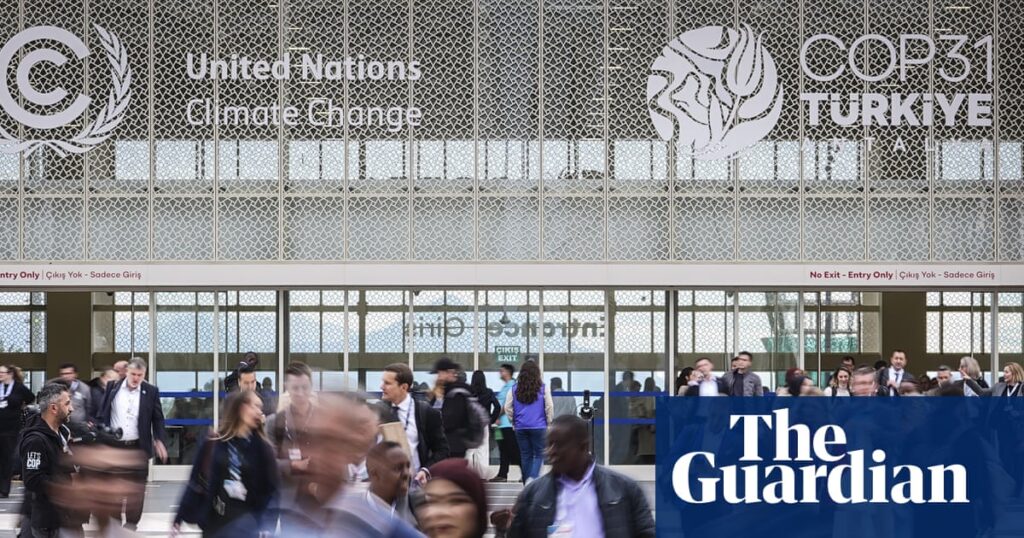
Covering a Cop conference is a formidable task. With nearly 70,000 delegates this year, logistical challenges abound, as demonstrated by journalist Graham Readfearn’s arduous three-and-a-half-hour journey to the venue. Such challenges highlight the difficulties faced by media representatives, particularly those from smaller, less-resourced organizations.
Ajit Niranjan, European environment correspondent, expresses the complexity of covering such events: “The hardest thing about covering Cop is satisfying the many different audiences who turn to our coverage during this chaotic fortnight.”
The summit’s scale requires journalists to juggle multiple responsibilities, from tracking diplomatic negotiations to conveying the significance of these discussions to the public. Adam Morton, Executive Editor for news, politics, and sport at Guardian Australia, elaborates on the exhaustion that accompanies covering such large-scale events: “By the end of the final weekend it is not unusual to have gone 48 hours with little to no sleep… Covering a Cop is a great reporting assignment – sometimes deeply frustrating, sometimes exhilarating.”
Fiona Harvey, Environment Editor, notes the logistical nightmare of the summit: “The annual Cop summits might seem futile… Logistically, they’re a nightmare.” Despite the challenges, she acknowledges the importance of these gatherings as platforms for accountability and progress.
Graham Readfearn, Environment and Climate Correspondent for Guardian Australia, highlights the intricate nature of the conference: “I can’t pick the one thing that’s hardest. They are sprawling in scale, cut across geopolitics, science, diplomacy, social affairs and so many other big issues.” The summit demands that journalists decipher complex topics and present them in an understandable way for readers worldwide.
Amidst the chaos and complexity, Cop31 continues to be a vital event for advancing global climate policy, offering a rare opportunity for nations to collaborate on this critical issue. As John Kerry stated, “I’d rather have it [Cop] taking place, and having people listen to each other and exchange information and views, than live in a completely dark, motionless pit where nothing happens.”
Original Story at www.theguardian.com