Climate Shift Detected: New Glacial Period Thwarted by Global Warming
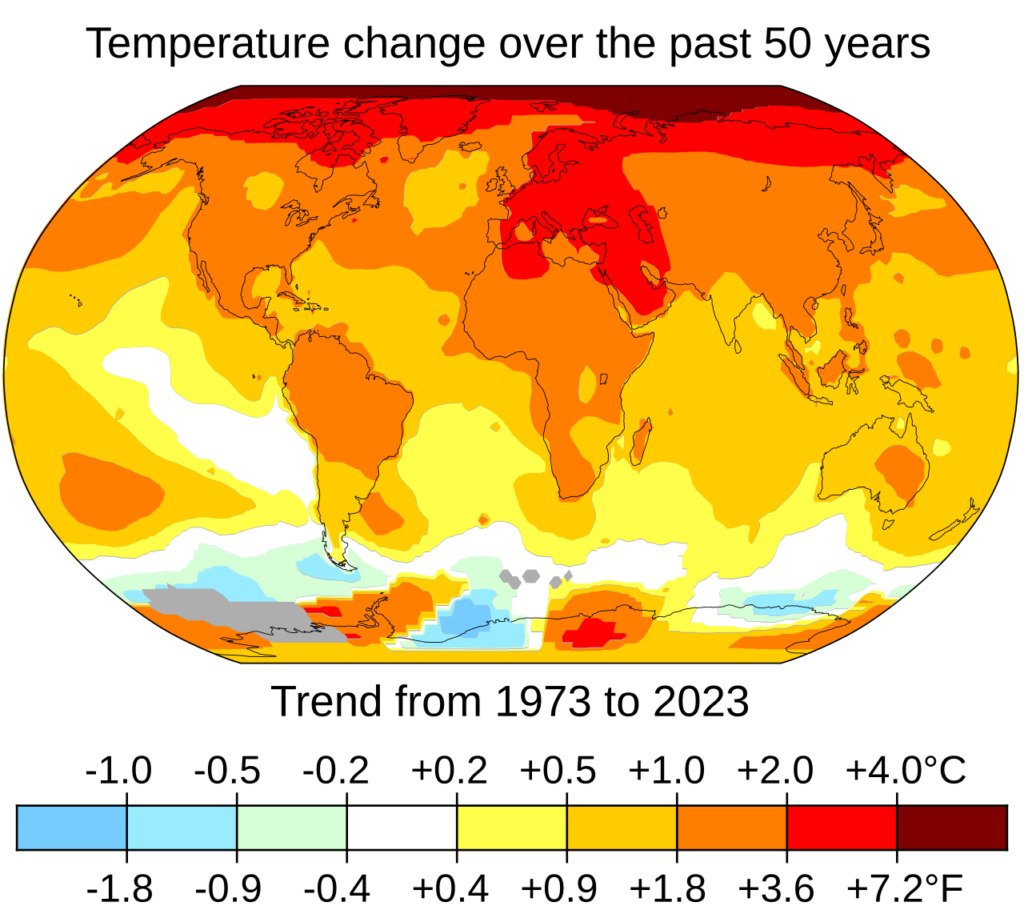
Recent research suggests that Earth was on the brink of entering a new glacial age until rising temperatures halted this natural progression. This intriguing discovery was made by observing an ice cap in northern Canada, which started expanding around 2,000 years ago. However, by the 1960s, warmer temperatures caused a reversal, leading to its retreat.
According to Nicolás Young, a geochemist at the Lamont-Doherty Earth Observatory, “It was just getting started, everything was normal, the next glaciation was about to happen—and yet it stopped.” This change serves as a significant indication of human impact on the climate system.
Remnants of the Laurentide Ice Sheet
Once a massive ice mass, the Laurentide Ice Sheet spanned much of Canada and the northern United States. Its remnants survive today as the Barnes Ice Cap on Baffin Island, Nunavut. Contrary to popular belief, Young states, “People always say that it disappeared, but that’s not true.” The Barnes Ice Cap, roughly the size of Delaware, offers insights into the past climate changes.
The research team, including Joerg Schaefer from Lamont, aimed to determine if the ice cap had ever been smaller than its current size before it began expanding again. This was accomplished by studying preserved plants buried beneath the ice, which provided a timeline of the ice margin’s expansion.
Vegetation Unveils Climate History
Unlike most glaciers, the Barnes Ice Cap is frozen to its bedrock, preserving the underlying vegetation instead of erasing it. As the ice retreats, these plants become exposed, allowing researchers to date them using carbon-14 dating. This method helps scientists trace back when the ice margin advanced over them.
Young explains, “If you do this enough times, you can actually develop a timeline of that ice margin systematically advancing over plants.” The research combined samples from Barnes with those from nearby smaller ice caps, reconstructing a climate history that saw the Laurentide Ice Sheet reach its smallest extent around 3,000 years ago, only to grow again 1,000 years later.
Redefining the Start of a Glacial Period
The team suggests that this renewed growth marks the commencement of a glacial period, challenging the traditional notion that such periods only begin when ice sheets cover continents. Earlier models indicated that another glaciation was millennia away, but Young’s findings propose that the process was already underway before being interrupted by modern warming.
Although some scientists in the 1970s speculated about an impending ice age, Young now claims, “It actually was happening. They couldn’t quite prove it, but now we sort of have the evidence.” Despite the potential onset of cooling, the process would have taken thousands of years to affect climate significantly.
The Implications of a Melting Ice Cap
By the 1960s, the Barnes Ice Cap was losing more ice in summer than it gained in winter, and models predict it could vanish in the next few centuries. This loss might alter future glaciations, as the Laurentide Ice Sheet once provided a starting point for ice expansion when the climate cooled.
With elevated greenhouse gas levels, predicting the onset of another glacial period remains uncertain. Should continental ice sheets re-emerge, they may need to develop from scratch without the foundational presence of the Laurentide.
For more detailed insights, refer to the study “Late Holocene reexpansion of the Laurentide Ice Sheet” by Nicolás E. Young and colleagues published in Science. The study’s DOI is available here. Additionally, the article “Has the next ice age already come and gone?” by Shaun A. Marcott provides further context, accessible here.
Original Story at scitechdaily.com