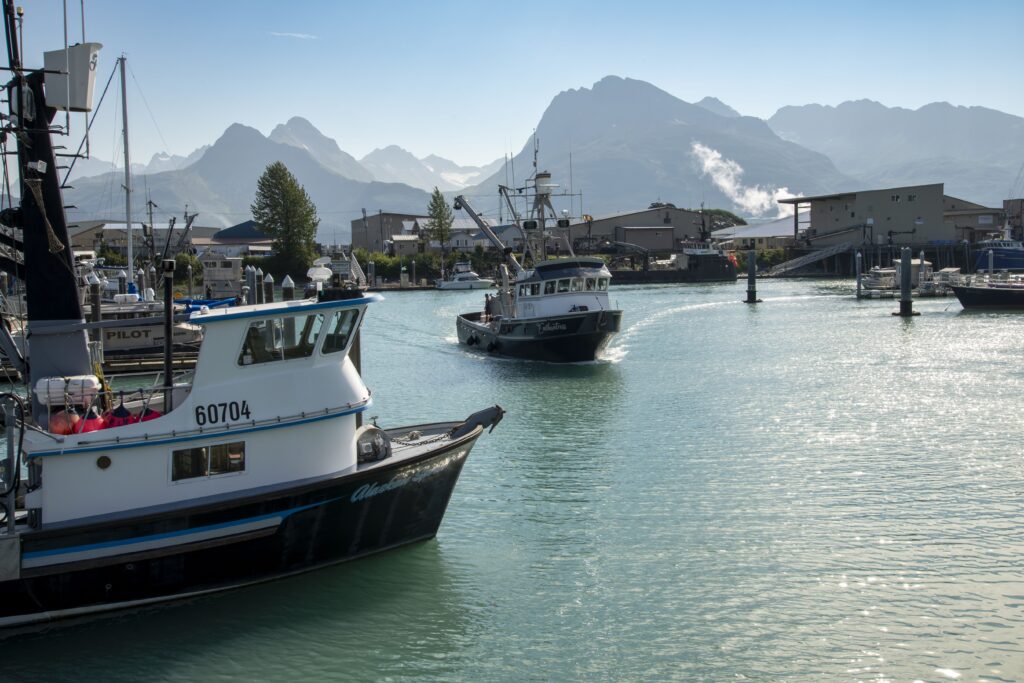
If you listen to the candidates running for the U.S. Senate seat in Alaska, major issues in the race focus on the state’s fisheries, oil and gas development, and rising prices for essentials.
Climate change, although not prominently mentioned, influences these issues. Warming waters are impacting Alaska’s fish, including declining salmon runs. Concerns about climate change drive opposition to expanding oil and gas development in the Alaskan Arctic. Rapid warming is melting permafrost, damaging infrastructure, and altering animal migrations crucial to Alaska Natives for subsistence.
Candidates have barely mentioned climate change, similar to other races nationwide.
But Alaska’s focus is unique. Consider fisheries.
Mary Peltola, the Democrat representing Alaska in the U.S. House from 2022 until January 2025, champions “Fish, family, freedom.”
“It may seem odd to emphasize fish in D.C.,” said Chantal de Alcuaz, co-executive director of The Alaska Center, an environmental advocacy group, “but it’s vital for Alaskans.”
Despite its size, Alaska has fewer than 740,000 residents, many of whom consider fishing central to their lives. For Alaska Natives, salmon are not just a food source; their cultures revolve around harvesting and processing the fish. Non-Indigenous Alaskans also fill their freezers with fish they catch. Recently, this has become increasingly difficult.
Some salmon species runs have decreased sharply. Authorities have repeatedly closed subsistence and sport fishing along the Yukon and Kuskokwim rivers.
In a debate last month, Peltola and her main opponent, Sen. Dan Sullivan, the Republican incumbent, acknowledged climate change as one of several factors affecting Alaska’s fisheries, including salmon. Warming waters are part of the decline’s complex causes.
Yet candidates focus on trawling, a commercial fishing practice resulting in bycatch. Peltola proposes banning “factory trawling,” targeting large, out-of-state boats.
Peltola stated climate change is “harder to address” than trawling. “Here, Congress and Alaskans can say no,” she said of the practice. “It’s a man-made impact.”
Peltola emphasizes her Kuskokwim River fishing history. Sullivan has introduced legislation to limit bycatch.
Alaska’s Senate race also stands out in oil and gas discussions. Unlike national parties, candidates show little difference on drilling.
Alaska relies on oil and gas revenue for its budget, and residents receive an annual dividend from a wealth fund built on petroleum royalties. Many Arctic North Slope Native communities have significant fossil fuel income. Yet production is declining.
The Trump administration has changed policies to allow new drilling, affecting areas critical to some Alaska Natives’ subsistence hunting. Recent proposals would remove environmental reviews and public comments from Western Arctic drilling plans. Sullivan supported these steps and sponsored a bill repealing Biden-era Western Arctic protections.
Peltola supports oil and gas. At a September forum, she credited Biden for approving the Willow project, a large Arctic development, and criticized Sullivan for confirming Interior Secretary Deb Haaland, critical of drilling.
A Peltola spokesperson declined to specify support for Trump’s oil and gas policies, stating, “Mary advocates for all solutions to reduce costs, including increased oil and gas production and restoring tax credits for renewable projects cut by Sullivan.”
Sullivan supports an “all of the above” energy policy but voted for the One Big Beautiful Bill Act, repealing renewable energy credits. His office did not comment.
Read More
Evacuating Remote Alaska Was Hard. Rebuilding Will Be Even Harder.
By Kiley Price
Despite an unusual focus on fish and agreement on oil and gas, candidates’ reluctance to address climate change is common nationwide. Many Democrats prefer discussing energy prices.
“It’s advertising savvy,” said Amy Lauren Lovecraft, a political science professor at the University of Alaska Fairbanks. Peltola knows her support base cares about climate, “because Sullivan doesn’t. His record is clear.”
Enei Begaye, executive director of Native Movement, said many Alaskans care about climate change, “led by Alaska Native people experiencing its deadly impacts.”
Despite Peltola’s oil and gas support, Begaye noted differences between candidates for Senate and the U.S. House.
“We have the chance to elect candidates respecting public processes and laws,” Begaye said.
Although Alaska often sends Republicans to Washington, D.C., it has an independent streak. Nearly two-thirds of voters are unaffiliated. In Alaska’s ranked-choice primary, Peltola led by eight percentage points over Sullivan, although this was fewer than 14,000 votes. Peltola leads in most polls.
As the election nears, candidates aim to show they prioritize Alaskans’ needs. A recent advertisement for Sullivan highlights his support for oil and gas, hunting, fishing, and Second Amendment rights. It does not mention Kodiak Island’s reliance on renewable electricity sources.
Original Story at insideclimatenews.org