Kia Initiates South Korea’s First Remotely Operated Car-Sharing Trial
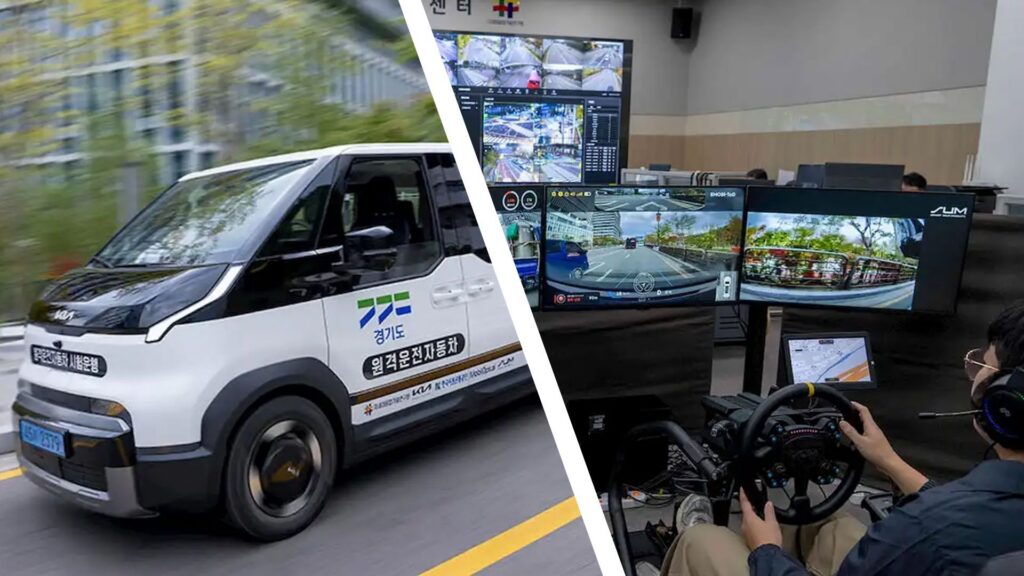
In a groundbreaking move for the automotive industry, Kia has commenced South Korea’s initial trial of remotely operated car-sharing in the Pangyo Techno Valley. This innovative approach allows users to request a vehicle to be delivered to their location without the need for a physical driver.
The trial utilizes Kia’s PV5 electric vans, where operators, positioned remotely, can maneuver the vehicles to designated spots without any human presence inside. This technology also provides the convenience for customers to leave the vehicle at their destination, as remote operators can drive it back to the depot for necessary maintenance and charging.
The initiative is a collaborative effort involving Socar, KT, Kia, and the autonomous driving startup SUM. The consortium is now focusing on bringing this technology closer to commercialization. According to the Korean Herald, the system relies on 4G or 5G networks for remote operation, with a user-friendly app facilitating booking, payments, and support services.
To minimize risks linked with network failures, a robust triple-network system has been implemented alongside operator training and emergency protocols. This setup, utilizing existing telecommunications infrastructure and conventional vehicles, reduces costs compared to fully autonomous systems.
Kia suggests that this remote vehicle operation model significantly alleviates the logistical burdens faced by large fleet operators. It allows for a more flexible vehicle collection and return process, enhancing customer convenience, particularly in areas with limited transport infrastructure.
Meanwhile, in 2024, BMW introduced a similar technology known as automated valet parking (AVP) at the Consumer Electronics Show. This solution, developed in collaboration with Tier 1 supplier Valeo, allows remote operators to assist BMW vehicles in finding parking spaces.
BMW’s system enables customers to leave their cars at designated drop-off zones, such as airports or malls, and the vehicles autonomously search for parking spaces using built-in driving technology. A remote operator can intervene to guide the vehicle safely if any issues arise.
While BMW has yet to launch a public tele-operation pilot, Kia’s program may inspire other automotive companies to explore similar remote operation technologies. This development marks a significant step toward leveraging connected car capabilities, offering a valuable bridge toward full autonomy.
Original Story at www.techradar.com