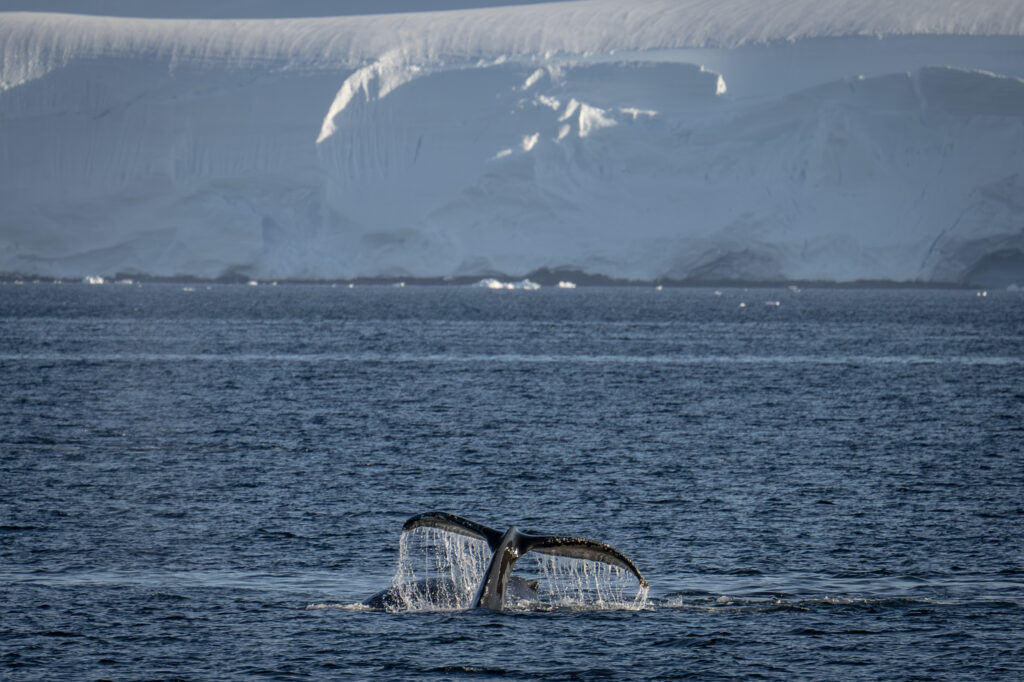
In the Southern Ocean, a delicate balance exists where marine life such as whales, penguins, and seals thrive on krill, a crucial component of the area’s food web. Yet, this balance faces challenges from a burgeoning fishing industry in Antarctica that harvests krill for products like Omega-3 supplements and pet food. Concerned about these practices, a group of over 30 scientists and ocean advocates, known as the Antarctic Avengers, is calling for a boycott of krill-based products to safeguard marine ecosystems.
Sylvia Earle, a distinguished marine biologist and a member of the Antarctic Avengers, emphasizes the urgency of this issue. She notes, “We are now witnessing the expansion of industrial fishing into one of Earth’s last great wildernesses. This is happening at a time when these waters are already under immense pressure from climate change, making it all the more urgent that we act to protect them rather than open them up to further exploitation.” Earle further asserts that krill should not be regarded as a commodity for large-scale extraction for uses such as aquaculture feed and consumer supplements.
The plight of krill is exacerbated by the reduction of sea ice, a critical habitat that is disappearing due to climate change. This loss affects krill populations and, in turn, the predators that rely on them, such as whales. Research indicates that a decrease in sea ice correlates with lower food availability for whales, potentially reducing their reproductive success. Krill populations are already suffering as sea ice continues to disappear due to rising temperatures.
Ari Friedlaender, an ecologist and professor at UC Santa Cruz, has studied Antarctic whale foraging behavior for over 20 years. He states, “We have shown that in years with poor winter sea ice extent there is a reduction in subsequent pregnancy rates that we believe is the direct result of prey limitation.” Friedlaender supports the boycott of krill-based products, viewing it as a means to alleviate pressure on krill-dependent predators. “It represents an opportunity that we have to reduce a known threat to krill predators,” he adds.
The Antarctic Avengers are urging consumers to refrain from purchasing products labeled with Antarctic krill, including Omega-3 supplements and pet food and treats made from krill meal and oil. In place of these, they suggest alternatives such as algae, flaxseed, hemp, and chia oils. Additionally, they advise against buying farm-raised salmon and other fish raised on krill meal. Like whales, some research shows whales may not be getting enough food in years where there is less sea ice, and are consequently less likely to reproduce.
Other conservation organizations like Sea Shepherd are also advocating for change. Sea Shepherd’s Operation Antarctica Defense campaign targets the industrial krill supertrawlers overfishing in the Southern Ocean. As a result, several major retailers have pledged to stop selling krill products.
Holland & Barrett, a leading UK health retailer, announced plans to phase out krill supplements, influenced by Sea Shepherd’s efforts. Jessica Long, the company’s sustainability and impact director, states, “Our decision to exit krill products is part of our ongoing journey to become a more sustainable, nature-positive business that protects the ecosystems we all depend on.”
Following suit, Germany’s prominent drugstore chain dm confirmed that it will stop selling krill products this year. Likewise, Woolworths and Coles, two of Australia’s largest supermarket chains, have decided to discontinue krill supplements from their offerings.
Andy Mann, a National Geographic explorer and filmmaker, echoes this sentiment, stating, “This is one of the few environmental problems where the fix is genuinely in our hands: read the label, put it back on the shelf, buy the algae version instead.”
Original Story at insideclimatenews.org