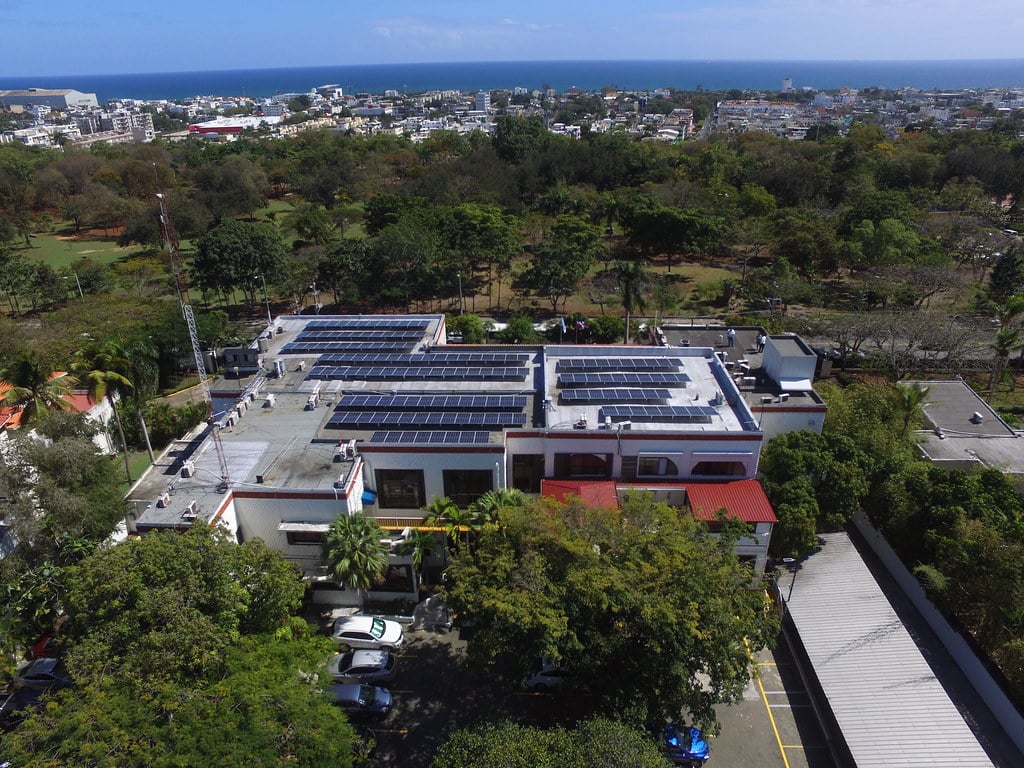
Caribbean Electricity Generation and Renewable Targets: An Overview
The Caribbean region is making significant strides in electricity generation and renewable energy targets. Covering thirteen countries, this report delves into the current state and future projections of the region’s electricity landscape. It focuses on electricity generation rather than primary energy and compares the installed solar capacity with recorded statistics.
Electricity Generation Data and Growth
Electricity generation data for the Caribbean countries comes from two primary sources: OLACDE-sieLAC for seven member countries and IRENA for the remaining six, with the information consulted in August 2026. For some countries like Antigua and Barbuda, The Bahamas, Dominica, Saint Kitts and Nevis, Saint Vincent and the Grenadines, and Saint Lucia—accounting for 5.5% of regional generation—2023 technology mix data was used due to the absence of 2024 data from IRENA. The growth analysis uses 2018 as the base year.
To convert installed capacity to generation, a 13.5% capacity factor is applied, based on the Dominican Republic’s 2024 solar generation data—the only country with sufficient solar capacity for this measurement.
Renewable Energy Targets and Progress
Renewable energy targets are verified through primary sources such as NDCs, national plans, and official decrees. Secondary sources that reclassify targets were not considered. Some unverified figures were also excluded, like the 37% target for Cuba and 100% for Grenada. Notably, four of the six renewable targets are conditional on international finance, with only Cuba’s target being unconditional, while Jamaica’s stance is unspecified.
The report measures progress by dividing the 2024 renewable share by the target. For the entire region, assuming six countries meet their targets while others maintain their 2024 share, the projection for 2030 is a renewable share of 23%, which remains consistent with varying demand growth rates. Additionally, if all four conditional targets are achieved, the fossil generation fall is estimated to be 9% with a 1.25% annual demand growth from 2018-2024, or 16% if demand remains unchanged.
Economic Implications of Fuel Imports
Fuel imports as a percentage of GDP are calculated using data from the World Bank. Only seven of the thirteen Caribbean countries have consistent data, as the fuel share in the remaining six countries fluctuates significantly between years. The data is stable up to 2023.
Solar Panel Imports and Installations
Data on solar panel imports is sourced from Ember’s China Solar PV Export Explorer. The 2026 data covers the period from January to July. Official national sources have not provided solar capacity figures for any year from 2019-2024, with initial figures appearing in 2025. Installations are estimated based on imports using Ember’s method, assuming 73% of Chinese panel exports are installed after a six-month delay. The report notes that this estimate might overstate installations in rapidly growing markets.
Tariffs and Regulations
Electricity tariffs in the Caribbean are compared to data from eighteen Latin American countries through OLACDE, excluding Haiti. A comprehensive review of each country’s electricity statutes and renewable energy laws was conducted to understand authorization processes for independent generators, connection decisions, and interim renewable targets. The findings also include procurement details from tender documents and public announcements.
Units and Comparability
The report maintains clear distinctions between different cost metrics, such as end-user tariffs, generation costs, and modelled levelised costs, ensuring clarity and comparability across data points. Electricity prices are expressed in US cents per kilowatt-hour, while battery costs are in dollars per kWh of capacity.
Original Story at ember-energy.org