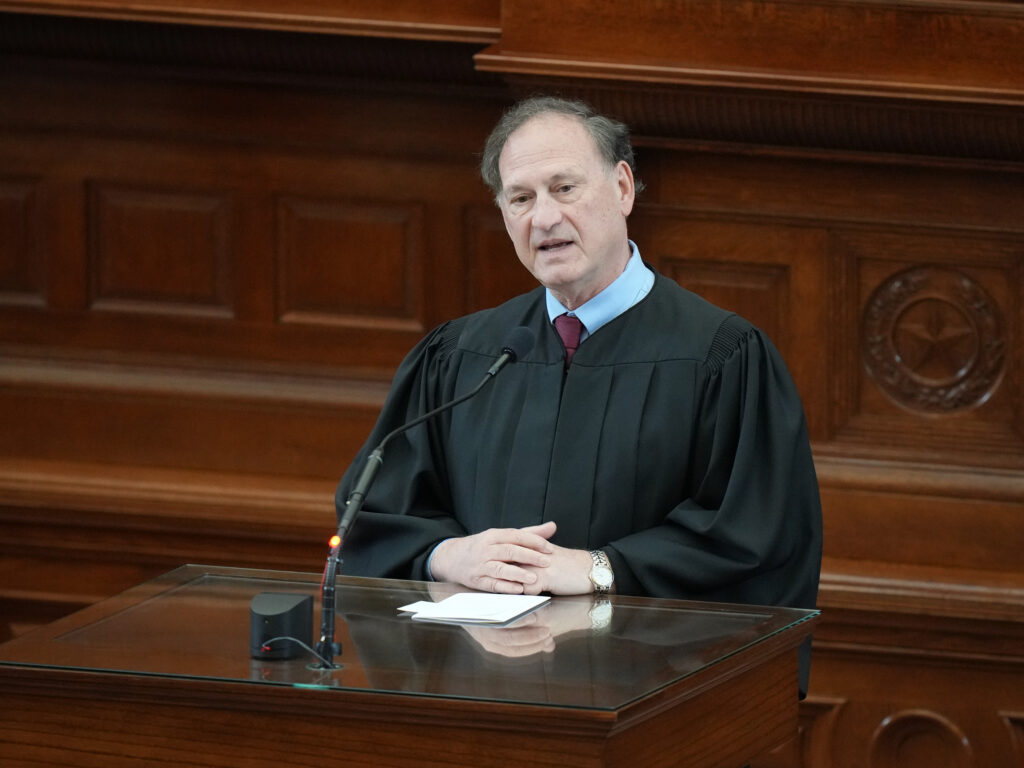
Justice Samuel Alito opted out of a significant Supreme Court climate change case due to his ownership of corporate stocks, including in the fossil fuel industry. Alito’s decision comes as the court prepares to hear the oil industry’s appeal to block Boulder, Colorado’s climate-related lawsuit.
Initially, Alito resisted calls for recusal but reversed his decision a week before the court’s session. The court’s clerk informed lawyers that Alito would not participate, without elaborating. Although Alito does not own stock in ExxonMobil or Suncor, companies involved in the Boulder case, he holds stocks in other companies affected by the Supreme Court’s decision.
Eleven similar cases are currently on hold pending the outcome of Suncor v. Boulder. These lawsuits seek damages from oil companies for costs incurred due to extreme weather, drought, and other climate impacts. Boulder sued Exxon and Suncor in 2018 after historic flooding caused significant damage.
The oil industry argues it should not bear financial liability, despite evidence suggesting they misled the public about climate risks. Exxon and Suncor claim lawsuits seek billions in damages and urge the Supreme Court to prevent these cases from progressing in state courts.
A coalition of environmental and watchdog organizations has urged the Senate Judiciary Committee to investigate Alito for potential violations of law or judicial ethics. Consumer Watchdog reported that two of Alito’s portfolio companies, ConocoPhillips and Phillips 66, acknowledged the litigation risks.
The controversy highlights Supreme Court ethics concerns, an issue Chief Justice John Roberts has attempted to address. Roberts has defended a system where justices decide their recusal without court oversight.
The Vote to Take the Boulder Case
“I have complete confidence in my colleagues’ ability to determine when recusal is warranted,” Roberts stated. Alito, with extensive stock holdings, has recused more often than other justices in recent years, according to Fix the Court.
Alito participated in the initial case conference for the Boulder case, raising questions about his influence on the decision to hear the case. The court requires at least four justices to agree before granting a writ of certiorari.
From 2023 to 2025, the court denied oil company petitions on similar issues. Alito recused from all but one related conference. ExxonMobil noted the recusal issue when suggesting the Boulder case as an ideal resolution vehicle.
Although the court initially passed on the Boulder case, it will now hear the oil industry’s arguments. State and local government advocates view Exxon’s brief as a guide for justices favoring a preemption decision.
Critics argue the court’s integrity is at stake, with actions like these reinforcing public concerns. The Supreme Court introduced its first code of conduct in 2023, detailing recusal situations, but did not address justices holding individual stocks.
Should Justices Own Stocks?
Alito’s latest disclosure reveals stocks in over 25 companies, including fossil fuel firms, and a mineral interest in Oklahoma. His holdings have spurred controversy, as seen in his delayed recusal from a wetlands case involving ConocoPhillips.
Legal experts question whether justices should hold such stocks at all. Louis Virelli, a law professor, emphasized the ethical duty owed by justices.
Arthur Hellman, a legal ethics expert, questioned Alito’s continued ownership of stock, noting potential impacts on the court’s work. He cited Alito’s past comments about the importance of a full bench.
Alito’s stock holdings, inherited by his wife, Martha-Ann, and valued sentimentally, are under scrutiny. Critics argue these holdings raise recusal issues and ethical concerns.
Hellman remarked on the potential impact of the court’s decision on other fossil fuel companies, emphasizing that emotional attachments should not override ethical considerations.
Original Story at insideclimatenews.org