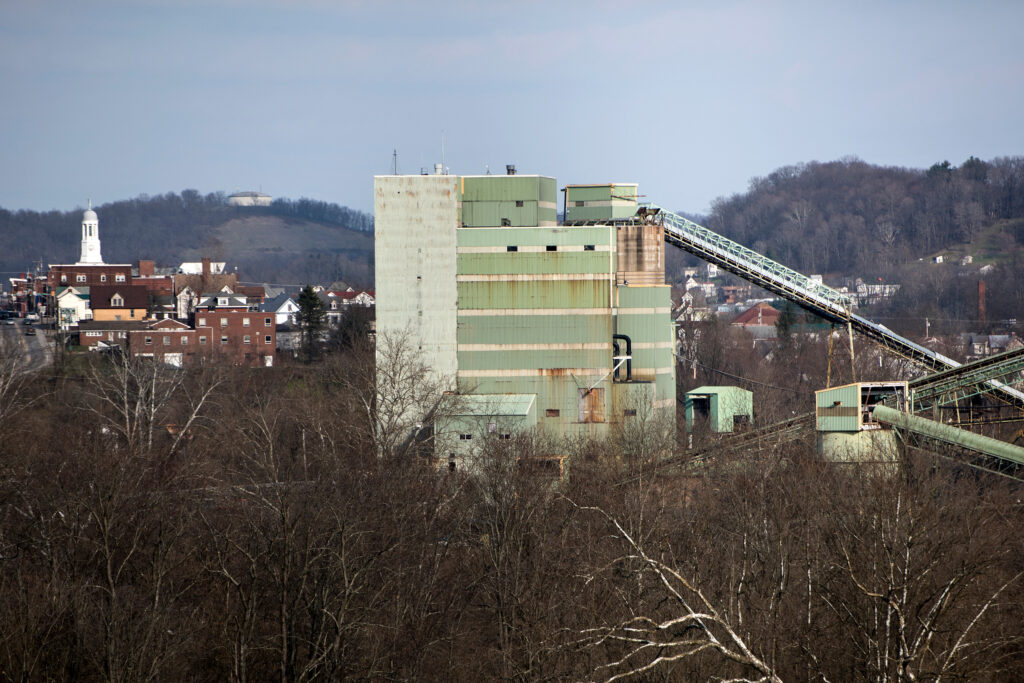
Few people want a data center as a neighbor due to concerns about noise, pollution, and resource consumption. In Pennsylvania, known for its numerous data centers, researchers suggest utilizing a longstanding environmental issue: abandoned coal mines.
Pennsylvania has the highest number of abandoned coal mines in the U.S., with about 5,586 sites. Reclaiming these areas, which are linked to water pollution and sinkholes, would cost approximately $5 billion. Local opposition to data centers is also rising.
Constructing data centers on these lands could prevent the destruction of farmlands and forests, using underground pools for cooling. Companies might cover cleanup costs for existing contamination. Federal researchers explored this idea in 2023, finding abandoned mines provide “land, power infrastructure, and mine water cooling” benefits for data center developers.
“If data centers can demonstrate environmental restoration, locals may support their development,” says Zhongyang He of Penn State, who’s researching potential data center sites on abandoned mines. His studies indicate benefits over building in residential areas, though scaling up might pose challenges.
An Opportunity for Reuse
Proof of concept exists in western Pennsylvania, where a former mine has housed a data center since 2013. Iron Mountain’s center in Boyers uses a closed-loop cooling system reliant on a 100-acre underground lake.
“We use what miners left behind,” said Chris Pennington of Iron Mountain. Boreholes provide internet infrastructure, and clients value the underground security. Despite recycling lake water, additional refrigeration is sometimes needed.
Potential data center sites include the former Robena Mine in Greene County, which plans to use river water for cooling. Another site at the former Consol coal mine in Washington County would use natural gas and “remediated mine gas,” according to Pittsburgh Business Times.
Outside Pennsylvania, Energy DELTA Lab in West Virginia employs 10 billion gallons of underground water for cooling. In Italy, a data center is located 328 feet underground in a dolomite mine.
Typically 40 to 50 degrees Fahrenheit, mine pools could theoretically cool data centers, which use around 100 million gallons of water annually. Of Pennsylvania’s abandoned sites, 160 have pools large enough for data centers. At least 100 data centers are proposed in Pennsylvania.
Other advantages include “legacy infrastructure,” like proximity to roads and the electricity grid. Transmission lines from old mines could be repurposed, though permits are needed.
The Morea mine in northeastern Pennsylvania is being assessed for data center suitability, with 7 billion gallons of underground water. It retains an electric transmission line, crucial for development.
Reports highlight economic burdens in former coal communities. In Mahanoy Township, the poverty rate is 20.3%, common in former mining areas. A 2024 study in Nature noted lower incomes in mine drainage areas.
Data center development may boost economic growth. Restored waterways attract skilled workers, increasing commerce. A study found population growth in areas with mine reclamation.
Choosing the Lesser Evil
Abandoned mine lands could host data centers across the U.S., from West Virginia to Wyoming. However, companies must address mining-related pollution, such as acid mine drainage.
In Luzerne County, streams polluted by mine drainage emit sulfuric odors. Anthracite coal piles loom over fields, with ash pillars eroding into streams during rain.
Positive changes have occurred due to the 1977 Surface Mining Control and Reclamation Act, which funds site restoration. Pennsylvania has received over $2 billion for reclamation efforts. Environmental groups assess and restore the region’s ecosystem.
Wildlife has returned to areas once filled with mining residue. Trees now grow where waste piles were removed, improving habitats. Bobby Hughes of the Eastern Pennsylvania Coalition for Abandoned Mine Reclamation has planted trees and redirected drainage at sites, making them more community-friendly.
Hughes notes developments like an Amazon distribution center on reclaimed land, where developers have improved drainage and planted trees.
Building on mine lands may seem preferable to destroying natural forests, yet it requires considerable effort. Accurate mapping of mine pools is necessary to avoid engineering challenges and environmental consequences.
The chemical reactions from heating mine pool water for cooling could threaten local ecosystems. Uncertainty remains about the long-term viability and environmental impact of using mine pools.
Developers must perform environmental assessments and consult the Pennsylvania Natural Diversity Inventory to ensure construction does not harm protected species.
Some developers remain skeptical. Chris Pennington of Iron Mountain said underground construction is complex, requiring constant monitoring. Not all mine lands have ready power infrastructure.
Matt Prusak of Giga Energy noted that while mines may offer land and cooling solutions, they often lack adequate power infrastructure.
Local Skepticism Endures
Hughes emphasizes his group’s focus on site assessments, not development decisions. His community opposes data centers near their homes, with signs reading “NO DATA CENTERS” lining roadsides.
In Archbald, residents oppose the proposed Wildcat Ridge Data Center despite plans to treat polluted lands. The fear of excessive water use and environmental damage has led to strong local resistance.
County Commissioner Bill Gaughan criticized the project, referencing the region’s coal mining history. “I am opposed to sacrifice zones,” he said, arguing against repeating past mistakes.
Original Story at insideclimatenews.org