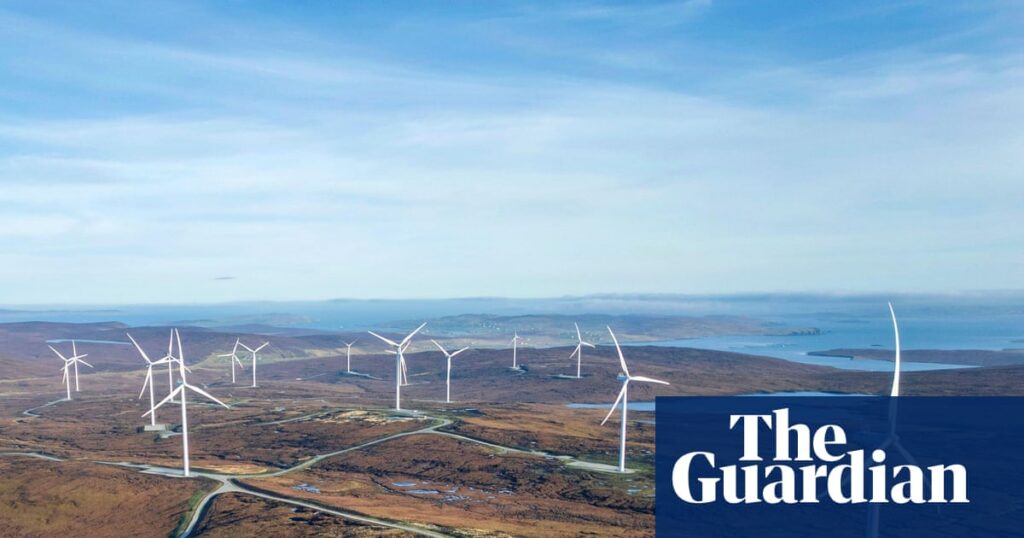
The Potential of Clean Energy to Transform the Climate Crisis
In an era where the climate crisis looms large, a new report suggests that a global transition to clean electricity could set off a “cascade” of changes that may help reverse environmental damage. This analysis, which highlights the most promising solutions for environmental recovery, focuses on the concept of “positive tipping points.”
These tipping points refer to thresholds where sustainable technologies or practices become more affordable, widespread, and politically viable, leading to self-sustaining progress. Among these, the shift to clean electricity is seen as the most impactful, as it can speed up transformations not just in the energy sector but across various industries.
As solar and wind energy become more economical, they enhance the feasibility of electric vehicles, heat pumps, and cleaner industrial processes. This, in turn, reduces air pollution and boosts the demand for renewable energy.
The report, developed by the University of Exeter in collaboration with the Earthshot prize, draws from the work of Prof Tim Lenton, a pioneer in climate tipping point research.
Steve Smith, the report’s author and a research fellow at the University of Exeter, highlighted the rapid advancements in clean energy: “The cascade of clean energy that we’re seeing now is just doing so much more than anybody expected even 10 years ago.”
Solar and wind technologies have reached positive tipping points in numerous markets, with reduced costs and increased investment fueling further expansion. However, challenges such as slow planning and grid development, especially in affluent regions, and inadequate investment in areas like Africa, where solar potential is vast, hinder progress.
Research within the analysis indicates that unified policies supporting clean energy, transportation, and heating could fast-track tipping points by two to eight years. Progress in one area often leads to advancements in others, further driving down costs and encouraging investment.
Another high-impact area identified is the transformation of global commodity supply chains. A small group of companies, banks, and regulators control commodities like beef, soy, and palm oil, which are major causes of tropical deforestation. Aligning policies in large markets, such as the EU and US, could promote deforestation-free products globally.
Smith emphasized the need for collaboration: “You need to be able to align not just the producers, but also the policymakers, the wholesalers, the consumers, the banks, the insurance companies, and get everybody working and doing the same thing.”
In certain regions, clean cooking and household energy are nearing tipping points, thanks to pay-as-you-go models and decentralized solar power. Despite this, 2.1 billion people still use solid fuels, exposing them to harmful pollution.
Reducing methane emissions is highlighted as a quick measure to curb global warming. Responsible for 30% of current warming but with a relatively short atmospheric lifespan, addressing methane can significantly alter climate trajectories.
The report suggests that climate adaptation strategies like flood defences and resilient infrastructure could become self-sustaining by attracting investment and reducing costs. However, current financial flows are disproportionate, with $7.3 trillion annually funding activities harmful to nature compared to $220 billion for nature-based solutions, according to UN figures.
“For every £1 invested in protecting nature, you’ve got £30 spent trying to degrade it,” Smith stated, pointing out the need for a shift in financial priorities.
Original Story at www.theguardian.com