Stay informed with TechCrunch Mobility — your go-to source for the latest in transportation technology. Subscribe for free by clicking here!
Waymo continues to make headlines with its rapid expansion across various cities, showcasing its ambitious growth strategy. The company’s robotaxis are becoming a familiar sight in more urban areas each week.
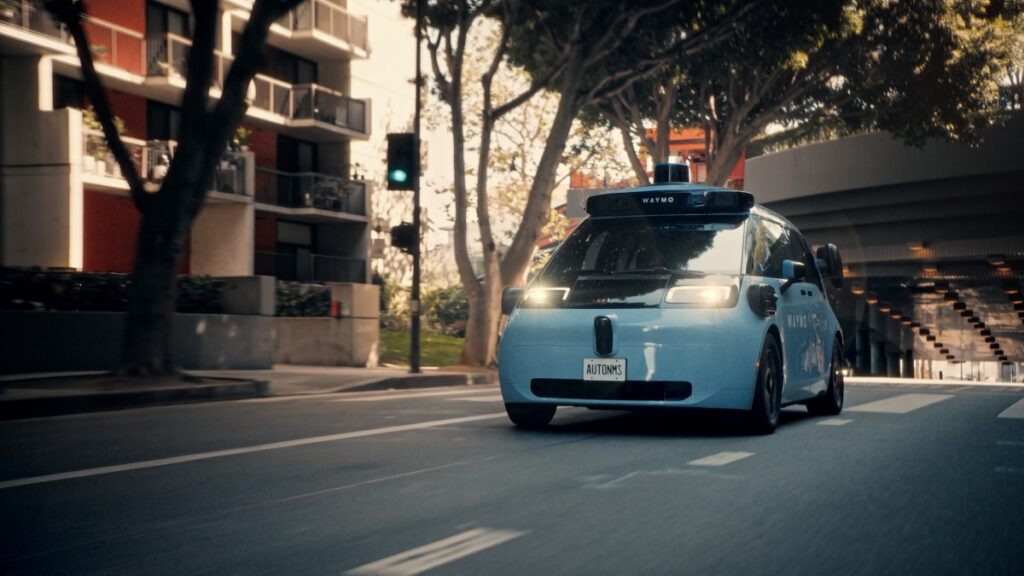
The key to Waymo’s strategy lies in its sixth-generation self-driving technology, prominently featured in the Ojai robotaxi. Now available to all riders in Los Angeles, Phoenix, and San Francisco, Waymo boasts that the Ojai is more cost-effective to produce and maintain, crucial for achieving profitability.
This week, new details emerged about Waymo’s approach to achieving these goals. The company revealed the development of a custom silicon chip — a 5 nm ASIC chip — designed to process large amounts of raw data from 13 high-fidelity cameras before it reaches the vehicle’s central processing unit. This chip delivers over 1,000 TOPS (trillions of operations per second), comparable to Nvidia’s DRIVE AGX Thor processor.
Waymo claims this advancement results in unparalleled efficiency and performance, allowing its vehicles to navigate complex urban environments swiftly and safely.
In this endeavor, Waymo has collaborated with numerous partners, including AMD, Micron, Nvidia, Samsung, Sandisk, Socionext, and TSMC, to refine its computing capabilities.
A little bird
In another development, the Idaho National Laboratory is investigating potential security risks posed by Chinese lidar sensors on U.S. vehicles. According to sources, the research is financed by entities within the electric and autonomous vehicle sectors.
Despite reaching out to various companies, including Rivian, General Motors, and Ford, none reported awareness of this investigation. Aurora, Nvidia, and Zoox did not provide comments.
Deals!

Also, a startup originating from Rivian, recently secured $150 million in a Series D funding round led by Prysm Capital. This brings the total amount raised to $455 million since its inception in March 2025. The company has transitioned from focusing solely on micromobility solutions to developing both driven and autonomous small electric vehicles.
Earlier this year, Also announced a collaboration with DoorDash to create autonomous delivery vehicles, building on a $200 million funding round.
Serve Robotics, a company specializing in sidewalk delivery robots, also finalized several partnerships despite Uber’s recent withdrawal from its collaboration. Serve will now work with Grubhub in multiple cities and expand its existing partnership with DoorDash.
Other notable deals:
Einride has agreed to purchase 500 Tesla Semis, expanding its electric fleet for customers such as Amazon. Deliveries will begin in September over a 24-month period.
Grounded, a Detroit-based van customization startup, raised $5 million in a seed round, with contributions from investors like Also Capital and others.
Uber announced an investment in drone delivery company Zipline, aiming for 1 million daily drone deliveries by 2029.
Vessev, a New Zealand-based electric hydrofoil boat manufacturer, raised $19 million in a Series A round led by Blackbird Ventures.
Notable reads and other tidbits

Amazon aims to expand its drone delivery service to nearly 500 U.S. cities by 2026.
Bedrock Robotics has developed autonomous excavators operating in Nevada and Texas, a notable achievement in self-driving technology.
Hyundai‘s Genesis brand unveiled the GV90, a seven-seater electric SUV competing with other large EVs.
Tesla joined other automakers in China for a massive vehicle recall, addressing hidden emergency door releases.
Tesla, Uber, and Waymo received permits to operate robotaxi services in Nevada, potentially deploying up to 8,000 vehicles over the next year.
Uber was fined €825 million for violating European data protection laws related to driver account suspensions.
Uber made several autonomous vehicle announcements, including testing in London, launching a service in Croatia, and offering driverless rides in Dubai.
Waymo provided responses to the National Highway Traffic Safety Administration regarding an incident involving a collision with a child, though these responses remain redacted.
Original Story at techcrunch.com