Mexico’s Ambitious Step into the Electric Vehicle Arena
Traditionally recognized as a manufacturing hub for international carmakers, Mexico is taking a bold leap by introducing its own brand of electric vehicles. This new initiative targets the domestic market with a focus on affordability and suitability for local conditions.
Global auto giants like GM, Ford, and Toyota have long leveraged Mexico’s manufacturing capabilities, boosting the country’s role in the world automotive industry. However, Mexico now seeks to redefine its position with the launch of Olinia, a line of mini-electric cars designed specifically for local needs. The name “Olinia” is derived from the Nahuatl language, meaning “movement.”
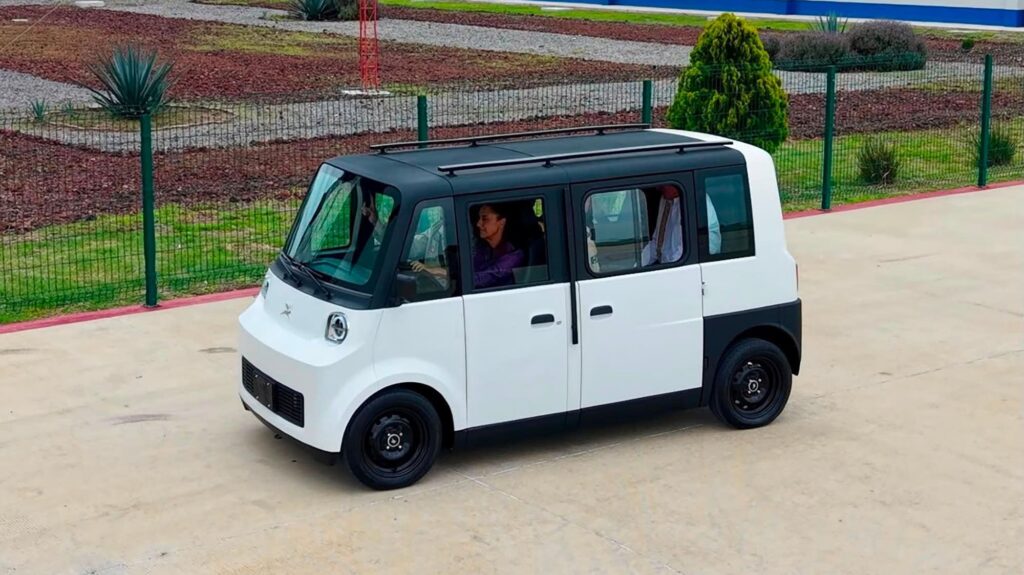
Unveiled by President Claudia Sheinbaum, the Olinia vehicle is seen as a symbol of Mexico’s capability to innovate and develop technology. She drove a prototype on stage, highlighting the car’s simple yet functional design. “Olinia is proof that Mexico can go beyond merely being a recipient of investment. It can generate knowledge, develop technology, and design solutions,” Sheinbaum remarked.
The Olinia is priced just under $9,000, making it accessible for many Mexicans. It can be charged at home, seats six people, and is ideal for urban use with a maximum speed of 30 miles per hour and a 90-mile range per charge. Thomas Karig, a consultant and former Volkswagen Mexico executive, commented, “You’re aiming for a low-cost, low-technology vehicle, which is usually not in the portfolio of the automotive industry.”
Nevertheless, the project’s reliance on Chinese technology has raised concerns, especially given the United States’ pressure on Mexico to reduce its trade ties with China. Despite this, the economic practicality of using Chinese components remains a driving force behind the Olinia initiative.
In a country where the VW Beetle, or vocho, has become a cultural icon, there is a potential market for a new “people’s car.” Carlos Pinzón, who runs La Casa del Volks in Mexico City, noted the historical appeal of affordable vehicles in Mexico. However, he doubts whether the infrastructure and expertise needed for electric vehicles are currently sufficient.
The Olinia’s introduction has not been without skepticism. Social media has seen a flurry of memes comparing it to toy cars and fictional vehicles from popular culture. The true challenge will be the vehicle’s reception when it hits the market next summer, as promised by the government.
For more information on Mexico’s automotive ventures, read more about its role in the global auto industry and the implications of trade tensions with China.
Original Story at www.marketplace.org