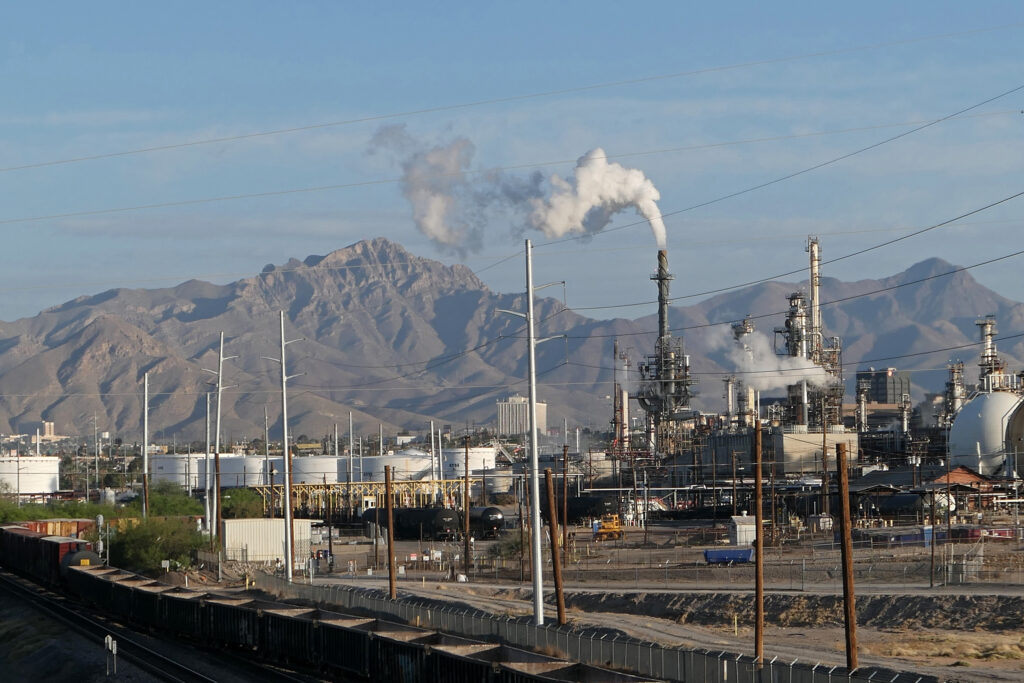
EL PASO, Texas—Gilbert Morales addressed the El Paso City Council on Tuesday, sharing his emotional story about his wife, who died of lung cancer in June despite never smoking. Morales lives near Marathon Petroleum’s El Paso Refinery, a major air pollution source facing scrutiny for releasing hazardous compounds.
Morales reported that when the refinery burns off gases, it causes headaches and nausea for his family.
“How many more loved ones do we have to lose to get the refinery accountable for our health?” he asked the council.
On the night of August 4-5, Marathon released 13 compounds exceeding permit limits, as reported to the Texas Commission on Environmental Quality (TCEQ). Residents experienced nausea and headaches during this event.
The El Paso City Council planned to request a public meeting with Marathon and environmental regulators. U.S. Rep. Veronica Escobar urged the EPA to investigate the refinery incidents.
Marathon is renewing its air permit with TCEQ. El Paso County protested the renewal, and TCEQ granted a hearing request in June.
The refinery discharged over 10,000 pounds of propylene, 15 pounds of hydrogen sulfide, and more than 1,400 pounds of isopentane. Emissions continued until August 7, surpassing permit limits for hydrogen cyanide and nitrogen oxides.
The El Paso Refinery is in a residential area of south-central El Paso. Residents urged the council to address the refinery’s pollution.
“In the past, many city and county leaders ignored this,” said Fred Borrego, president of the San Juan Neighborhood Improvement Association. “Please do not look the other way.”
TCEQ and Marathon Petroleum did not comment. An EPA spokesperson stated that TCEQ is the lead agency for this incident.
“Entirely Unacceptable”
Marathon’s El Paso Refinery originated from two facilities built by Chevron and Texaco in the late 1920s and early 1930s. Marathon acquired the refinery in 2018. As El Paso expanded, residential areas developed around the refinery, where 93% of residents are Hispanic, and over 44% live in poverty, according to U.S. Census data.
County Commissioner David Stout criticized Marathon’s handling of the August 4-5 incident as “entirely unacceptable.” He sought information directly from the company after initial reports downplayed health risks. Upon seeing TCEQ’s detailed reports of toxic releases, Stout felt misled.
City Representative Josh Acevedo added an item to the August 18 council meeting agenda, requesting a formal meeting with Marathon, TCEQ, and the EPA. “El Pasoans deserve clear answers,” Acevedo stated.
Marathon’s report to TCEQ claimed emissions estimates do not reflect ground-level concentrations. The report indicated that air quality monitoring through August 10 showed levels below established exposure guidelines.
An updated report revealed an electrical issue caused the flaring event on August 4. Veronica Carbajal from the Sembrando Esperanza Coalition reported residents experienced health effects and some left their homes due to overwhelming odors.
Carbajal insisted Marathon should provide more information and establish an alert system, noting a lack of warnings during unsafe air conditions.
These developments have intensified scrutiny of Marathon’s permit renewal application with TCEQ. Marathon appealed a June ruling granting El Paso County standing to protest, but Stout said the case is proceeding to a hearing.
Original Story at insideclimatenews.org