European Wine Regions Grapple with Intense Heat, Early Harvests, and Future Uncertainty
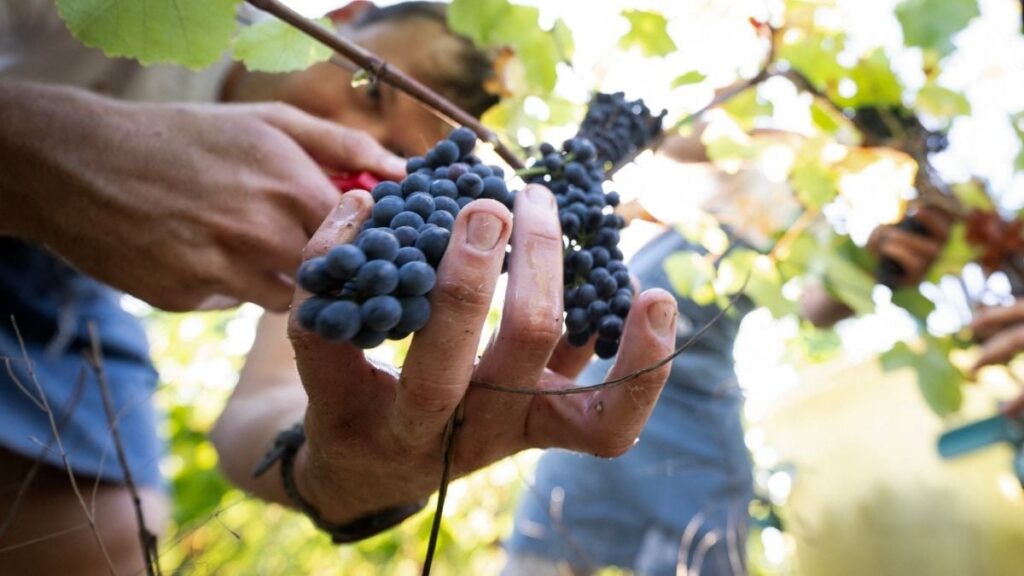
With Western Europe enduring the hottest summer on record, winemakers from renowned regions are rushing to harvest grapes sooner than usual, assuming their crops have survived the devastating fires and drought.
Climate projections indicate that wine-producing areas in Europe and globally will continue to suffer from increased heat and dryness.
An investigation led by viticulture specialists from institutions in France, Germany, and Argentina examined how Pinot noir and Chardonnay, two widely cultivated wine grape varieties, might adapt to escalating drought conditions as climate change advances.
Wine grapes (Vitis vinifera) are known for their resilience to arid conditions. For red wines, a slightly drier climate can enhance the quality and value of wine bottles, albeit with reduced yields.
However, this delicate balance can be easily disrupted by severe conditions. Droughts can lead grapevines to produce fewer and smaller berries, which may not ripen as expected.
Experts propose that artificial selection or gene editing might develop new wine varieties that are better suited to future climates.
Nevertheless, winemakers in historic regions such as France, Italy, and Germany remain committed to their traditional grape varieties.
“While many possibilities have been explored to adapt wine production to climate change, changing cultivars is indeed a risky choice for premium wine regions whose wine characteristics and reputations strongly rely on a single or a few varieties,” writes viticulturist Sébastien Nicolas, of Institut Universitaire de la Vigne et du Vin – Jules Guyot, with his colleagues in their recent paper.
“These levers are considered as options of last resort in cool or temperate climate winegrowing regions bound by strict regulations such as the Loire Valley, Bourgogne, or Champagne in France… This is because the combination of wine variety and place of origin strongly marks the wine sensory characteristics.”
Understanding how warming scenarios could affect these traditional vines is crucial. With the current intense European summer, these impacts might manifest as early as next year.
To evaluate the potential outcomes for Pinot noir and Chardonnay in a climate that is two degrees warmer than pre-industrial levels, researchers collected samples from 80 vineyards in 13 regions across France, Italy, Germany, Portugal, and Argentina, over three vintages: 2019, 2020, and 2021.
Using carbon isotope analysis from the grapes’ juices, which is a proven indicator of vine water status, they assessed water availability in the vineyards.
“Both varieties appeared to be able to withstand a wide range of water deficits, some of which may be associated with climatic conditions similar to a +2 °C warming scenario in Burgundy,” Nicolas and his team write.
Chardonnay vines displayed the broadest range of water deficits across all regions and years.
Interestingly, the regions with the least precipitation were not necessarily those where vines faced the most significant water shortages, as those vineyards had implemented irrigation systems.
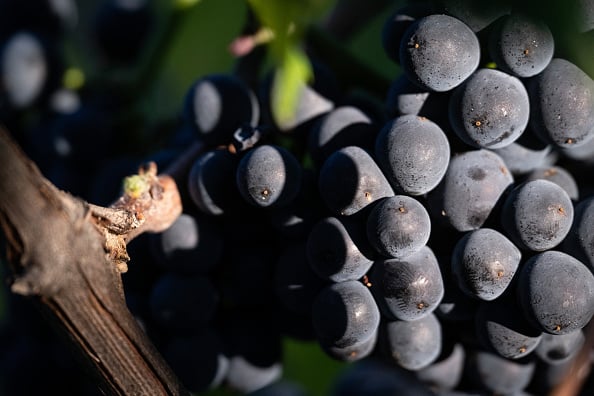
Depending on the vineyard’s water status, researchers observed significant alterations to the grapes’ metabolic profiles, influencing the terroir—the unique character of the wine derived from its specific growing conditions.
“The ‘Chardonnay’ cultivar did not seem to reach a tipping point, and the response dynamics of the metabolites was linear, suggesting a potentially higher adaptability of this variety to its changing environment,” the authors report.
However, Pinot noir appears to have a tipping point. Its characteristic metabolites remain stable until the vines encounter severe water shortages, beyond which these key molecules begin to degrade.
The findings suggest that quality Chardonnay wines will likely persist even amid increased droughts. In contrast, the production of top-tier Pinot noirs may diminish.
The research was published in Food Chemistry: X.
This article was fact-checked by Fiona MacDonald and edited by Fiona MacDonald. While we pride ourselves on our process, we are only human. If you spot a mistake, please let us know.
Original Story at www.sciencealert.com