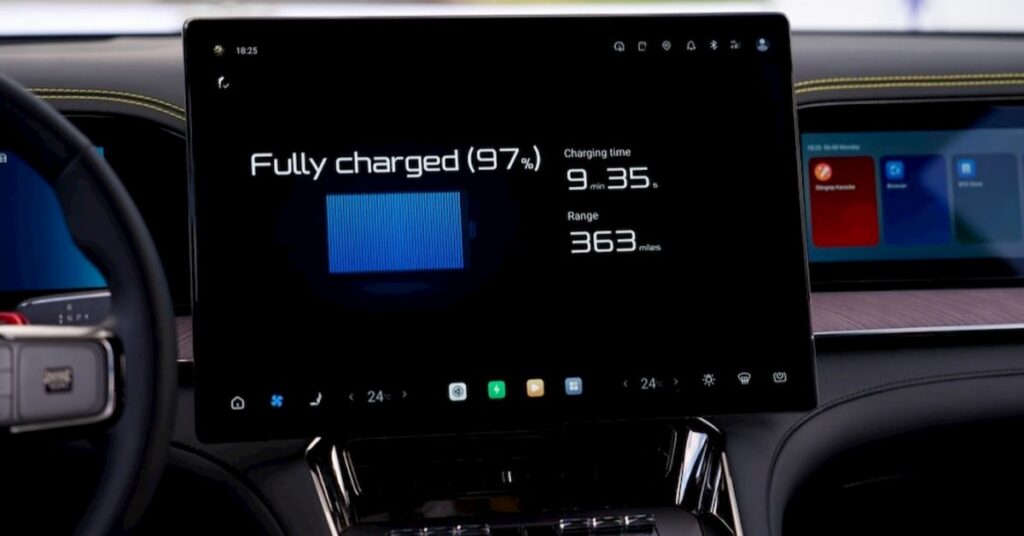
China is leading the charge in the fast-paced world of electric vehicle (EV) technology, focusing on reducing charging times from minutes to mere seconds. Among the latest innovations, a new EV model can charge from 10% to 70% in just 4 minutes and 22 seconds, marking a significant leap in charging efficiency.
The competition for faster charging is heating up, as other companies also announce breakthroughs. Geely’s Lynk & Co. has introduced its 10 series EVs featuring the “Golden Brick” battery, which claims to surpass BYD’s “Blade 2.0” battery by achieving this rapid charge time. In contrast, BYD vehicles equipped with the Blade 2.0 battery can achieve a 10-70% charge in 5 minutes.
Seconds Matter in EV Charging
In the race for faster EV charging, every second counts. Recent announcements showcase battery technologies capable of charging in record times. BYD and Geely are at the forefront with their respective technologies, while CATL, another major battery manufacturer, unveiled a commercial battery capable of achieving a 20-80% charge in 6 minutes and 48 seconds. However, its latest consumer battery promises even faster charging, going from 10-80% in just 3 minutes and 44 seconds.
FAW Group also joined the race by introducing a battery that charges from 10-70% in 3 minutes and 41 seconds. As these developments unfold, the focus has shifted from minutes to seconds, highlighting the rapid advancements in EV technology.
Do Rapid Charging Times Matter?
Public perception remains that EVs should charge as quickly as gasoline vehicles. While EV owners often enjoy the convenience of home charging, rapid charging becomes crucial for those relying on public infrastructure. Quicker charging reduces congestion at charging stations, particularly in urban areas where space is limited.
Despite the necessity, these ultra-fast charging capabilities are currently available primarily in China, emphasizing the country’s leadership in the EV sector.
US Charging Infrastructure: A Different Story
In the United States, the fastest charging vehicles, such as Hyundai and Kia’s E-GMP cars, can achieve a charge from 10-80% in about 18 minutes. However, the upcoming Mercedes AMG GT EV promises to cut this time significantly with an 11-minute charge, although it will be a high-end, limited-production model.
While US infrastructure faces challenges, China continues to rapidly deploy 1,500kW charging stations. BYD, Geely, and state-owned Dongfeng are rolling out these ultra-fast chargers, with plans for thousands more installations by year-end.
Infrastructure Challenges and Opportunities
China’s swift infrastructure rollout contrasts with the slower pace in the US, where political factors and regulatory hurdles have impeded progress. Efforts like President Biden’s infrastructure initiatives have faced obstacles, including opposition from some political factions that have delayed funding disbursement and imposed restrictive component sourcing rules.
While Europe benefits from faster charging solutions, the US lags behind due to political and logistical challenges, leaving it unable to fully capitalize on cutting-edge EV technologies. The ongoing debate over infrastructure investments and international collaboration continues to shape the future of EV charging in America.
Original Story at electrek.co