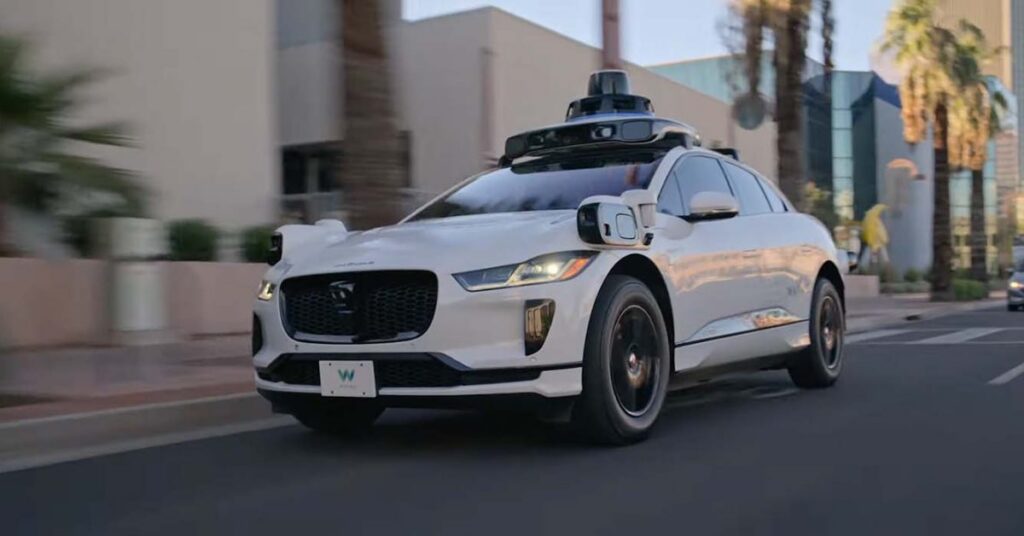
Waymo’s autonomous taxi service is making waves with its impressive safety record. Recent data by the Insurance Institute for Highway Safety (IIHS) indicates that Waymo’s driverless cars experience 68% fewer crashes than the average human driver. However, there are various limitations to the study that suggest these figures should be interpreted with caution.
Autonomous taxis, especially those with level 4 automation, have been gaining traction, with Waymo leading the pack. This Alphabet Inc. subsidiary has expanded its services to 11 US cities, covering an area larger than Rhode Island. With millions of rides under its belt, Waymo offers a vast dataset to assess the safety of autonomous vehicles.
Waymo’s Remarkable Safety Performance
The IIHS, a well-regarded authority in crash safety, analyzed crash reports from 2021-2024, focusing primarily on Waymo due to its extensive operations. According to the IIHS findings, Waymo’s autonomous vehicles showed a significantly lower crash rate compared to human drivers—1.28 crashes per million miles versus 4.06 for humans.
Interestingly, Waymo’s crashes were less severe and typically not the company’s fault. However, the data showed that Waymo had a higher incidence of crashes in dark conditions. This anomaly persists despite Waymo’s reliance on radar and LiDAR, which do not depend on visible light.
The study’s results were consistent across most cities, including Phoenix, San Francisco, and Los Angeles. However, in Austin, the crash rate was slightly higher than that of human drivers, possibly due to a limited sample size during the study period.
Challenges in Data Interpretation
While Waymo’s data is compelling, there are several caveats. For one, autonomous companies must report crashes but not the miles driven autonomously, complicating crash frequency analysis. Waymo voluntarily reports miles driven, but other companies do not, making comparisons challenging.
The definition of an “average human driver” also raises questions. Autonomous vehicles can operate optimally at all times, unlike human drivers, who may be impaired by various factors such as fatigue or distraction. Thus, comparing autonomous taxis to the average human driver might not yield a fair assessment of their capabilities.
Moreover, Waymo’s operations focus on city streets, excluding highways, which typically have lower crash rates. This omission potentially skews the comparison between human and autonomous driving safety.
Additionally, many of Waymo’s trips occur at lower speeds, further reducing crash severity. Nearly half of Waymo’s crashes occurred on streets with speed limits under 25 mph, a stark contrast to human drivers, where only 8% of crashes occurred in similar conditions.
Lastly, the lack of a driver in many Waymo trips means fewer injury-related incidents. While this is beneficial, it also means more vehicles on the road without passengers, potentially increasing traffic congestion and overall collision risk.
Despite Waymo’s extensive dataset of approximately 50 million unsupervised miles, the number remains small compared to the vast number of miles driven by human drivers annually. Consequently, further data collection is necessary to comprehensively evaluate the safety of autonomous vehicles.
Original Story at electrek.co