A Groundbreaking Legal Battle: Oil Industry Faces Scrutiny Over Climate Change Impacts
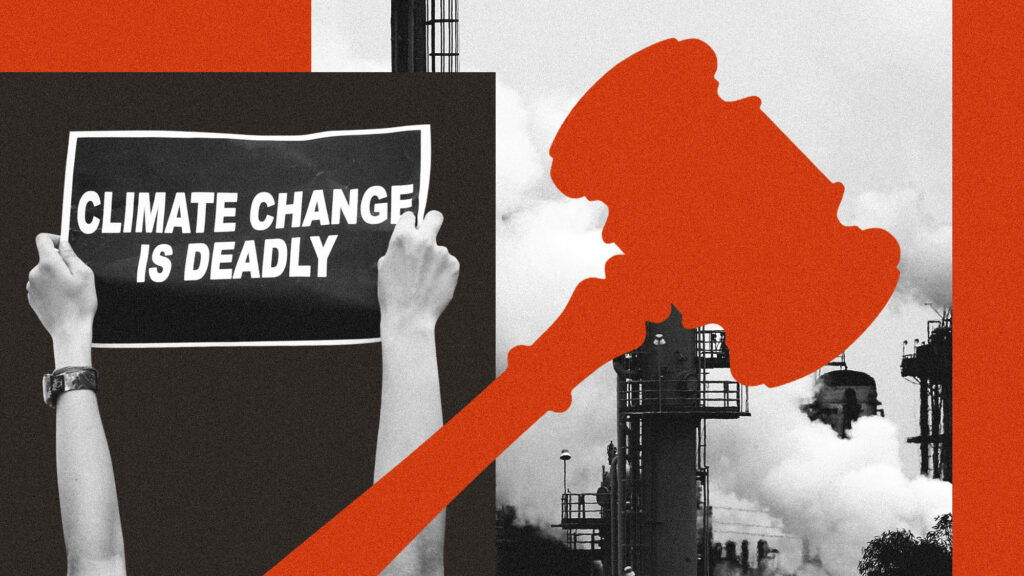
A lawsuit in Washington state is challenging major oil companies, raising questions about their responsibility for extreme weather events linked to climate change. This legal battle could set a precedent for holding the fossil fuel industry accountable for its role in global warming.
The case stems from the tragic death of Misti Leon’s mother, who succumbed to extreme heat during the record-breaking 108-degree Fahrenheit weather in June 2021. Scientists attributed the heat dome over the Pacific Northwest to climate change, stating it would have been “virtually impossible” without its influence (source). Leon has filed a wrongful death lawsuit against Exxon Mobil, BP, Chevron, Shell, and other oil giants, accusing them of long knowing the risks of fossil fuel emissions but misleading the public, potentially preventing timely actions that could have saved her mother (source). During that fateful week, approximately 1,200 people died due to the sweltering conditions.
Recently, a King County judge denied the oil companies’ requests to dismiss the lawsuit, allowing the case to advance to trial. Mike Meno from the Center for Climate Integrity noted that this was a significant development, indicating the potential validity of such cases. “It’s the latest type of legal liability that the oil companies are absolutely terrified of and are going to fight like hell to try to escape,” he said.
After revelations that Exxon Mobil had been aware of the dangers of global warming since the 1970s but downplayed them publicly (source), lawsuits against the oil industry have surged. Margaret Barry from Columbia Law School’s Sabin Center notes nearly 40 cases are pending nationwide. Some, like those from Massachusetts and Vermont, are moving to the discovery phase, a precursor to trial where evidence is gathered (source).
Other cases are on hold pending the Supreme Court’s decision on a lawsuit from Boulder, Colorado, which could influence ongoing and future climate litigation (source).
The oil industry, with support from the Trump administration and various Republican politicians, is actively opposing these lawsuits. The American Petroleum Institute, a leading industry lobbying group, aims to “stop extreme climate liability policy” as part of its 2026 agenda (source). Efforts to challenge “attribution science,” which assesses the link between emissions and extreme weather, are underway.
Republicans have successfully passed laws in several states granting oil companies immunity from climate-related lawsuits. States like Utah, Iowa, and Louisiana have enacted such laws, with similar efforts taking place at the federal level (source).
An investigation by ProPublica uncovered coordinated efforts behind these “liability shield” laws, linked to conservative groups and fossil fuel giants like Koch Industries and Exxon (source). Mike Meno questioned the need for such measures, stating, “If these companies have done nothing wrong and they think the law is on their side, why are they lobbying Congress for immunity?”
Federal government support for the oil industry is evident, with the Trump administration prioritizing the blocking of state-level climate lawsuits (source).
Despite these efforts, scientific evidence linking climate change to extreme weather continues to strengthen. A report from the National Academies of Sciences, Engineering, and Medicine highlights the robust science supporting these claims, drawing scrutiny from industry opponents (source).
Carly Phillips, a senior scientist at the Union of Concerned Scientists, emphasized the soundness of the science, viewing opposition as an attempt to undermine it before court proceedings. Meanwhile, efforts to remove climate science from judicial reference materials faced mixed success (source), with President Trump calling for a review of the National Academies’ conduct.
The oil industry seeks to avoid the fate of Big Tobacco, which faced massive settlements for deceptive practices. As legal strategies evolve, Exxon lawyer Justin Anderson acknowledged the need to adapt. “Why do they keep adapting and changing their theories?” he asked. “It’s kind of obvious. I have to win every time. I have to win every case that is brought. They just need to find one they can get through.”
Original Story at grist.org