India’s Renewable Energy Shift: Progress and Challenges
India is undergoing a significant transformation in its energy sector, with a remarkable push towards renewable sources such as wind and solar. This shift is not just about meeting growing energy demands but also about achieving energy independence, a crucial element of the government’s economic vision.
The Rapid Growth in Renewable Energy
India’s energy consumption is expected to increase dramatically due to rapid urbanization and a burgeoning middle class. By 2040, primary energy demand is forecasted to rise by nearly 80%, from 1,074 Mtoe to 1,921 Mtoe. In response, India has set ambitious climate targets: achieving 500 GW of non-fossil fuel capacity and sourcing 50% of its energy from renewables by 2030, with a goal of reaching net-zero emissions by 2070 (Prajapati et al, 2025).
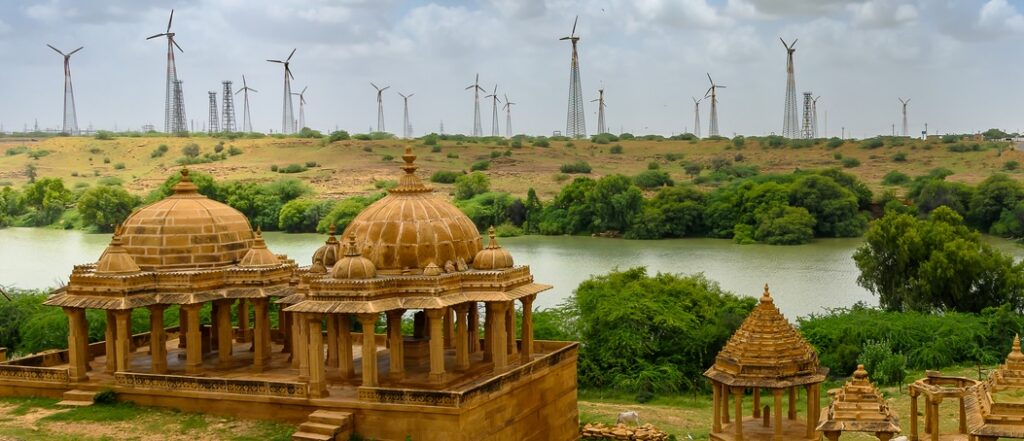
The progress in renewable energy has been noteworthy. India has increased its total installed capacity from 17 GW in 2010 to 190 GW by 2025, marking an annual growth rate of nearly 18% (Kumbhar et al, 2026). Solar energy has been a key driver, growing nearly 30-fold over a decade, and now accounts for 57% of the country’s renewable power. Wind energy too has seen significant growth, reaching 47 GW last year (Prajapati et al, 2025).
Self-Sufficiency and Technological Challenges
Despite these gains, achieving energy self-sufficiency remains a complex task. India is the world’s third-largest solar market but imports nearly 90% of its solar cells from China, posing a strategic vulnerability due to geopolitical tensions (Takahashi, 2020). Furthermore, China dominates global production of key solar components, making it challenging for India to achieve independence in the solar sector.
India’s solar module production costs are higher than China’s due to differences in manufacturing experience and technological depth. Moreover, the country’s domestic production of critical materials like polysilicon and wafers is minimal, further complicating efforts to become self-reliant in solar technology.
Beyond solar, storage capacity presents another major hurdle. With less than 5 GW of current storage capacity, India needs over 60 GW by 2030 to effectively integrate renewable energy into the grid (Raizada, 2025).
Economic Implications of the Green Transition
Successfully overcoming these challenges could significantly enhance India’s economic standing. The cost of solar electricity has dramatically decreased, and a shift to domestic clean energy could improve the country’s trade balance by reducing dependency on fossil fuel imports (International Energy Agency, 2021).
Developing a robust domestic renewable manufacturing base could generate substantial economic benefits. The solar equipment market alone could be worth $42 billion by 2030, while the broader renewable energy market could reach $80 billion annually.
These economic opportunities align with Prime Minister Narendra Modi’s Viksit Bharat 2047 vision, aiming to transform India into a fully developed economy by the centenary of its independence (National Statistics Office, 2025).
Original Story at www.economicsobservatory.com