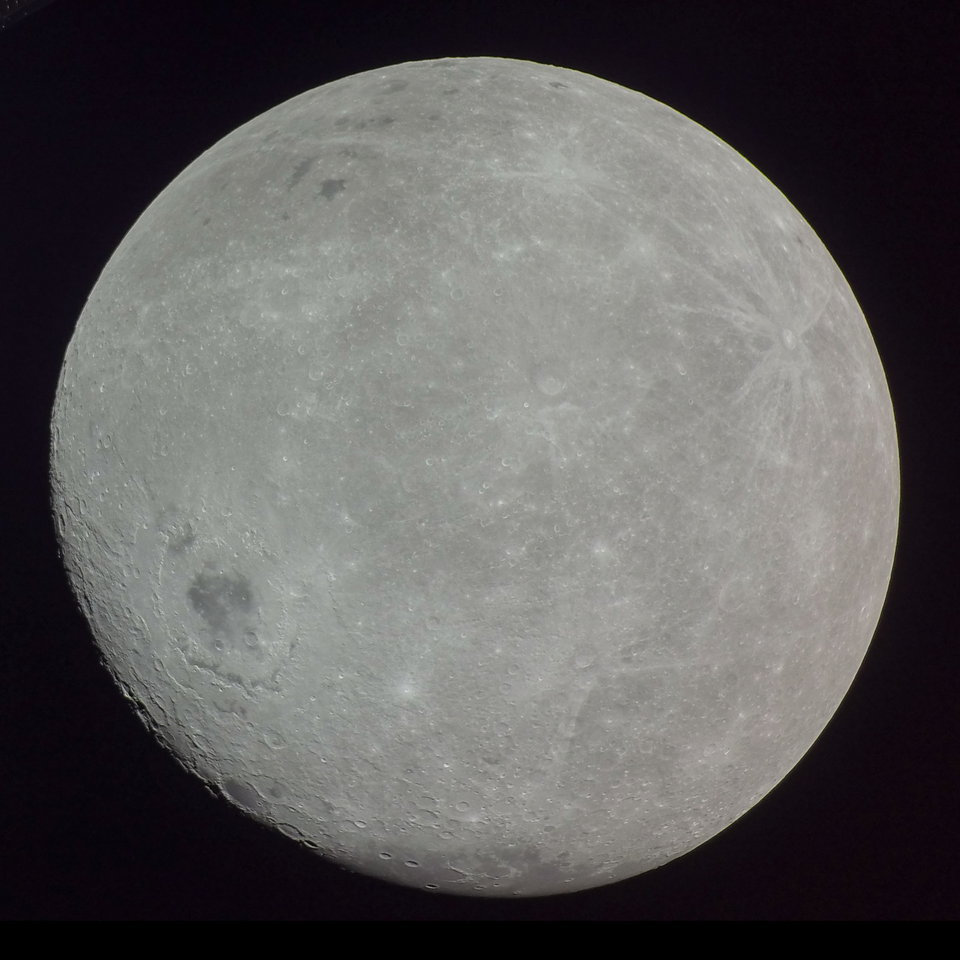
As humanity ventures further into the cosmos, the challenge of preserving the untouched environments of our Solar System becomes increasingly critical. Recent debates and discussions highlight the importance of safeguarding these celestial bodies, not just from human interference but also from microbial contamination, as exploration missions become more frequent.
Concerns about “forward contamination”—the risk of Earth microbes hitching a ride on spacecraft—have been prevalent in the scientific community for decades. This issue gained attention during the planning of NASA’s Viking Mars missions in the 1960s and 1970s. The notion of “backward contamination,” where extraterrestrial life forms might be brought back to Earth, has also been a significant concern. To address these risks, NASA’s Office of Safety and Mission Assurance has established planetary protection protocols with two primary objectives:
-
Prevent forward contamination of other celestial bodies with Earth-based organisms to ensure the authenticity of extraterrestrial life studies.
-
Avoid backward contamination of Earth by extraterrestrial organisms or molecules, thus protecting human health and the planet’s biosphere.
The Future of Lunar Exploration
While planetary protection protocols are in place, the Moon presents a unique case for scientific preservation and exploration. As humanity prepares for more extensive lunar exploration, the question arises: Should parts of the Moon be reserved purely for scientific research, or should commercial activities be allowed?
This question was the focus of a debate organized by the Royal Astronomical Society in Birmingham, England, on July 21. The debate was part of a conference on lunar governance, where an overwhelming 76 percent of attendees supported the idea of protecting the Moon for scientific purposes.
The panelists, which included Dr. Jonathan McDowell, Professor Joe Silk, Professor Martin Ward, Dr. Nikita Chu, and Dr. Manual Salvoldi, discussed whether the lunar far side should remain a protected scientific environment or if commercial ventures could coexist with research efforts.
Astrophysicist Dr Jonathan McDowell stressed that what we do on the Moon today will set a precedent for preserving parts of the entire Solar System as we move out into it. Courtesy: Royal Astronomical Society
Scientific Opportunities on the Lunar Far Side
The lunar far side offers an environment free from Earth’s radio pollution, making it an ideal location for radio telescopes. Such facilities could detect faint signals from the Universe’s early days, a task nearly impossible from Earth due to increasing light pollution and satellite interference.
The far side is also perfect for hosting interferometers, observatories, and gravitational wave detectors. It provides a stable environment to study minute distortions in space-time, offering insights into the Universe’s origins. As Earth’s darkest skies face growing threats from satellite constellations like Starlink and OneWeb, the Moon’s far side becomes increasingly attractive for astronomers seeking pristine observing conditions.
Securing Future Scientific Sites
Professor Joe Silk emphasized the urgency of reserving lunar territory for scientific endeavors, stating, “I think it’s important to preserve the far side for the ultimate science, which will be decades in the future.” He highlighted the need to address humanity’s profound questions about our existence in the Universe and its beginnings.
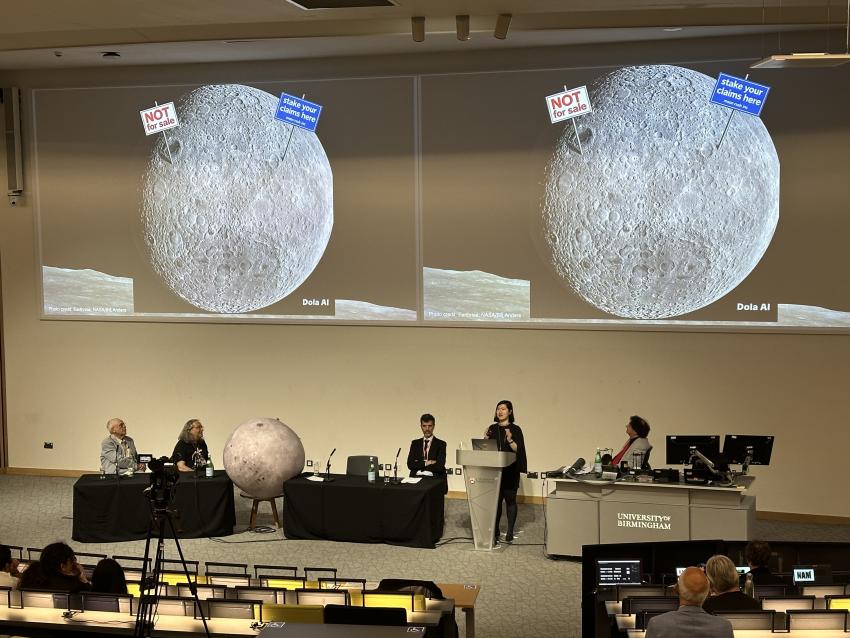 Dr Nikita Chiu argued that commercial and scientific activities can coexist under appropriate governance. Courtesy: Royal Astronomical Society
Dr. McDowell warned that future developments on the Moon could compromise its unique environment if not managed carefully. He stated, “What we do now and in the next few years to preserve science on the Moon is going to be critical not just to the future of science on the Moon, but to the future of science and the environment throughout the Solar System.”
For More Information
NAM 2026 Debate: Should the Far Side of the Moon be Reserved for Science?
Original Story at www.universetoday.com