U.S. Automakers Urged to Compete with Chinese Rivals Amid Market Tensions
As the debate over the presence of Chinese automakers in the U.S. intensifies, Ford’s executive chairman, Bill Ford, has taken a stance that diverges from some industry leaders. While some legislators and automotive lobbyists push to exclude Chinese carmakers from the U.S. market, Ford calls for American manufacturers to rise to the occasion.
During an Axios event in Washington, D.C., Bill Ford remarked, “We have to go toe-to-toe with China. We can’t expect to keep them out forever, and we have to be able to beat them at their own game,” according to the Wall Street Journal.
This perspective is not uniformly shared within Ford itself. CEO Jim Farley expressed a different view in April, telling Fox News that the entry of Chinese electric vehicles (EVs) into the U.S. market should be blocked. Farley raised concerns about the competitive advantage Chinese automakers gain from government subsidies, labeling the competition as “not a fair fight.”
Ford’s membership in the Alliance for Automotive Innovation (AAI), a lobbying body, adds another layer to the discussion. The AAI supports the Connected Vehicle Security Act, a legislative proposal from Senators Bernie Moreno and Elissa Slotkin, aimed at barring Chinese-manufactured vehicles and technologies from entering the U.S. market.
John Bozzella, president and CEO of AAI, stated, “We need to make sure we’re all playing by the same rules, but Chinese automakers are flooding markets around the world with cut-rate vehicles.” He added that Senators Moreno and Slotkin’s legislation sends a clear message that the U.S. will not simply open its doors to Chinese manufacturers.
While the U.S. market debates these issues, Chinese EVs are already being introduced to Mexico and Canada under a new rule allowing limited imports. Meanwhile, cars with Chinese connections, such as those from Volvo and certain models like the Lincoln Nautilus, continue to be sold in the U.S.
Amid this landscape, Bill Ford advocates for a long-term strategy that transcends political cycles, emphasizing the need for a bipartisan industrial policy. “Our lead times are longer than political lead times. I think an industrial policy that is a bipartisan one—which, as I say today, even saying that might sound difficult—we really need that,” Ford commented.
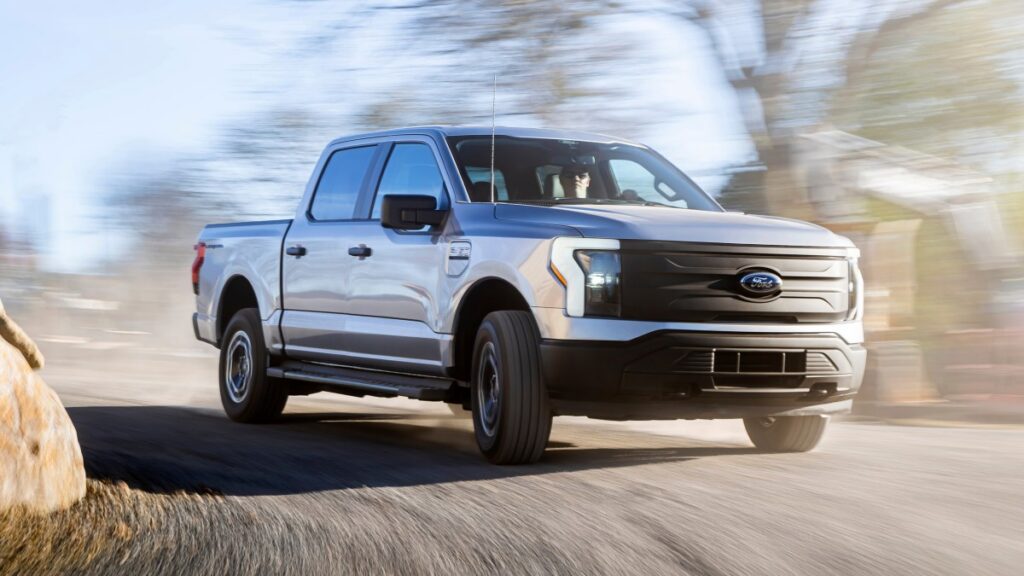
In response to the competitive threat, Ford is developing a $30,000 electric pickup, a strategic move in anticipation of potential Chinese entrants. Other companies, like startup Slate, are also aiming to capture market share with smaller, more affordable vehicles. Should Chinese automakers penetrate the U.S. market despite legislative efforts, the competitive landscape could shift significantly, with Ford’s remarks suggesting it’s more a matter of “when” than “if.”
Original Story at www.thedrive.com