
In an effort to inspire the next generation about renewable energy careers, twenty high school students explored two significant Stanislaus County sites focused on sustainable energy solutions. The visit offered a firsthand look at innovative practices transforming traditional industries.
The students toured the Keyes Road ethanol plant, operational since 2007, which produces ethanol from Midwestern corn. They also visited a dairy farm on Monte Vista Avenue, which began converting manure into biogas for PG&E in 2023.
Owned by Aemetis Inc., the ethanol facility and its biogas pipeline hub, connecting 15 dairy farms in Stanislaus and Merced counties, were part of an educational tour organized by Climate Action Pathways for Schools (CAPS), a nonprofit focused on career training.
“It’s kind of inspiring,” remarked Nicholas Perez, a rising senior at Johansen High School with plans to study agricultural business in college. “It’s really cool to see the process.”
Aemetis employs 48 individuals in ethanol production and another 20 in dairy biogas. During the tour, ethanol manager Eddie Turnbough mentioned openings for a mechanic and an engineer.
The students first visited DeHart Technical School in Modesto on July 2, where they learned about energy-efficient methods in heating, cooling, plumbing, and electricity.
They also explored renewable resources used by the Turlock Irrigation District, which primarily relies on wind and solar energy to comply with state renewable mandates. Some solar panels are even used to shade canals in a widely recognized UC Merced research project (source).
The participating students, hailing from Modesto, Ceres, and Turlock, traveled by bus courtesy of CAPS. They will conclude their experience with presentations on July 16.
Just what happens on a dairy farm?
Contrary to the idyllic image of pasture-grazing cows, S&S Dairy and similar conventional farms focus on feeding corn, alfalfa, and other crops grown separately. This approach has been criticized, but Jessica Cardoso, an Aemetis project manager and tour guide, provided a different perspective. Raised on a dairy farm herself, she emphasized the cows’ welfare, noting, “The number-one priority is a healthy, happy cow because if you don’t have a healthy, happy cow, you don’t have milk production.”
How much manure does a cow produce?
Each cow consumes up to 150 pounds of feed daily, yielding around 10 gallons of milk and producing approximately 120 pounds of manure. This waste is directed to lined lagoons for irrigation and fertilization, though its environmental impact is under state review. Methane from these lagoons is captured by Aemetis in digesters, converting it into biogas for PG&E, thus reducing climate impact.
The S&S Dairy’s digester, capable of holding 9 million gallons of manure, made an impression on Pitman High School sophomore Jennifer Valenzuela, who noted, “That methane from the cow is just going into the atmosphere but could be used for something different.”
How does an ethanol plant smell?
During the tour, the Aemetis plant emitted a bread-like odor due to yeast fermentation of grain into ethanol. Producing 180,000 gallons daily, the ethanol is transported for blending with gasoline, mitigating fossil fuel climate impact.
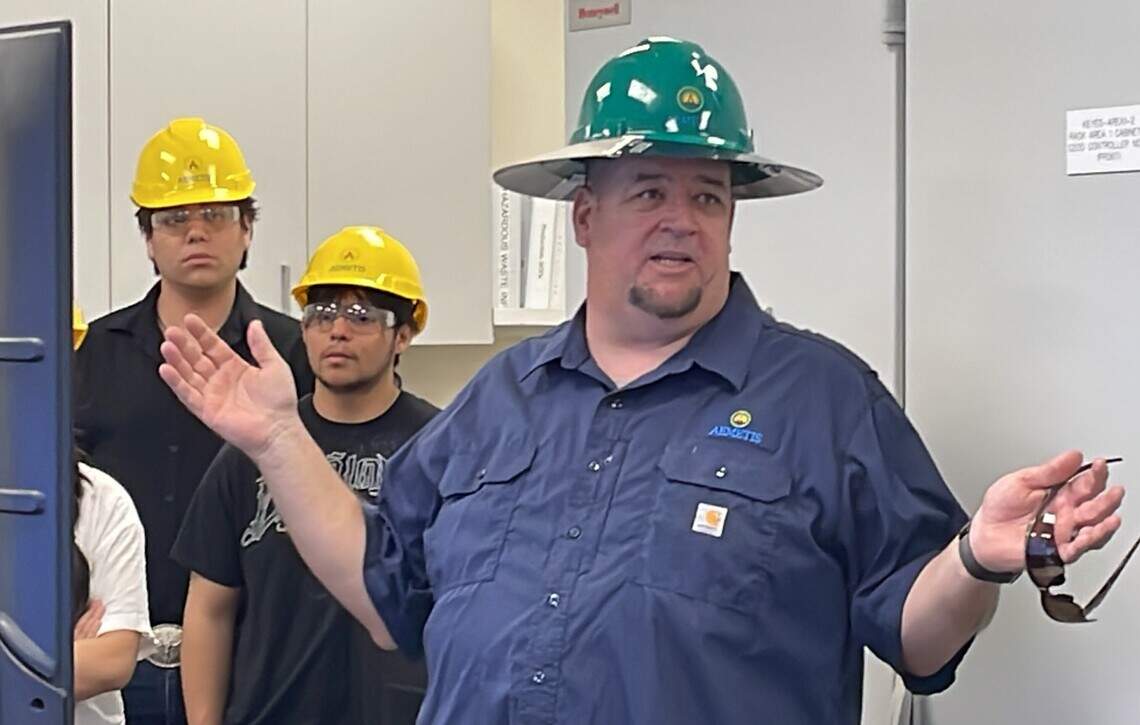
Turnbough, who has managed the plant since its inception, explained that it receives corn shipments from Minnesota, Iowa, and Nebraska via 115 rail cars every five days, contributing to its net climate benefit despite transportation emissions.
The students also learned about other educational and training opportunities, including programs at Modesto Junior College and potential apprenticeships, which are already part of Central Valley High School senior Ephram Castro’s plans: “I want to go into welding, specifically pipeline welding. I’ve already thought about apprenticeships, especially PG&E … I’ve also thought about trade school at MJC.”
Original Story at www.aol.com