In a rapidly evolving energy landscape, an Edmonton-based start-up finds itself grappling with unforeseen challenges posed by recent policy shifts. Varme Energy, a subsidiary of Green Transition Holding from Oslo, is facing potential setbacks due to changes in carbon pricing agreements between federal and Alberta governments, threatening up to 1,000 construction jobs and 100 full-time positions in Alberta’s clean economy.
The recent industrial carbon pricing deal, primarily designed for Alberta’s fossil industry, has inadvertently overlooked businesses like Varme Energy that were relying on higher carbon prices to make emission reduction projects viable. This unforeseen consequence has left Varme Energy scrambling to adjust its plans.
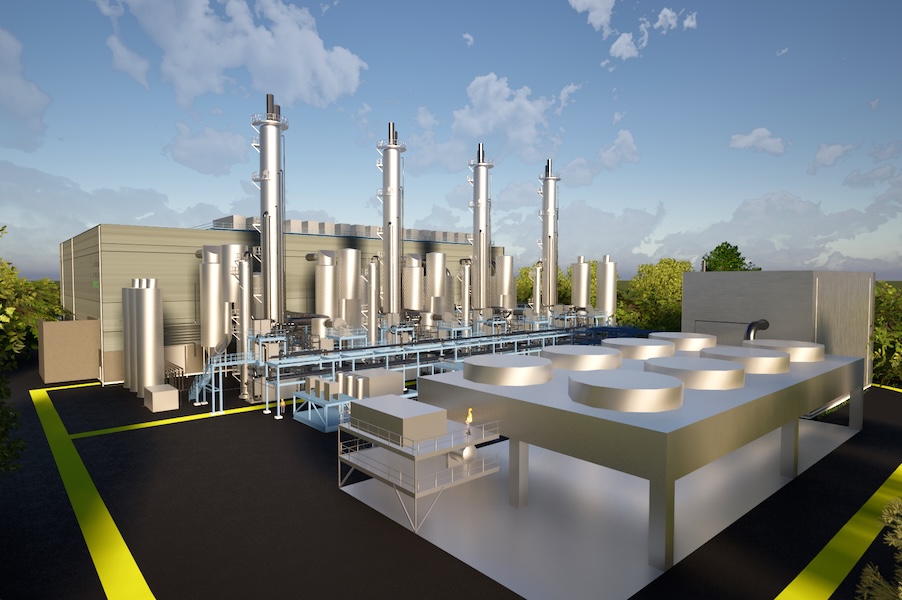
Varme Energy had been progressing with a “shovel-ready” initiative—a $400-million facility in Edmonton aimed at converting landfill waste into electricity, while capturing and storing greenhouse gases underground. This project was expected to generate carbon credits, supported by a Norwegian industrial investor, aligning with Prime Minister Mark Carney’s trade diversification strategy.
However, the project’s financial model depended on a federal commitment to raise the industrial carbon price to $170 per tonne by 2030. The new agreement between Carney and Alberta Premier Danielle Smith, reducing the price to $130 per tonne by 2040, has significantly impacted Varme’s carbon credits’ value, altering the project’s financial feasibility.
“Unfortunately, nobody has runway forever,” Varme CEO Sean Collins told CBC, highlighting the financial challenges now faced by the company.
Despite having an operating agreement with the City of Edmonton landfill and provincial permits to produce electricity, Varme’s projected operating cost of $118 per tonne remains unviable against the minimum carbon price of $60 in Alberta by 2030.
Time is Running Out
To complete its flagship Industrial Heartland project, Varme Energy needs a “positive signal on policy solutions” by September. This project leads a three-project portfolio in Alberta, potentially creating hundreds of jobs. Yet, without progress on the Edmonton project, future developments remain uncertain.
Collins pointed out that by the time Carney and Smith signed their Memorandum of Understanding (MOU) last November, warning signs were already present for carbon removal companies. “There were essentially no carbon capture final investment decisions the year before the MOU,” he noted.
Despite the Alberta government’s supportive policies and a $2.9-million grant to Varme, the federal government’s rejection of requests for better treatment under the CCS investment tax credit has left companies like Varme in a challenging position.
Collins expressed hope that the bio-CCS industry would gain federal attention for supportive policies, emphasizing the projects’ benefits in energy production and carbon removal.
$265 Million in Lost Revenue
Sean Collins revealed to iPolitics that changes in carbon pricing and methane regulations have potentially cost the company $265 million in projected revenue. Varme and other coalition members voiced their concerns in Ottawa, stating their projects are “economically underwater.”
Collins emphasized that previous investment decisions were based on long-standing policy frameworks, but recent changes have disrupted revenue expectations for carbon capture projects, leading to a broken economic model.
With more attractive federal incentives in the United States, bio-CCS companies are considering moving south, where they can earn better returns. “Investors respond to incentives, not aspirations,” Collins wrote, highlighting the shift in investment focus.
The companies are pushing for access to a clean fuels market, where carbon credit prices can exceed $400 per tonne, which could finance their projects. Mark Kalegha, an energy finance analyst, noted that Alberta’s Technology Innovation and Emissions Reduction (TIER) regulation caps CCS project revenue, making it challenging to sustain larger projects.
Original Story at www.theenergymix.com