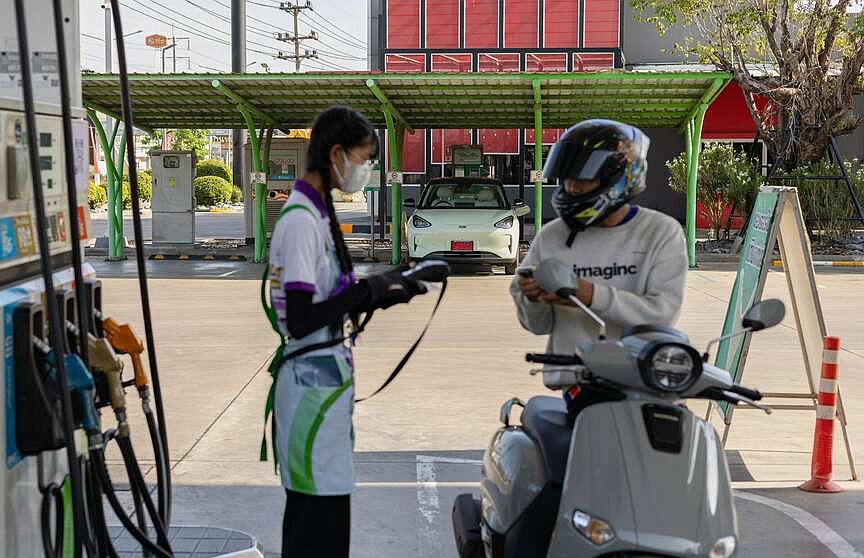
The global electric vehicle (EV) landscape is undergoing a transformation, notably influenced by geopolitical events. The ongoing conflict in Iran has unexpectedly become a catalyst, propelling Chinese automakers into the spotlight across developing markets. As fuel prices soar due to disruptions in oil supply, particularly through the Strait of Hormuz, there is a growing shift towards electric mobility, even as charging infrastructure struggles to keep up.
With the Strait of Hormuz blockade impacting about 20% of the world’s oil and gas shipping, regions such as Asia and Africa have felt the immediate effects. This disruption has hastened an existing trend towards electric vehicles. According to the think tank Ember’s analysis of Chinese customs data, Chinese EV exports reached a record $9.4 billion in April, targeting markets in Australia, Brazil, Southeast Asia, and East Africa.
In May, Chinese automakers exported approximately 435,000 passenger EVs and plug-in hybrids, a significant increase from the previous year, as reported by the Chinese Association of Automobile Manufacturers. The rise in fuel costs is incentivizing drivers to transition to EVs, while governments from Laos to Ethiopia are advocating for electrification to lower oil imports and reduce fuel subsidy expenses.
Infrastructure Challenges
Despite the surge in EV adoption, the expansion of charging networks remains a challenge. Governments and state-owned utilities in Africa are spearheading efforts to develop these networks, a model that could be beneficial for other emerging markets in Asia. Paul Gong, head of UBS bank’s China automotive industry research, highlights the “classic chicken-and-egg problem” where insufficient charging infrastructure hinders EV growth, suggesting that government support could be pivotal in accelerating adoption.
In Southeast Asia, Chinese EV imports have notably increased in countries like Thailand, Laos, and the Philippines. In a bold move, Laos has prohibited the import of fuel-powered vehicles until the end of 2026 to encourage the switch to electric alternatives.
Africa, too, is experiencing an EV boom, with imports from China increasing by 130% in 2025 compared to the previous year, based on data from the Chinese Commerce Ministry. Transportation is a major expense in many developing regions, making the switch to EVs financially appealing as fuel prices continue to rise.
Market Dynamics
One in four new cars sold globally last year was electric, according to the International Energy Agency (IEA). The IEA predicts further growth, estimating that electric car sales will reach 23 million by 2026, constituting nearly 30% of all cars sold worldwide. Chinese automakers, such as Geely Auto, are capitalizing on this trend, with plans to accelerate overseas expansion into Southeast Asia and beyond.
Vietnam’s VinFast has also seen a boost in sales, thanks to rising demand from Southeast Asia, contributing to a 42% year-on-year revenue increase in the first quarter. However, the charging infrastructure remains a bottleneck, as seen in Thailand, where there are 4,600 public charging locations for over 424,000 EVs, according to the Electric Vehicle Association of Thailand.
The Future of Charging Networks
In places like Malaysia and Indonesia, efforts are underway to expand charging networks with government incentives and initiatives by state-owned utilities. Ethiopia’s government is actively constructing new charging stations to meet growing demand, recognizing the critical role of infrastructure in the EV transition.
Ndia Magadagela, CEO of Everlectric, emphasized the importance of state-owned utilities in building EV charging networks. “Utilities are recognizing that electric mobility will become a meaningful source of future electricity demand,” she stated. In Kenya, the state-controlled utility plans to establish 44 charging stations within a year.
Chris Liu from the technology research group Omdia noted that while large Chinese automakers like BYD are expanding ultra-fast charging networks in Europe, they might have limited incentives to build infrastructure elsewhere. Therefore, the involvement of state-owned utilities is crucial as they align with national grid planning and electricity distribution strategies.
As Paul Gong from UBS suggests, expanding charging infrastructure is essential to support the growing EV fleet globally.
Original Story at www.arkansasonline.com