In the heart of Loudoun County, Virginia, a unique landscape is emerging—one dominated not by nature, but by technology. Known as Data Center Alley, this region hosts over 200 data centers, serving as the backbone for the ever-expanding digital world. Sarina Virmani, a high school student from this area, has taken a keen interest in the environmental implications of this burgeoning industry, publishing her findings in the American Journal of Student Research.
Virmani is advocating for more transparency and regulatory measures in the data center sector. “A lot of people think that artificial intelligence is something that’s invisible, but it’s not. It lives in these massive buildings,” she explained.
The rise of AI technologies like OpenAI’s ChatGPT, Anthropic’s Claude, and Google’s Gemini is fueling an increased demand for data centers. These facilities, however, carry significant environmental ramifications. They contribute to prolonging the life of outdated fossil fuel infrastructures and necessitate the creation of new ones, while also posing potential threats to local water resources.
Why AI Technologies Demand Extensive Energy
Artificial intelligence, a concept dating back to the 1950s, has evolved alongside computer technology, embedding itself into everyday life. A pivotal moment came in November 2022 with the launch of ChatGPT by OpenAI, a development that leveraged a vast, and at times, uncopyrighted dataset.
The immense computational power required to train models like ChatGPT-3 is staggering. AI scholar Sajjad Moazen, in a University of Washington Q&A, noted that such an endeavor could consume up to 10 gigawatt-hours of electricity, equating to the annual power usage of over 1,000 U.S. households.
The Environmental Toll of AI-Driven Data Centers
As these AI technologies require substantial power, they inadvertently drive a surge in fossil fuel infrastructure projects. Quentin Good, a coauthor from the Frontier Group, referred to these as “zombie power plants,” facilities that should be decommissioned but are kept active due to the energy demands of data centers.
Good’s report highlights that at least 15 power plants have deferred their planned retirements, resulting in emissions exceeding those of Massachusetts. A southern Virginia coal plant exemplifies this trend, where its operations were extended indefinitely, emitting more pollution in 2023 than 65,000 gasoline-powered vehicles would in a year.
In addition to extending the lifespan of old plants, new fossil fuel infrastructures are being developed to support AI needs. According to a report by Wired, new gas facilities linked to 11 data center campuses in the U.S. could surpass the total emissions of Morocco in 2024. Diesel generators, often used as backup during peak demand, further compound the pollution problem, with some states considering regulatory exceptions for data centers.
Water Consumption Concerns in Data Centers
The water consumption associated with data centers is another environmental concern, although it varies by location. Good’s research suggests that while water use isn’t yet a crisis in Virginia, it could become problematic during droughts.
However, in arid regions such as Colorado, data centers pose a more pronounced risk. These facilities require significant water for cooling, often during the driest months when water resources are already strained. The environmental impact of discharging used, heated water into local ecosystems remains an underexplored area, with the potential to affect aquatic life adversely.
Reducing AI’s Environmental Impact
Addressing the environmental impact of AI systems involves multiple approaches, from regulatory measures to community activism. While the Trump administration has supported expedited permitting for data centers, there is bipartisan interest in Congress to regulate the AI industry more stringently.

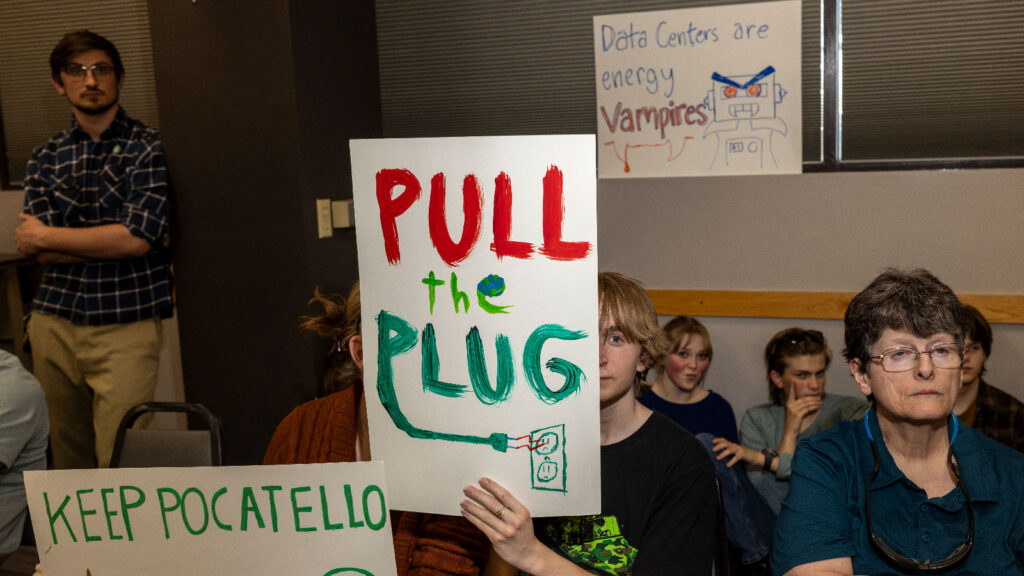
Locally, citizens can influence decisions by participating in public forums and voicing their concerns. Successful community efforts have halted data center projects, enacted moratoriums, and curbed electricity rate increases.
At an individual level, minimizing the use of energy-intensive AI tools can reduce demand and, consequently, the environmental footprint of these technologies.
Original Story at yaleclimateconnections.org