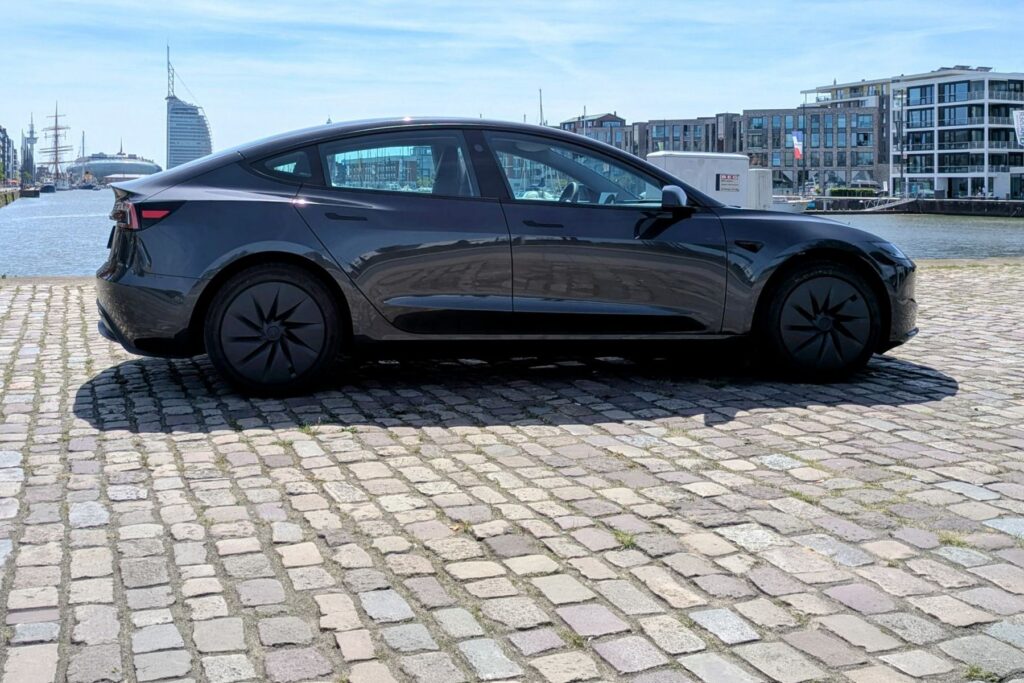
In a world where electric cars are rapidly gaining popularity, the Tesla Model 3 Rear-Wheel Drive stands out due to its remarkable efficiency and performance. Covering a distance of 362 kilometers, the vehicle’s trip computer recorded an impressive energy usage of just 13.4 kWh/100 km. This journey, which included urban traffic in Hamburg and motorway driving via Bremerhaven to Bremen and back, highlights the Model 3’s efficient energy management.
Ending the journey at a DC charging station, the Model 3’s energy consumption, factoring in charging losses, was confirmed at 15 kWh/100 km. This exceptional figure underscores the car’s suitability for everyday use, particularly considering its competitive starting price of €36,990, in addition to delivery charges. Tesla’s zero-interest loan offer further enhances its appeal to private buyers.
The panoramic roof stays
Unlike its counterpart, the Model Y Rear-Wheel Drive, the Model 3 retains several features that enhance its allure. While both models feature fabric seats, the Model 3 continues to offer a panoramic glass roof, which is no longer available in the Model Y. Practical elements, such as the unchanged frunk and easy tire pressure checks, add to its practicality.
Buyers might miss features like the LED dashboard light strip and manual seat adjustments, which are handled via the touchscreen. Rear passengers will also have to forgo direct air conditioning controls.
Cornering fun up to the limits of grip
Driving enthusiasts will appreciate the Model 3’s dynamic handling, attributed to its low center of gravity. Its steering is precise and agile, making it a joy to drive. However, the Bridgestone low-rolling-resistance tires may not be as smooth as some competitors, like the Mercedes CLA.
The Model 3 Highland’s updated chassis, introduced in late 2023, offers improvements over previous versions. Yet, the suspension may feel too soft at high speeds and harsh in urban settings, an area where some rivals excel.
Strong powertrain, outstanding efficiency
The Model 3 Rear-Wheel Drive delivers a swift driving experience, achieving 0 to 100 km/h in 6.2 seconds, with a top speed of 201 km/h. Its energy consumption remains efficient across various driving conditions, with figures like 15.8 kWh/100 km at 130 km/h and 12.1 kWh/100 km in cities.
Ideal weather conditions during testing—dry roads and mild temperatures—contributed to these impressive results, showcasing the car’s real-world efficiency.
Peak charging power of 180 kW, reasonable charging time
With a real-world range of approximately 450 kilometers, the Model 3 Rear-Wheel Drive is practical for long trips. Charging from 12 to 80 percent took just 23 minutes, with the peak charging power reaching 180 kW. The vehicle uses LFP battery cells, known for their durability and safety, although their flat voltage curve can complicate state-of-charge readings.
The FSD (Supervised) situation
Tesla’s Full Self-Driving (FSD) Supervised is now available as a subscription, costing €99 monthly. The potential for full regulatory approval in the EU could enhance its appeal, though this remains uncertain and may take until 2027.
Tesla’s cautious approach, following a class-action lawsuit, emphasizes conditional language regarding FSD approval on their website.
The Model 3 is pure Tesla
The Tesla Model 3, despite controversies surrounding Elon Musk, remains a leading electric vehicle in Europe. While the Model Y offers more versatility, the Model 3 provides an efficient and sporty driving experience at an attractive price point.
Although competitors like the Mercedes CLA boast higher perceived quality and charging performance, they come at a steeper price, starting around €10,000 more than the Model 3 Rear-Wheel Drive.
Original Story at www.electrive.com