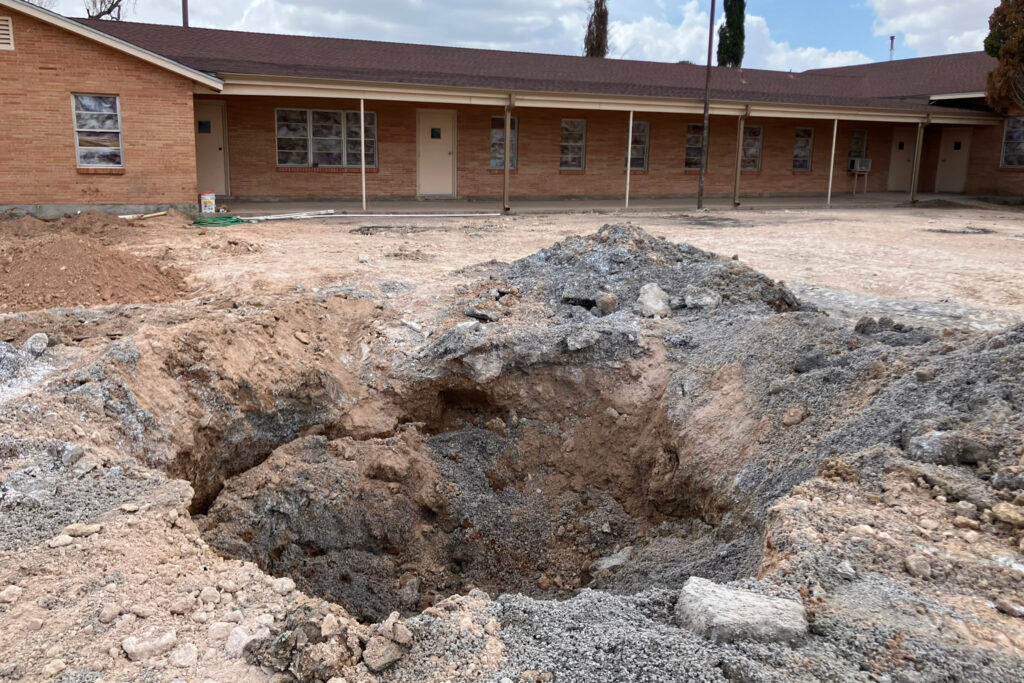
GRANDFALLS, Texas—In April, an old oil well under the First Baptist Church of Grandfalls’ parking lot unexpectedly began leaking. Over eight days, more than 1.5 million gallons of toxic wastewater surfaced, as noted in state records. The Railroad Commission, the state regulator, used $1.49 million to plug the leak and $1.16 million to dispose of the wastewater underground. By June, the flow was halted and the well sealed.
Fortunately, the wastewater did not reach the church itself, averting immediate danger. However, concerns remain among residents and church officials about why old wells keep failing and what might happen if a future leak occurs near homes or schools.
The Permian Basin’s oil and gas production generates large amounts of wastewater, known as produced water. This saline, toxic liquid is injected into underground wells, which increases subterranean pressure. Occasionally, this pressure escapes via old wells, causing surface breaches.
The Railroad Commission requested a halt to injection activities at nearby wells while addressing the leak. Agency spokesperson Bryce Dubee confirmed that investigations into the old well are ongoing.
David Tucker, who became interim pastor at First Baptist last summer, played a key role in the response due to his oil industry experience. He believes the incident highlights the need for change.
“It brought attention to ongoing issues,” Tucker stated, referencing similar oilfield leaks in the Permian Basin.
Tucker commended the Railroad Commission’s quick action but emphasized that they need more funding to manage such incidents effectively.
“We’re Doing Something Subsurface”
Injection wells aim to store wastewater permanently, yet recently, surface geysers and leaks have occurred. Tucker, familiar with these issues, has seen old wells on his property leak, requiring assistance from the Railroad Commission. Nearby areas like Crane and Ward Counties have experienced similar surface leaks, including a geyser in 2022.
“We’ve turned a lot of the shale play into just one big crack. Everything’s communicating,” Tucker noted.
This recent leak, discovered on April 21, was located in the town center. First Baptist Church, built in 1955, sits on Avenue D near a gas station and school. It marks the largest incident of oilfield wastewater leakage in a populated Texas area.
Grandfalls has about 375 residents, over 20% of whom live below the poverty line, with nearly half the population being Hispanic.
Records obtained by Inside Climate News show the wastewater contained high levels of chlorides and sulfates, making it four times saltier than seawater.
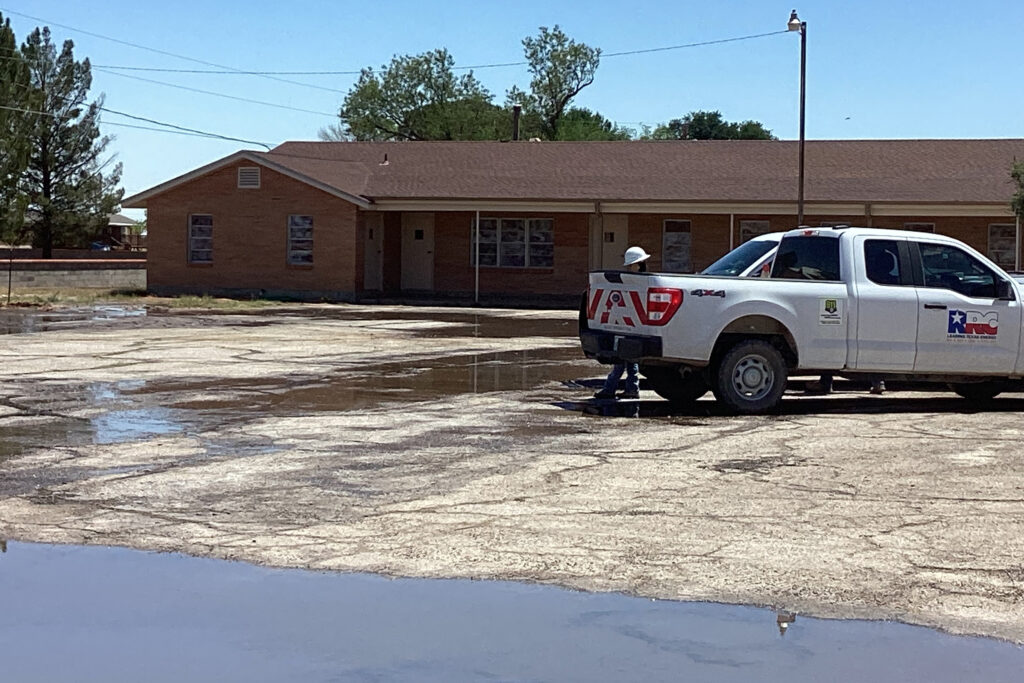
The Railroad Commission’s daily logs detail how vacuum trucks collected wastewater. Initially, 95,760 gallons were removed, escalating to 277,200 gallons the following day. By April 29, the wellbore was identified and sealed with concrete.
The well’s exact origin isn’t confirmed, though historical records indicate numerous wells from the 1930s in Grandfalls.
“We continue to investigate potential sources,” the agency spokesperson stated.
Hawk Dunlap, a well control expert, noted the irony of transporting wastewater to other injection wells. “You’re taking it out of one and putting it in another,” he remarked.
“They Should at Least Know That These Wells Exist”
State Rep. Brooks Landgraf visited the church on April 24, assuring the situation was under control. He has advocated for using treated wastewater outside oilfields to reduce underground injections.
Landgraf said on Facebook, “A well plugged in the 1930s causing a leak in town is concerning.”
Landgraf has discussed these issues with the Texas Commission on Environmental Quality (TCEQ), which is reviewing the process for land application of treated water.
Commission Shift, a nonprofit focused on oil and gas oversight, urges caution with permitting non-oilfield uses for produced water.
Surveyor Jackie Portsmouth stressed the need for awareness of old wells beneath structures. Railroad Commission records on pre-modern wells can be incomplete, raising concerns about potential damage.
In Oklahoma, a similar leak under a home exemplifies the risks old wells pose.
Tucker is relieved no injuries occurred in the Grandfalls incident and hopes it raises awareness about the region’s vulnerability.
The salty water killed trees on church property, and a sewer line was damaged during containment efforts. Tucker hopes the Railroad Commission will assist with repairs.
Original Story at insideclimatenews.org