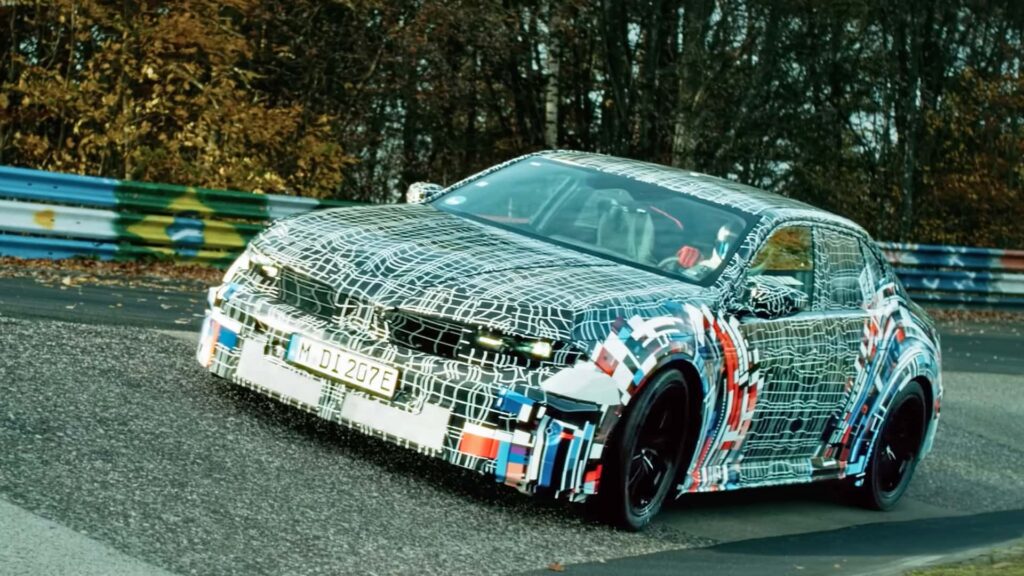
BMW’s Approach to Electric M3 Sound Design Focuses on Driver Experience
As BMW ventures into the electric vehicle (EV) market with its upcoming electric M3, the company is tackling a unique challenge: the absence of traditional engine noise. Unlike combustion engines, electric motors are relatively quiet, which can make it difficult for drivers to gauge speed, particularly on a track. BMW aims to address this with a novel sound design approach.
BMW has taken an unconventional route, choosing not to mimic the sounds of its iconic V8, V10, or straight-six engines. Instead, the company has analyzed these sounds to understand what makes them emotionally engaging. The result is a distinctive, high-pitched sound that is uniquely tailored for the M3 EV.
In a previous teaser video, BMW showcased its engineers recording the sounds of three classic M cars. Initially, it seemed these recordings would be repurposed for the M3 EV. However, BMW clarified that the recordings were part of a study to craft a novel auditory experience for the electric M3, rather than replicating traditional engine sounds.
The goal, according to BMW, is not to deceive drivers into thinking they are in a combustion engine car but to create a sound that is both compelling and functional. The sound design aims to provide drivers with auditory cues that help them judge speed and acceleration—critical for performance driving.
Unlike other manufacturers, such as Hyundai and Mercedes-AMG, who have incorporated simulated engine sounds and physical effects like vibrating seats, BMW is focusing on creating a unique auditory experience. The sound for the M3 EV is designed to avoid monotonous droning and maintain an exciting auditory profile across different speeds.
One intriguing aspect of BMW’s sound design for the M3 EV is the potential inclusion of simulated gear shifts. While electric vehicles typically employ a single-speed transmission, BMW’s engineers have hinted at the use of simulated gears to enhance the driving experience. This approach could provide drivers with an auditory sense of progression and speed as they “shift” through gears.
BMW is actively testing the electric M3 on the Nürburgring, a track where sound cues are crucial for understanding vehicle dynamics without constant visual checks. The company is committed to ensuring that the M3 EV’s auditory experience is both engaging and functional, aiming to make the electric M3 as thrilling to drive as its combustion counterparts.
Overall, BMW’s innovative approach to sound design for the electric M3 highlights the company’s dedication to providing an engaging driving experience, even as it transitions to electric powertrains.
Original Story at insideevs.com