Brazil Pledges Major Investment to Boost Amazon Sustainability Initiatives
The Brazilian government has announced a significant financial commitment aimed at enhancing sustainable development in the Amazon region. A total of $617.5 million will be allocated to the Eco Invest program, a federal initiative designed to promote ecological investments, as part of efforts unveiled at last year’s COP30 climate summit.
This funding is set to benefit projects that emphasize sustainable tourism and infrastructure improvements within the Amazon, as well as initiatives that expand the “bioeconomy,” which relies on preserving natural resources. The Eco Invest model employs a blended finance approach, where the National Treasury lends money to banks at a 1% annual rate. These banks are then required to generate at least four times that amount in private investments, with foreign entities contributing at least 60% of the total.
To date, the program has amassed 140 billion reais ($28 billion) in combined public and private resources. The Ministry of Environment reported that the Treasury’s recent allocation of $617.5 million was complemented by an additional $2 billion from eight banks during the latest auction of the Eco Invest initiative.
The national secretary for the bioeconomy, Carina Pimenta, highlighted the potential for this credit to support cooperatives involved in producing Amazonian products like acai and Brazil nuts, as well as tourism infrastructure in protected areas.
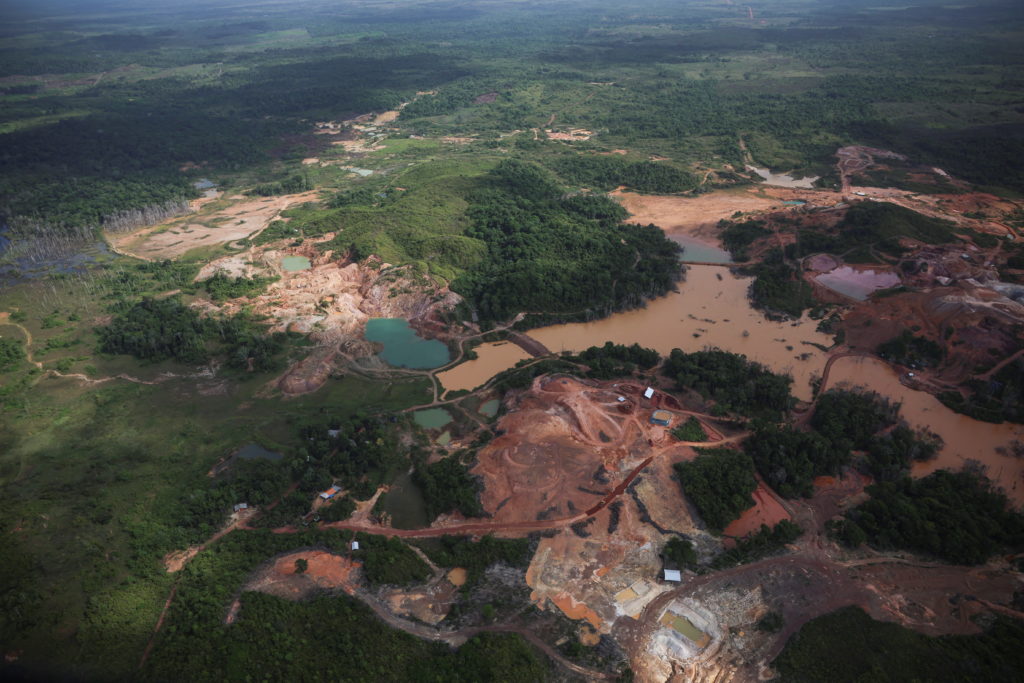
READ MORE: Brazil gold mining rush brings deforestation and mercury risks to the Amazon
Brazil’s Amazon, the largest rainforest globally, is essential for climate regulation. The country controls over 60% of this forest, much of which extends across economically challenged regions. Investment projects here are notoriously risky and costly, prompting President Luiz Inácio Lula da Silva’s administration to launch the Eco Invest program in 2024, offering assurances to minimize investor risk.
Environment Minister João Paulo Capobianco stated that Eco Invest is integral to Brazil’s strategy to achieve net-zero carbon emissions by 2050, creating financial incentives for sustainable economic activities. He noted that Brazil has successfully reduced deforestation without sacrificing agricultural productivity since 2023.
The investment announcement follows a challenging week for Brazil’s environmental policy. The lower house, which largely supports agribusiness interests, approved legislation that compromises efforts to curb environmental violations, including a proposal to restrict enforcement against illegal deforestation based on satellite data alone.
This policy, a cornerstone of environmental enforcement, has contributed to a 50% reduction in deforestation in the Amazon since 2023, according to IBAMA, Brazil’s natural resources agency. However, these enactments still require Senate approval and President Lula’s endorsement, causing concern among environmental advocates.
Climate Observatory, a coalition of environmental NGOs, expressed apprehension, stating that the new measures “reduce the Brazilian state’s ability to prevent, control and respond to the economic, social and climate impacts of climate change.” Despite these legislative challenges, Capobianco reassured that Brazil remains steadfast in its climate commitments, emphasizing the country’s ongoing efforts to control and reduce deforestation.
The Associated Press’ climate and environmental coverage receives financial support from multiple private foundations. AP is solely responsible for all content. Find AP’s standards for working with philanthropies, a list of supporters and funded coverage areas at AP.org.
Original Story at www.pbs.org