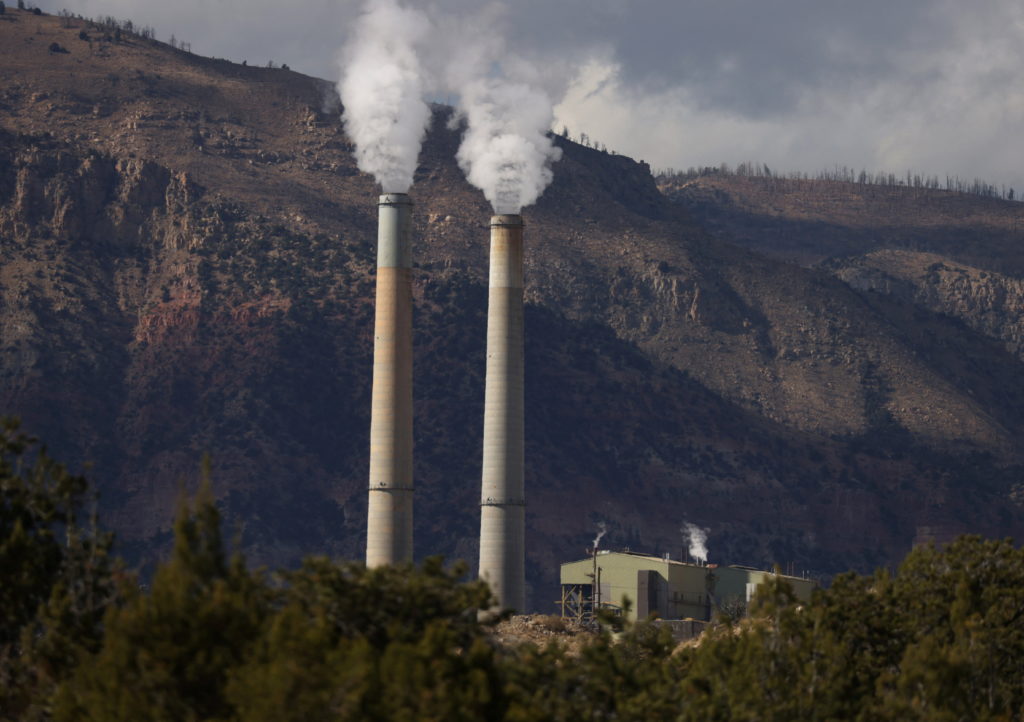
In a notable shift from previous policies, the Trump administration is actively working to extend the life of coal plants across the United States, marking a significant pivot from the renewable energy focus of the Biden era. This move is reshaping the energy landscape, impacting electricity costs, and potentially increasing pollution levels.
Under President Trump’s direction, efforts to retire coal plants have been largely halted, a decision that contrasts sharply with previous plans to phase them out. According to Enverus, an energy analysis company, this delay means no coal plants are expected to close until Trump’s term ends. This policy shift has widespread implications for the environment and energy costs, with coal plants contributing to emissions equivalent to those of 27 million cars.
Using emergency powers, Trump officials have intervened to prevent the closure of five coal plants, resulting in increased costs for ratepayers. For instance, keeping a Michigan plant operational for an additional seven months reportedly cost $135 million. This approach includes not only financial expenditures for plant repairs but also a relaxation of pollution limits, thereby extending coal plants’ operational life without costly upgrades.
WATCH: EPA rollbacks on pollution limits could drive up health care costs, advocates warn
Interior Secretary Doug Burgum emphasized the administration’s commitment to keeping coal plants operational, stating the aim is “100% stay open, no more retirements, no more shutting down.” This approach surpasses Trump’s initial term efforts, which slightly eased environmental regulations to support coal.
“The Trump administration this time around is much more organized and strategic in trying to bring about a revival of coal,” observed Robert Lifset, a University of Oklahoma professor specializing in energy history. “You’re seeing almost like a whole-of-government approach.”
Simultaneously, electricity demand is climbing due to the expansion of data centers. In Indiana, a solar field development intended to replace the Schahfer Generating Station was halted as the Trump administration intervened to maintain its coal power, highlighting its necessity during extreme weather conditions.
WATCH: Trump signs executive order to bolster U.S. coal industry
Barbara Deardorff, an activist from the area, expressed her disappointment: “I was really emotional about it because finally they weren’t going to be a threat to our air and to our water anymore. Since then, everything’s gone upside down.”
This rare moment in time
Historically, U.S. electricity consumption grew in tandem with economic expansion post-World War II, but this ceased after the 2008 recession, as energy efficiency improved. Utilities began to retire outdated plants, opting instead for natural gas and renewables, significantly reducing coal’s share of power generation.
The Schahfer plant, a longstanding fixture in Indiana since the 1970s, was slated for closure in favor of renewable energy as part of Northern Indiana Public Service Company’s plan to completely eliminate coal in its energy mix. This transition saw the rise of solar installations on local farmland, a change welcomed by some for its environmental benefits.
A ‘180 degree’ turnaround
However, in December, the Trump administration declared an emergency, reversing plans to shut down Schahfer, asserting the critical need for its coal-generated power. Energy Secretary Chris Wright remarked on the situation, “Today, the policies that get in the way of a reasonable energy development and mess up the math are things focused around climate change.”
Meanwhile, Amazon has proposed building a data center complex nearby, powered by gas generators, potentially doubling the power output of the coal facility it intends to replace. NIPSCO has stated that a partnership with Amazon would benefit customers.
“It’s been a complete 180,” said Deardorff, noting the impact on her family’s farming operations near the plant.
Should plant retirements be entirely halted as suggested by Burgum, around 34 gigawatts of coal power may remain active through 2029, which could reverse the trend of declining pollution and related health benefits. Coal plants slated for closure under Trump produced over 130 million tons of carbon dioxide last year, along with other harmful emissions.
“If we retire all the coal plants we could avoid those 2,000 deaths per year from coal. And if we keep the plants online and they keep burning coal, then we’re going to get those emissions and see those same health impacts,” noted Lucas Henneman, an environmental engineer at George Mason University who conducted a government study on coal pollution-related mortality.
Beyond immediate measures to keep plants operational, the administration has invested $175 million in upgrades for seven additional plants, with potential plans for $350 million in further spending. Enverus analyst Juan Arteaga predicts that these efforts, combined with coal’s reliability, will delay plant retirements until at least 2030.
Michelle Bloodworth from America’s Power, an industry group, estimates that modernizing U.S. coal plants to reduce emissions and costs could require $1 billion annually, justifying this expenditure in view of substantial investments in renewable energy.
Broad authority over the grid
The administration’s broad authority allows it to declare emergencies and implement sweeping changes to the electricity system, as outlined by the Congressional Research Service. Nevertheless, this has sparked legal challenges from states like Washington, Illinois, Minnesota, Michigan, and Colorado.
Colorado Attorney General Phil Weiser criticized the administration’s orders for increasing consumer costs and hindering sustainable energy progress. Bob Keefe from E2, a renewable energy advocacy group, echoed these concerns, stating, “We are going from a trajectory where we were going to lead the world on clean energy to one where we are becoming an isolated petrostate.”
Despite skepticism about coal’s long-term viability, given the low cost of solar energy, industry leaders remain optimistic. “It’s our time,” declared Jimmy Brock, CEO of Core Natural Resources, a major coal mining company.
Associated Press journalists Mead Gruver in Cheyenne, Wyoming, and M.K. Wildeman in Hartford, Connecticut, contributed.
Original Story at www.pbs.org