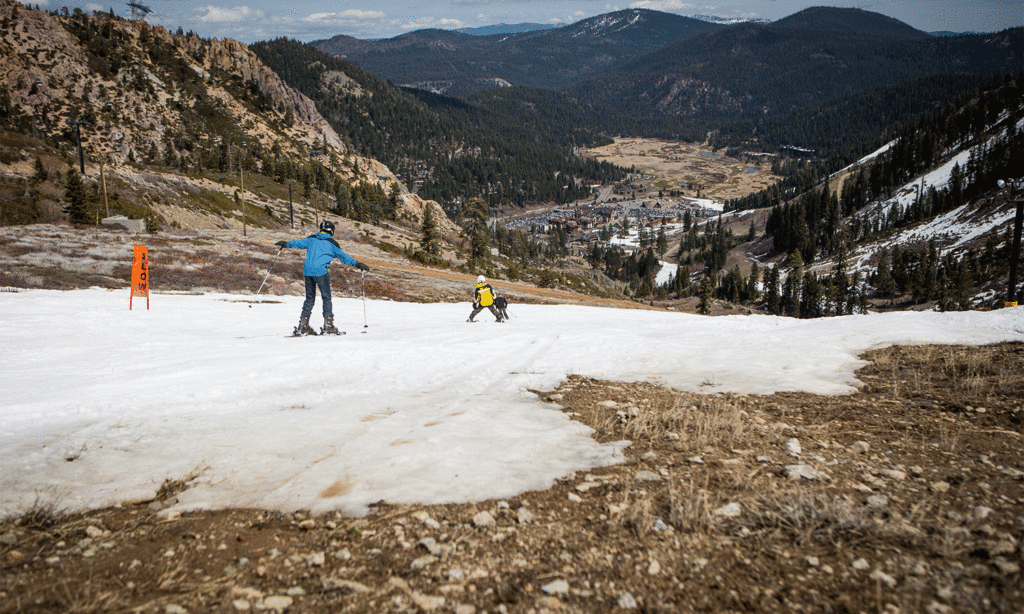
The western United States is witnessing the stark realities of climate change with an alarming decline in snowpack levels due to record-breaking heatwaves and unusually warm winters. This phenomenon, compounded by increased global temperatures from fossil fuel combustion, is reshaping the winter water cycle and challenging water supply systems that rely heavily on snowmelt.
The ongoing snow drought in spring 2026, marked by historically low snowpack levels and extreme heat, poses significant risks of drought, water shortages, and wildfires throughout the region. In California, the Sierra Nevada snowpack, which provides about one-third of the state’s water supply, is critically diminished following a warm winter and a severe March heatwave. This trend aligns with longstanding climate science predictions as temperatures continue to rise globally.
Understanding Snow Drought
Early winter storms delivered over 90 inches of snow to some parts of the Sierra, but the warmth that followed led to a significant decrease in snowpack. A ‘warm snow drought’ occurs when precipitation falls more as rain than snow, despite average precipitation levels. The Western US has become a global hotspot for snow droughts, with their frequency and intensity increasing over the past two decades.
By early January, the snow water equivalent (SWE) was below the 20th percentile, indicating the lowest snowpack levels in 25 years. By late March 2026, the situation had not improved, with Colorado’s SWE at only 38% of average, the lowest in over 40 years.
In California, a robust Sierra Nevada snowpack is vital for managing water supplies through dry summers. Historical data indicates the largest snow-producing months are from December to March, with April 1 marking the traditional peak of snow accumulation.
Winter Heat’s Impact on Snow
A March heatwave across Western North America was deemed “virtually impossible without human-induced climate change” by a World Weather Attribution study. This heatwave followed an abnormally warm winter, drastically reducing snowfall and impacting the winter tourism industry in states like Arizona, Colorado, and Oregon. As ski resorts closed early, the broader economic implications are expected to be significant.
Climate Change as a Driving Force
Dr. Pablo Ortiz highlighted the importance of snow in California, describing it as an “indicator of climate change” and likening the state’s snow surveys to “a health check-up for our water system.” Since 1942, the lowest snowpack was recorded in 2015, measuring just 5% of the historical average, partly attributed to human-induced warming.
In 2026, California started the year with snowpack at 89% of average, which dropped to 59% following a dry January. Northern Sierra snowpack was measured at 46% of normal in February. The subsequent early melting of snowpack, exacerbated by a March heatwave, further reduced water reserves.
This situation poses challenges as California’s reservoirs, filled by winter precipitation, are now at 122% of average, leaving limited space for additional meltwater.
Wildfire Risks from Smaller Snowpack
High temperatures dry out vegetation while diminished snowpack deprives soil of moisture, increasing wildfire risks. Recent research suggests that declining snowpack could lead to more severe fires, particularly in areas where snowpack traditionally mitigated fire risk.
From Snow to Hydrologic Droughts
The Western US is experiencing its driest period in over a millennium, with snow droughts potentially leading to hydrologic droughts affecting water supply and agriculture. The Colorado River Basin, with record-low snow cover, serves 40 million people, raising concerns about water supply and hydroelectric power generation.
Building Drought Resilience
California briefly achieved “100% drought-free” status after a wet start to winter, but the National Weather Service forecasts expanding drought conditions. To address these challenges, adaptive strategies must evolve, such as improving forecasting and managing water resources effectively.
Ensuring equitable water rights and considering land use changes are critical for resilience. California’s snow survey results will inform strategies for managing water amid climate change.
Communities should engage with elected officials to support climate services and protect democratic processes, as outlined by Jennifer Jones and the Union of Concerned Scientists.
Original Story at blog.ucs.org