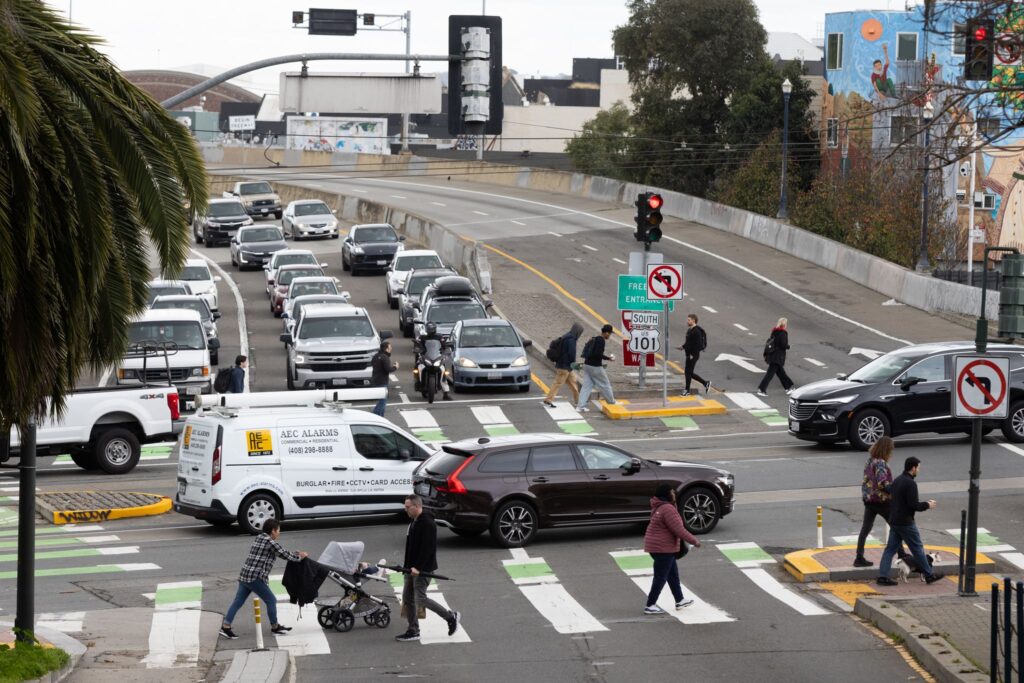
San Francisco Updates High Injury Network Map to Improve Road Safety
San Francisco has unveiled an updated “high injury network” map, highlighting the streets responsible for the majority of severe and fatal traffic incidents. This latest update, incorporating data from 2020 to 2024, reflects additions and removals of certain street segments, aiming to focus enforcement and safety improvements in key areas.
Based on recent collision and hospital data, the map identifies the 13% of streets where 74% of serious traffic injuries occur. While many segments remain unchanged, new additions include parts of Alemany Boulevard and Lincoln, while some short segments have been removed or adjusted.
The high injury network serves as a cornerstone for San Francisco’s street safety strategy. It guides police and transit authorities in prioritizing enforcement and implementing safety measures. Enhanced “high-visibility enforcement” is now a focus on these streets, with traffic enforcement integrated into routine patrols across the city’s police districts.
Recent updates come amid growing concerns over pedestrian safety. Although pedestrian fatalities decreased last year, six pedestrians have already lost their lives on city streets this year. Four of these incidents occurred on streets included in both the previous and current versions of the high injury network. One tragic death happened on a section of Mission Street now removed from the network, while another occurred near a newly added section on Jackson Street in Chinatown.
Mayor Daniel Lurie emphasized the importance of the updated map, stating, “Too many San Franciscans are losing their lives on our roadways, and often in predictable and preventable crashes. The updated High Injury Network gives us a clear understanding of where changes need to be made—and under our Street Safety executive directive, we’re acting on it with targeted safety improvements and stronger enforcement.”
Parisa Safarzadeh, a spokesperson for the San Francisco Municipal Transportation Agency (SFMTA), highlighted that traffic patterns have shifted post-pandemic, noting “more reckless driving behavior, larger and heavier vehicles, and the rapid growth” of e-scooters and bikeshare programs. These factors have influenced the current street safety landscape, prompting measures such as speed cameras and daylighting, which involves painting curbs near crosswalks red to improve pedestrian visibility.
Despite ongoing challenges, there have been successes. California Street in the Richmond District was removed from the high injury network after safety measures reduced injury collisions by 64% in the first year. In SoMa, improvements like a separated bikeway and pedestrian pathway on Townsend Street led to a 50% reduction in collisions, resulting in its removal from the network.
Safarzadeh indicated that even on streets remaining in the network, injury crashes have decreased following safety initiatives. Transit and health officials continue to analyze collision data for a comprehensive report expected later this year.
“In places where severe crashes repeat or concentrate, multiple factors are often at play, which means no single tool or agency can solve the problem alone,” Safarzadeh remarked. “Preventing the most serious crashes requires multiple layers of safety working together.”
Original Story at www.sfchronicle.com