As the geopolitical tensions between the U.S. and Iran escalate, the reliance on fossil fuels has become increasingly scrutinized. Since President Donald Trump assumed office, there has been a marked pivot away from renewable energy. His administration has emphasized fossil fuels, particularly oil, as part of a broader strategy for American energy dominance.
However, the current conflict in Iran is highlighting the vulnerabilities inherent in this approach.
With crude oil prices exceeding $100 per barrel and gasoline nearing $4 per gallon, the U.S. faces a dilemma due to its limited alternative energy sources. The blockage of the Strait of Hormuz by Iran has exacerbated these challenges, leaving the global oil market in a precarious position.

Energy Secretary Chris Wright, left, speaks as President Donald Trump listens during an event about the Ratepayer Protection Pledge, in the Indian Treaty Room of the Eisenhower Executive Office Building on the White House complex, March 4, in Washington.
“The biggest short-term losers of the war will be U.S. consumers of oil and gas, as energy prices rise,” said Peter Gleick, a climate scientist and co-founder of the Pacific Institute. Tyson Slocum from Public Citizen remarked on the risks of relying on fossil fuels, noting the administration’s lack of solutions.
Despite campaign promises to cut energy bills, Trump has overseen increases as data center demands grow, and now, gas prices are soaring with no clear resolution in sight, Slocum added.

‘Small price to pay’
President Trump has characterized the situation as a “very small price to pay” for countering years of Iranian aggression. He anticipates a sharp decline in oil prices post-conflict and remains committed to a policy of robust oil production.
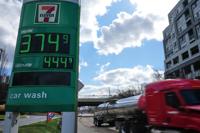
The impact on consumers is already evident, with AAA reporting a national average gasoline price rise to approximately $3.84 per gallon, contradicting previous claims of sub-$3 prices. This surge in energy costs could have political repercussions in a crucial election year, as affordability remains a primary voter concern.
Trump is all in on fossil fuels
Despite a global push for cleaner energy, Trump’s administration has heavily favored fossil fuels while dismantling various clean energy initiatives. The president has criticized wind energy for aesthetic and environmental reasons, despite statistics showing minimal impact compared to other threats.
Under Trump, fossil fuels have received incentives like tax breaks and expedited drilling permits, while clean energy projects have been stalled or defunded. This marks a stark departure from predecessor Joe Biden’s policies, which emphasized reducing emissions and investing in clean energy technologies.
Jason Bordoff from Columbia University noted the administration’s stance against climate change regulations, questioning the necessity of importing clean energy solutions when the U.S. is a leading oil and gas producer.

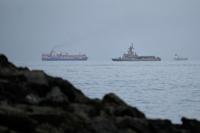
A UAE navy ship sails next to a cargo ship in the Strait of Hormuz as seen from Khor Fakkan, United Arab Emirates, March 11.
‘Largest oil supply disruption in history’
In response to the escalating crisis, Trump has authorized releasing oil from the U.S. Strategic Petroleum Reserve and is considering lifting sanctions on Russian oil. The U.S. is also exploring the possibility of using naval forces to ensure safe passage through the Strait of Hormuz, collaborating with other nations to maintain the flow of oil.
Despite these measures, oil prices remain elevated. Gregory Brew of the Eurasia Group described the situation as “the largest oil supply disruption in history,” predicting sustained high prices as geopolitical tensions persist.


Energy Secretary Chris Wright walks to the White House following an interview with CNN, March 12, in Washington.
‘No guarantees in wars’
Energy Secretary Chris Wright acknowledged that the current energy price hikes might persist in the short term, emphasizing the need for a strategic shift to address long-term challenges. He stated, “There’s no guarantees in wars at all,” highlighting the complexities of the situation.
U.N. Secretary-General António Guterres has suggested that the quickest route to energy security is transitioning from fossil fuels to renewable sources, noting, “There are no price spikes for sunlight and no embargoes on the wind.”


Photos from the Mideast in the 3rd week of the Iran war

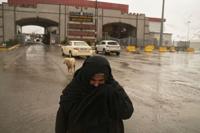
Iranian Kurdish Mariam crosses the Haji Omeran border crossing on foot between Iran and the autonomous Kurdistan Region of Iraq (KRI), Iraq, Sunday, March 15, 2026, as the border remains open. (AP Photo/Leo Correa)


A man cleans debris from his apartment damaged when a nearby police station was hit Friday in a U.S.-Israeli strike in Tehran, Iran, Sunday, March 15, 2026. (AP Photo/Vahid Salemi)


The shattered structure of a police station is seen after it was hit Friday in a U.S.-Israeli strike in Tehran, Iran, Sunday, March 15, 2026. (AP Photo/Vahid Salemi)


A FlyDubai plane is parked at Dubai International Airport as smoke rises in the background after a drone struck a fuel tank early morning, forcing the temporary suspension of flights, in Dubai, United Arab Emirates, Monday, March 16, 2026. (AP Photo)
 www.channel3000.com