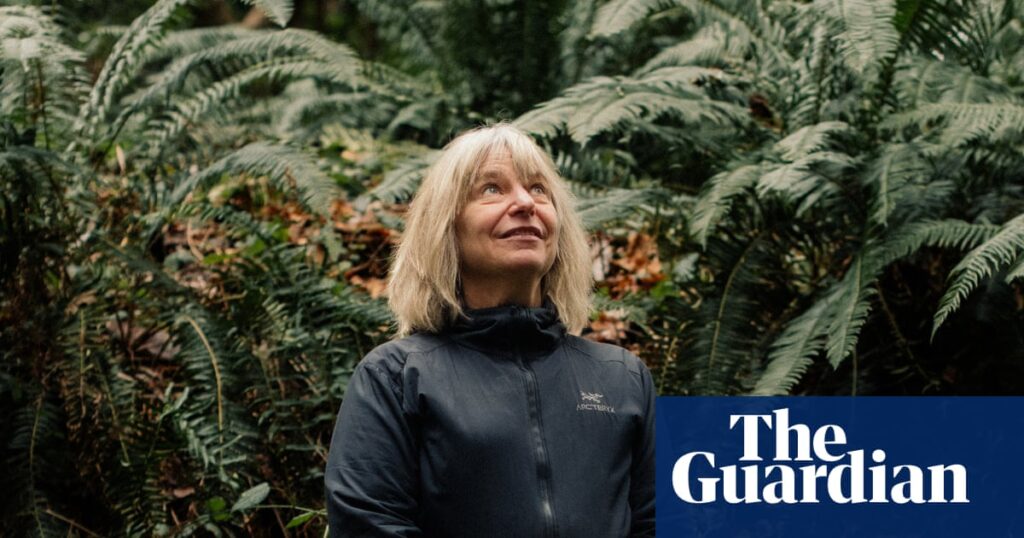
The Hidden Networks of Forests: Suzanne Simard’s Quest to Transform Forestry
When a fierce thunderstorm erupted in the Caribou Mountains of western Canada back in 2018, ecologist Suzanne Simard and her companions found themselves in a dire situation. Accompanied by her daughters and fellow researcher Jean Roach, they sprinted nearly a half kilometer to safety as wildfires ignited the forest. Animals fled alongside them, and helicopters soon hovered above, trying to quell the raging blaze.
Wildfires in Canada have escalated in recent years, with 2018 marking a record in British Columbia, only to be surpassed in 2021 and again in 2023. These fires consumed vast areas and spread smoke to far-off cities like New York. The changing climate with hotter, drier conditions, along with the replacement of native forests by flammable conifer species planted by logging companies, are significant contributors to this crisis.
For decades, Canadian policymakers believed that the vastness of the country’s forests would render human impact negligible. However, as Suzanne Simard notes, “The rationale was that it will all come out in the wash: the trees will recover, the forests will grow back, and we’ll all be fine.” Contrary to these assumptions, deforested areas struggle to recuperate, and since 2001, due to factors like logging, wildfires, and beetle infestations, Canada’s forests have shifted from being carbon sinks to carbon emitters.
Simard, a forest ecology professor at the University of British Columbia, has spent 40 years advocating for a different approach. She argues, “What we’re doing by taking down forests is we’re undercutting our ability to solve, and to provide natural solutions to, climate change.” Trees, she explains, are efficient natural carbon capturers, surpassing any man-made technology. Yet, they are being cut down at alarming rates.
Her research, notably encapsulated in her bestseller Finding the Mother Tree, posits that trees are interconnected and communicative, forming complex networks via underground fungi, the mycorrhiza. Simard coined the term “mother trees” for the largest, most connected trees that nurture their surroundings, a concept that resonates with various cultures.
Believed to be revolutionary, Simard’s ideas have faced scientific scrutiny and backlash, akin to what pioneers like Jane Goodall encountered. Critics question the extent of nutrient exchange via fungi and suggest more research is needed. Despite such challenges, Simard remains committed, emphasizing the urgency of climate action. “In this period of rapid climate change we need to be creative – we need to break out of the scientific mould,” she asserts.
Her work aligns with Indigenous wisdom, which has long embraced forest connectivity. Through the Mother Tree Project, Simard explores sustainable forestry by preserving large “mother trees” to aid forest regeneration.
Simard’s personal journey intertwines with her professional endeavors. Her latest book, When the Forest Breathes, reflects on both the Mother Tree Project and her personal battles, including her fight with cancer and the loss of loved ones. As she continues to advocate for change, she acknowledges the challenges posed by geopolitical dynamics and climate change denial but remains hopeful that her work will inspire action and agency among readers.
As wildfires remain a concern, Simard plans to reconnect with the forests of British Columbia, taking a sabbatical to immerse herself in the natural world she tirelessly studies and defends.
Original Story at www.theguardian.com