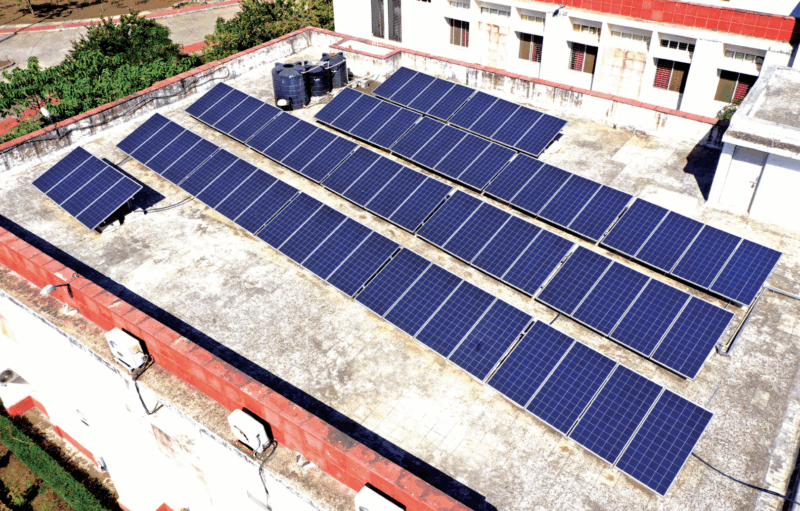
In a significant push for renewable energy, the World Bank recently unveiled plans to bolster clean energy initiatives in both India and Pakistan. The simultaneous announcements underscore a commitment to advancing sustainable power solutions in two of the region’s most populous countries.
India’s Rooftop Solar Initiative
The World Bank has pledged substantial support for India’s solar rooftop sector, marking a notable shift towards decentralized energy systems. The initiative, backed by a comprehensive financing package, aims to accelerate the country’s solar rooftop adoption, thereby providing clean energy to millions of households and generating approximately 1.7 million jobs in the renewable energy sector.
A key component of this initiative is the PM Surya Ghar: Muft Bijli Yojana, designed to promote rooftop solar installation across 10 million rural and urban homes. The program also seeks to reduce electricity costs for households while encouraging local manufacturing of solar equipment.
The financing structure includes an $820 million loan from the International Bank for Reconstruction and Development (IBRD), a $60 million concessional loan from the Clean Technology Fund, and a $10 million grant from IBRD’s Livable Planet Fund. Additionally, the World Bank plans to mobilize $4.2 billion in private financing to further support the initiative.
According to Moez Cherif, Task Team Leader of the program, the initiative aims to “transform the residential solar market by removing financial barriers and building the capacity of distribution companies, banks, and vendors to deliver integrated service solutions.” Paul Proccee, World Bank Acting Country Director for India, emphasized the bank’s long-standing commitment to India’s solar sector, highlighting past efforts that have expanded capacity significantly.
Boosting Clean Energy in Pakistan
Meanwhile, Pakistan is set to benefit from a $375.9 million investment, which forms part of a broader strategy to modernize the nation’s electricity transmission network. This project represents the initial phase of the Boosting Energy Security through Transmission in Pakistan (BEST-PAK) initiative, a 10-year effort to enhance grid stability and incorporate more clean energy sources.
The project will involve the installation of advanced grid equipment, such as Static Synchronous Compensators (STATCOMs), to improve electricity flow and grid stability. These upgrades are expected to integrate 640 MW of currently curtailed wind energy and support 491 MW of upcoming private-sector-led renewable projects. Over its lifetime, the project is anticipated to prevent approximately 832,500 tons of CO₂ emissions annually.
The World Bank’s Country Director for Pakistan, Bolormaa Amgaabazar, stated, “By investing in advanced technologies for more resilient transmission infrastructure, this project will contribute to reducing electricity costs, bring more renewable energy onto the grid, and lay the groundwork for a power sector that works better for households, businesses and industries, as well as overall Pakistan’s economy.”
Original Story at cleantechnica.com