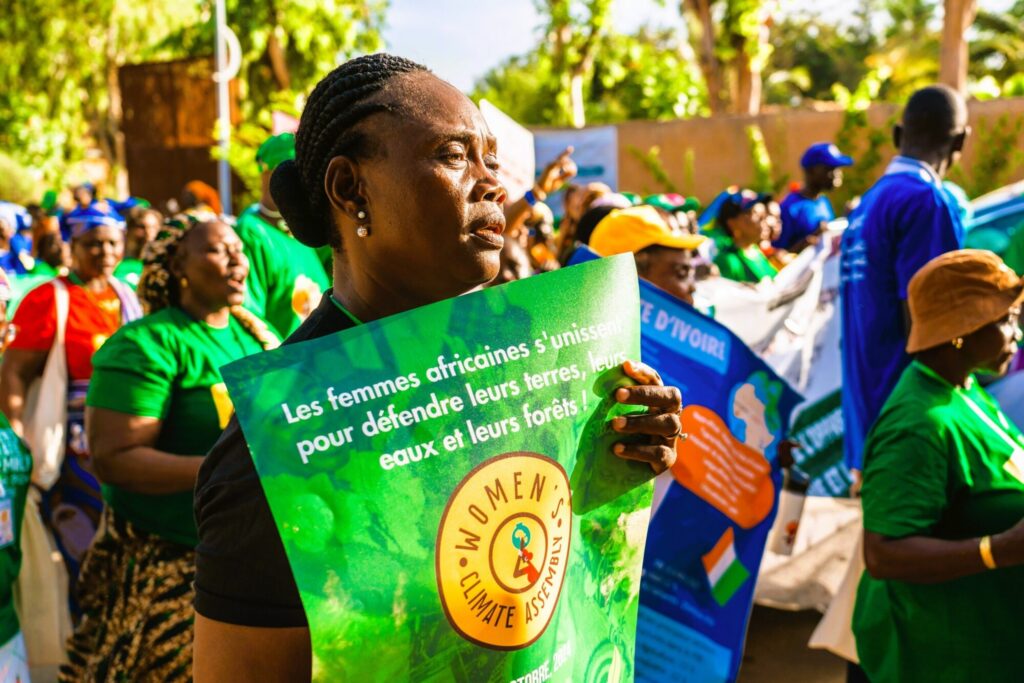
Cameroon Hosts Pivotal Women’s Climate Assembly to Champion Ecofeminist Resistance
In a significant event for climate advocacy, Cameroon is set to host the fourth regional Women’s Climate Assembly (WCA), themed “Our lands, our voices: African women united for climate justice and reparations!” This important gathering aims to unite women from West and Central Africa in a collective effort to bolster ecofeminist resistance and the defense of communal resources like land, forests, water, and seeds.
Despite Africa’s minimal contribution to global greenhouse gas emissions, women in rural, coastal, and forested areas suffer disproportionately from climate impacts. The WCA seeks to address this injustice, highlighting the climate debt owed by historically polluting nations and corporations to African communities.
With the goal of reinforcing a Pan African ecofeminist movement for climate justice, the assembly focuses on connecting women’s struggles. Principal objectives include promoting women’s leadership, developing shared climate justice strategies, and advocating for community-based alternatives centered on food sovereignty and sustainable resource management. The call for climate reparations and equitable development models is a core theme of the assembly.
Climate Reparations: Beyond Rhetoric
African women are crucial in food production, water management, and resource protection, yet they face severe threats from land degradation, droughts, extreme weather conditions, and the expansion of extractive sectors such as oil and gas. The World Meteorological Organisation’s State of the Climate in Africa 2025 report reveals that climate-related hazards impacted at least 13 million people and resulted in over 3,000 deaths in 2025 alone, with floods, droughts, and cyclones devastating numerous communities.
The rising temperatures, ocean warming, and sea-level rise further destabilize food systems and livelihoods, despite Africa’s limited role in causing these issues. The WCA emphasizes that these losses should not be considered an unavoidable aspect of development nor left to African communities to bear financially. The current theme underscores the demand for climate reparations, seeking substantial resources for loss and damage, adaptation, ecosystem restoration, and community-driven solutions, along with accountability from major emitters.
The assembly, co-hosted by Green Development Advocates, WoMin African Alliance, and other partners, will convene over 75 women leaders, activists, NGOs, and allies from countries including Burkina Faso, Cameroon, Côte d’Ivoire, and more. By uniting against exploitative industries and ineffective climate solutions, the WCA represents a crucial ecofeminist resistance necessary for Africa’s and the planet’s future.
“The Women’s Climate Assembly taking place in Cameroon will allow women from other countries to experience firsthand the realities of Cameroonian women’s lives impacted by major projects and how they overcome these challenges” – Bela Marie Victorine, Cameroon
A Permanent Platform for Women-Led Resistance
Building on prior assemblies in Nigeria and Senegal, this event serves as a formidable political platform for women at the front lines to share battles, foster solidarity, and create ecofeminist analyses based on their experiences. The 2026 assembly aspires to establish the WCA as a lasting platform across various levels to amplify women’s voices and demands often overlooked in broader discussions.
The WCA remains a critical space for strategic planning, learning, organizing, and movement-building. Key sessions will cover national and sub-regional assembly processes, climate crisis impacts in Africa, and strategies for resistance led by women. Workshops will tackle topics like the Congo Basin’s forests defense, food sovereignty, seed protection, feminist advocacy, and oil and gas expansion. Additionally, popular education sessions will aid women in areas such as seed conservation and traditional ecological knowledge preservation.
“Participating in the Women’s Climate Assembly gives me a platform to share my community’s experiences and learn from other African women. I believe our voices and lived experiences must be part of climate decisions. I am here to connect, learn, and strengthen our collective voice for our land, livelihoods, and future.” – Abbie Freeman, Liberia
This year’s assembly in Cameroon marks a crucial step for the expanding African women-led climate justice movement, bringing to life the vision of a permanent WCA structure for resistance and advocacy, and crucially, spotlighting the voices of community women that have long been overlooked.
Original Story at africasciencenews.org