
As Wisconsin navigates the complexities of data center development, public sentiment reveals a deep-seated unease towards these expansive projects. Concerns over energy, water usage, and economic implications highlight a widespread apprehension that transcends political lines.
Strong Public Sentiment Against Data Centers
Recent Public Service Commission (PSC) cases have spotlighted the public’s growing discontent with data centers’ operational costs. Two cases have attracted significant public involvement, with a clear consensus that technology giants should bear the entire financial responsibility for their infrastructure and fuel expenditures.
Analyzing the WEC Tariff Docket
The WEC Large Customer Tariff case has been a focal point of public discourse, revealing that 98.5% of the over 2,000 comments submitted disapproved of the current tariff structures proposed by WEC. The major themes emerging from these comments emphasized the need for Big Tech to cover the full cost of their energy consumption.
Public feedback highlighted concerns about climate change due to increased power demands and fossil fuel reliance, urging the incorporation of clean energy solutions to stabilize fuel prices and promote public health.
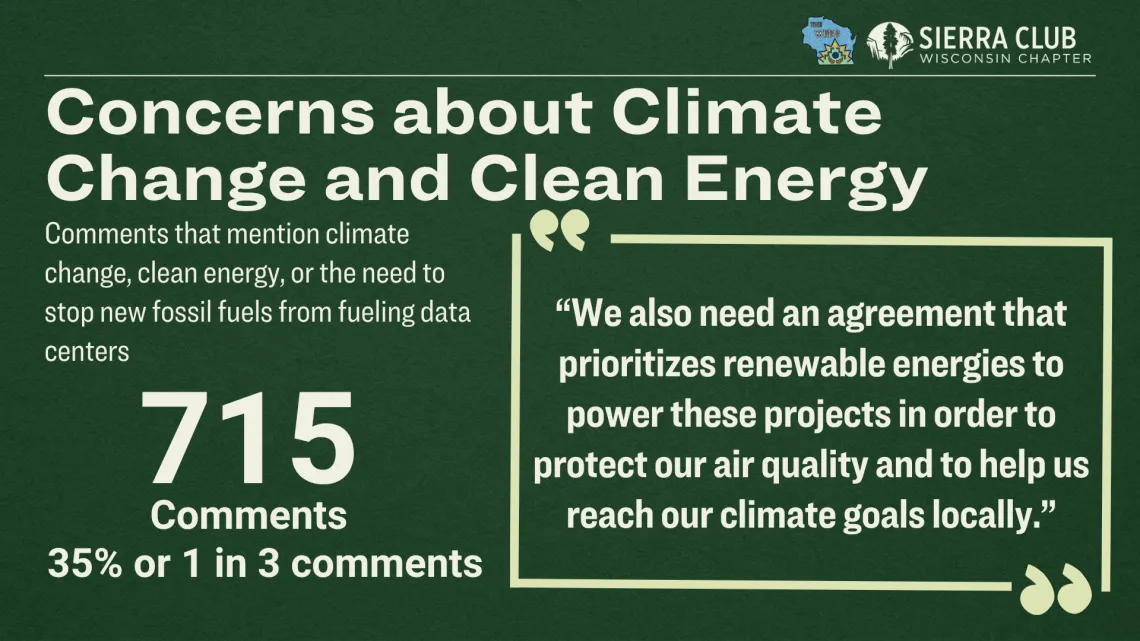
Commenters also stressed the need for fair energy rates, fearing that costs might shift from data centers to residential consumers. Suggestions for improvement included more transparent and enforceable tariffs, applying to larger customer bases, and discouraging new fossil fuel projects.
Alliant Energy’s Proposal for Beaver Dam
A similar sentiment emerged against Alliant Energy’s customer contract proposal for the Beaver Dam data center. Despite redactions in the contract, public comments overwhelmingly opposed the proposal, calling for transparency and fair rate structures.
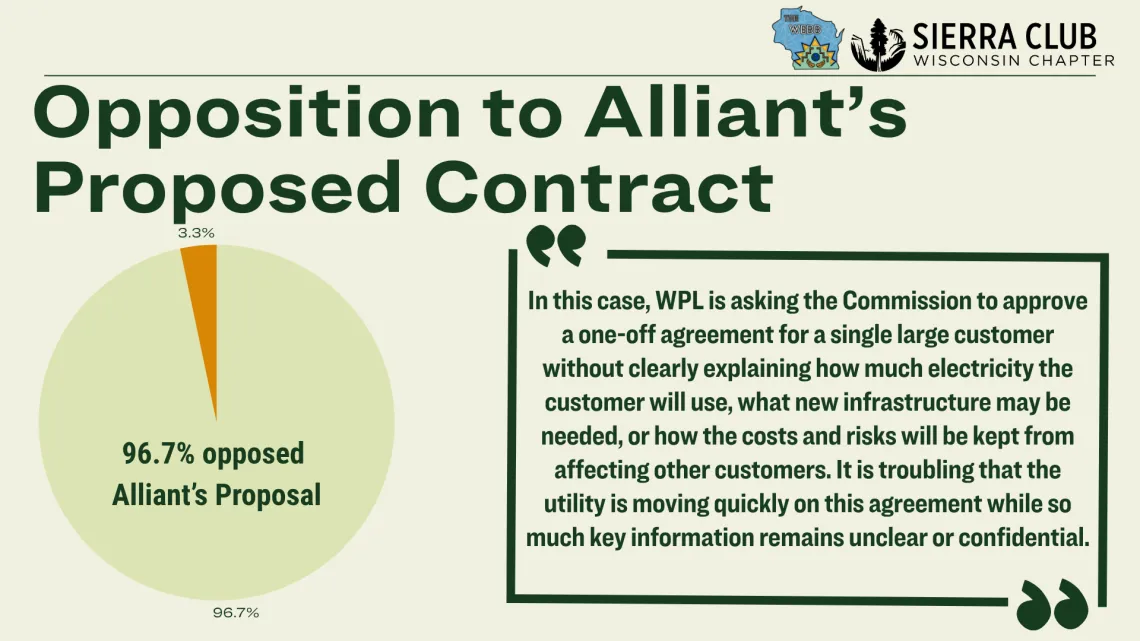
With 93% of verbal comments and 85% of written submissions advocating for data centers to shoulder 100% of their costs, the public echoed the concerns raised in the WEC docket. Comments emphasized the necessity of clean energy and transparency in contract terms.
Broader Resistance Evident in Related Hearings
This public opposition was further evidenced in a Department of Natural Resources hearing on an air permit for the Vantage data center in Port Washington, where all verbal comments opposed the permit, citing potential adverse effects on air quality and public health.
These discussions were encapsulated in a recent press conference, which can be viewed here. The widespread participation and the effort by volunteers and commenters underscore the community’s commitment to holding technology companies accountable for their environmental and economic impacts.
Original Story at www.sierraclub.org