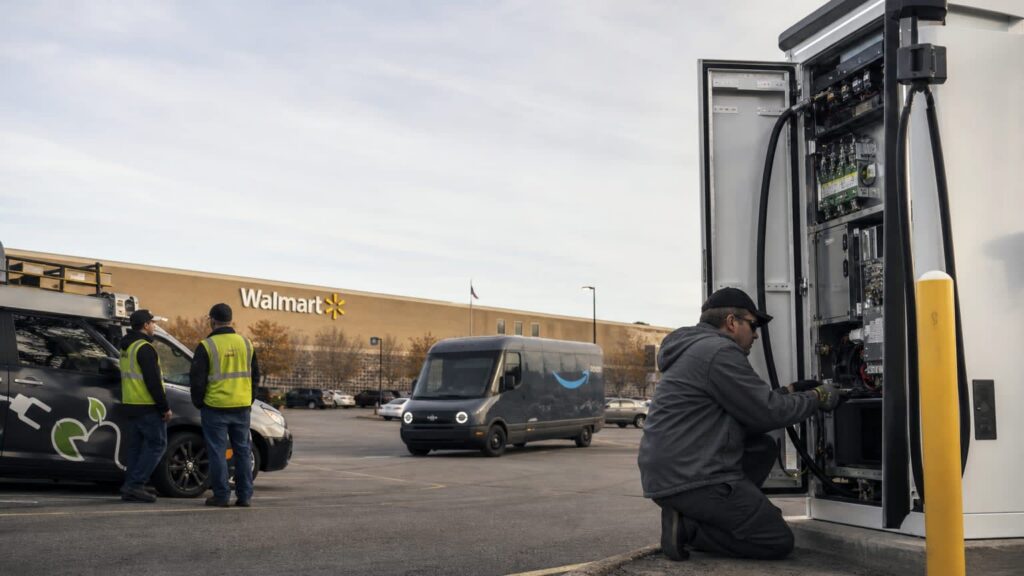
As electric vehicle (EV) adoption surges, the infrastructure supporting these vehicles is rapidly evolving. Key players like Walmart are transforming their experimental charging initiatives into standardized networks, while utilities such as ComEd are offering incentives to ease this transition. These developments mark a significant shift in how EV charging networks integrate into the broader energy landscape.
On August 21, 2026, Walmart announced a milestone with the launch of its 100th company-owned and operated EV fast-charging site at a Walmart Supercenter in Monument, Colorado. This brings Walmart’s EV charging availability to 100 stores across 20 states, as reported by Business Wire.
Simultaneously, ComEd highlighted the success of small businesses utilizing its EV rebates and resources during an EV Ambassador Program event in Chicago. These efforts are part of a broader push to support fleet transitions to electric vehicles, according to a Business Wire release.
The maturity marker is “100 sites”, and it changes how charging gets specified
Walmart’s achievement of 100 sites is not just a number; it signifies a transition from trial projects to a fully operational, scalable network. As detailed in the Business Wire announcement, this network is designed to offer fast, reliable charging at convenient locations where customers already shop, with Walmart maintaining ownership and operational control.
For facility managers overseeing extensive property portfolios, this benchmark demonstrates what a stable deployment looks like when charging infrastructure becomes a routine site feature. A network of this magnitude suggests the implementation of standardized electrical upgrades, consistent commissioning processes, and budgeted field service coverage akin to other utilities.
Once charging reaches 100 live sites, the hard problem stops being ‘can we install chargers’ and becomes ‘can we run them like a utility service with predictable uptime and pricing governance.’
The shift also brings contractual implications. With company ownership, accountability for uptime, maintenance, and pricing policies lies with the host, providing tighter control but also increased responsibility for performance risks and maintenance costs over time.
Utility rebate programs are being packaged with education and partner support
ComEd’s EV Ambassador Program underscores the importance of comprehensive support for businesses transitioning to electric fleets. The utility’s approach combines rebates, partnerships, and educational resources to promote electrification in northern Illinois, as per its Business Wire release.
This holistic approach is crucial as many fleet electrification projects face challenges not in vehicle procurement but in coordination. Aligning charger design, make-ready efforts, permitting, and internal training are essential to avoid unexpected costs. By linking rebates with broader support, utilities facilitate quicker transitions from vehicle delivery to reliable daily charging, especially crucial for small depots with limited in-house expertise.
The PR Newswire energy release feed illustrates the widespread nature of infrastructure announcements across regions and technologies, emphasizing the need for operators to prioritize changes that impact their immediate site plans and costs.
Where this hits budgets: electrical upgrades, operating SLAs, and data rights
The expansion of Walmart’s network highlights that large-scale EV charging installations behave as a new category of distributed critical equipment. The primary cost centers are not the chargers themselves but the supporting electrical infrastructure, such as switchgear and trenching, and the service models that ensure charger availability.
ComEd’s focus on rebates highlights another budgetary consideration: while incentives can reduce net installed costs, they also introduce processes involving documentation, equipment eligibility, and commissioning verification. These tasks may shift labor demands from facilities teams to energy management or finance departments.
The charging decision is moving into the same procurement lane as HVAC and backup power: performance commitments, service response times, and lifecycle cost beat brand-name hardware every time.
Data management is another critical factor. Different ownership and utility-linked programs create varying constraints on session data access, pricing governance, and third-party app support. These factors determine whether charging infrastructure becomes a transparent operational system or remains an opaque amenity.
Questions to put in the next charger RFP and utility incentive review
- What uptime metric will be written into the operating model, and who is financially accountable when a site drops below it (host, network operator, or service contractor)?
- What is the make-ready scope at each site, including transformer and switchgear lead times, and which party carries change-order risk if service upgrades expand?
- For utility rebates like ComEd’s, what are the hard gates: eligible equipment, commissioning documentation, and the timing window relative to vehicle delivery and construction schedules?
- Who owns charging-session and pricing data, and what is the minimum export format needed to reconcile energy bills, demand charges, and fleet cost-per-mile reporting?
Original Story at www.marketscale.com