The Urgency of Accelerating Carbon Removal Technologies
New research underscores the critical need for humanity to enhance carbon dioxide removal (CDR) technologies at an unprecedented pace, surpassing even the rapid deployment of solar panels, to curb global warming to 1.5°C. The report highlights the necessity for innovative carbon removal methods to expand at “highly ambitious rates” to bridge the gap between governmental commitments and the requirements of the Paris climate agreement.
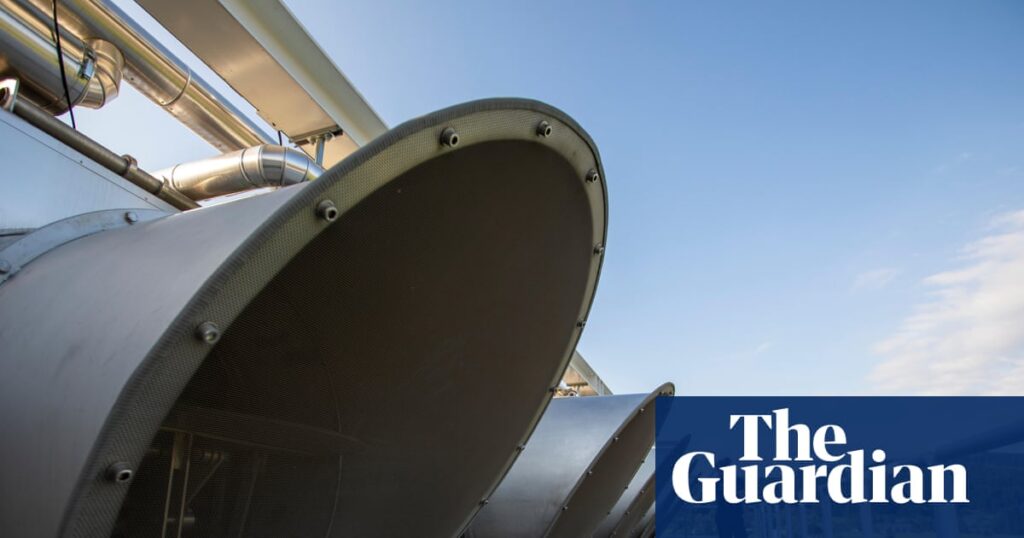
Currently, cutting-edge carbon removal techniques, which include direct air capture and the production of biochar, contribute only 0.1% to the 2.2 billion tonnes of CO2 extracted annually worldwide, as detailed in the report released on Tuesday. The remaining carbon removal is attributed to land-based activities like afforestation, which face spatial limitations.
Although novel CDR methods have witnessed a 40% annual growth, they remain nascent compared to solar and electric vehicle technologies, which have expanded at record rates. The report indicates a shortfall, with just 20% of the anticipated capacity realized in recent years.
“Countries have pledged around 2.7bn tonnes of carbon removal by 2035 and about 3.6bn by 2050, but climate pathways require much more, especially in the long term,” stated William Lamb, a scientist at the Potsdam Institute for Climate Impact Research and co-author of the report. “This leaves a gap that grows significantly over time.”
CDR plays a pivotal role in strategies aimed at halting planetary warming, serving to counterbalance emissions that are challenging to mitigate and potentially reducing temperatures to 1.5°C after an unavoidable “overshoot” period, as predicted by scientists.
The analogy of carbon removal to cleaning a littered beach is drawn by scientists, emphasizing prevention as the most cost-effective approach while acknowledging the necessity of addressing existing pollution through cleanup efforts.
The independent scientific assessment, now in its third iteration, warns of “fragile” support indicators. The U.S., during Donald Trump’s presidency, withdrew from the Paris climate accord, fostering fossil fuel use at the expense of green regulations. Researchers note that such “policy dismantling and volatility” in the U.S. undermines global credibility, pressuring other regions.
Microsoft, identified as the purchaser of 82% of novel CDR credits, reportedly paused its acquisitions in April. Researchers highlight the vulnerability of relying on initial adopters when their actions fail to gain broader traction.
A Microsoft spokesperson clarified that the company’s carbon removal program is ongoing, though specifics on resumption remain undisclosed. “At times we may adjust the pace or volume of our carbon removal procurement as we continue to refine our approach toward sustainability goals,” stated Melanie Nakagawa, Microsoft’s chief sustainability officer, emphasizing that adjustments are strategic rather than indicative of reduced ambition.
Ana Hernández from the Foundation for Climate Research in Spain, unaffiliated with the study, commented on the diminished corporate aspirations and the growing instability of the support system. “To complete the picture, no G20 country has a legally binding removal target, and the NDCs [official climate action plans] submitted in 2025 did not increase ambition for carbon removal.”
Scientific forecasts to mitigate planetary heating advocate for drastic fossil fuel reductions and ecological restoration, alongside technologies for residual atmospheric CO2 removal. However, many CDR methods lack permanent storage solutions.
Thomas Gasser, a scientist at the International Institute for Applied Systems Analysis and co-author of a study asserting that even temporary methods could mitigate warming from short-lived climate pollutants, expressed concern that without significant carbon removal, severe climate impacts might persist beyond this century.
“While we are indeed far behind in terms of CDR development, it remains the only option to revert climate change in the long run – although only if greenhouse gas emissions are also reduced to near-zero,” he stated.
Original Story at www.theguardian.com