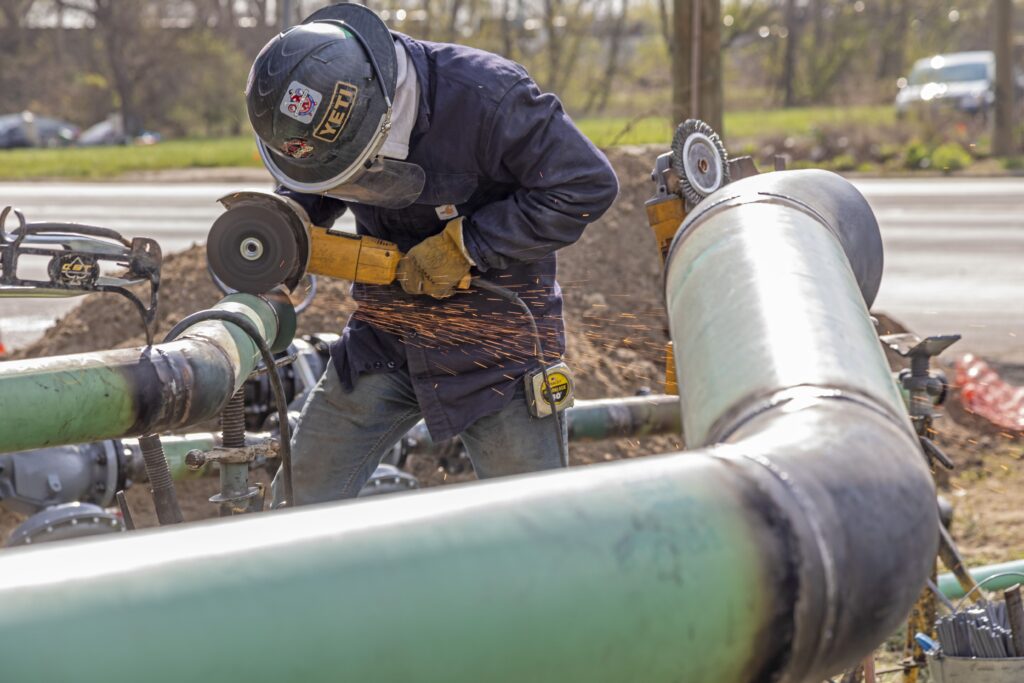
Amidst a harsh winter and geopolitical tensions, rising energy bills have become a significant issue in the United States. However, the primary influence on increasing gas-utility costs extends beyond gas prices, tracing back to infrastructure investments.
Today, the infrastructure such as pipeline replacements is the largest factor, accounting for about 70% of customer bills in 2024, with gas prices making up just 30%. “The underlying cause of rising bills is infrastructure,” stated Kristin Bagdanov, co-author of a report by the Building Decarbonization Coalition (BDC).
Electric bills have increased but at a slower pace compared to gas bills. In 2025, gas utility bills rose 60% faster than electric ones and four times faster than inflation, according to the BDC. This trend occurs even as gas usage declines due to more efficient boilers and a shift towards electrification to meet climate goals.
The rising cost of gas is minor compared to the overall increase in system expenses. Gas utility spending on infrastructure has tripled in the past decade, reaching $28 billion in 2023, as utilities accelerated pipeline replacements starting in 2010.
Between 2010 and 2014, 27 states enacted policies allowing utilities to recover costs quickly, increasing customer rates. As of now, at least 42 states have implemented measures to speed up pipeline replacements, based on data from the American Gas Association.
Though utility spending has soared, the gas customer base has grown by just 8.5% since 2000, with residential gas demand remaining flat since the 1970s. “People are paying more per pipe than they did 30 years ago,” Bagdanov explained, pointing out a gas system that is underutilized and costly.
If investment rates had continued at their pre-2010 pace, U.S. customers could have saved an estimated $130 billion through 2023, the BDC estimates. The gas industry points out cost savings for residents using gas over electricity, with the American Gas Association noting savings of $1,030 per year for homes using natural gas.
The BDC report argues against continuous investment in the gas system, suggesting states aiming for climate goals should focus on electrification and reducing fossil fuels. Alternatives to gas pipelines include geothermal energy, demand-response programs, sewer heat recovery, and electrification, said Kevin Carbonnier, another co-author.
This approach is gaining traction, with utility regulators in 13 states and Washington, D.C., initiating steps to transition away from natural gas heating. In Minnesota, a proposed bill supports geothermal energy networks, receiving backing from large utilities and labor groups.
Massachusetts is expanding its thermal energy network, and Maryland is reviewing gas utilities’ planning against state climate goals.
State policies are also aiming to make electrification tools more accessible. California’s Heat Pump Access Act aims to streamline the installation of heat pumps, a key part of the state’s carbon neutrality strategy by 2045.
In 2025, heat pumps outsold gas furnaces in the U.S. for the fourth consecutive year. Balcony solar is also gaining popularity. “We see a rise in electrification and people upgrading to modern, efficient appliances,” Carbonnier mentioned.
Despite federal cuts to clean energy incentives, state-level progress continues. Bagdanov noted, “As the gas system becomes costlier, clean-heat solutions become more viable and affordable.”
Original Story at insideclimatenews.org