The clean energy sector in the United States, buoyed by favorable policies and competitive market dynamics, is facing significant challenges from legislative changes introduced by former President Donald Trump’s administration. The sector, previously thriving under the Biden-Harris administration, now grapples with the ramifications of the “One Big Beautiful Bill Act,” signed into law by Trump on July 4.
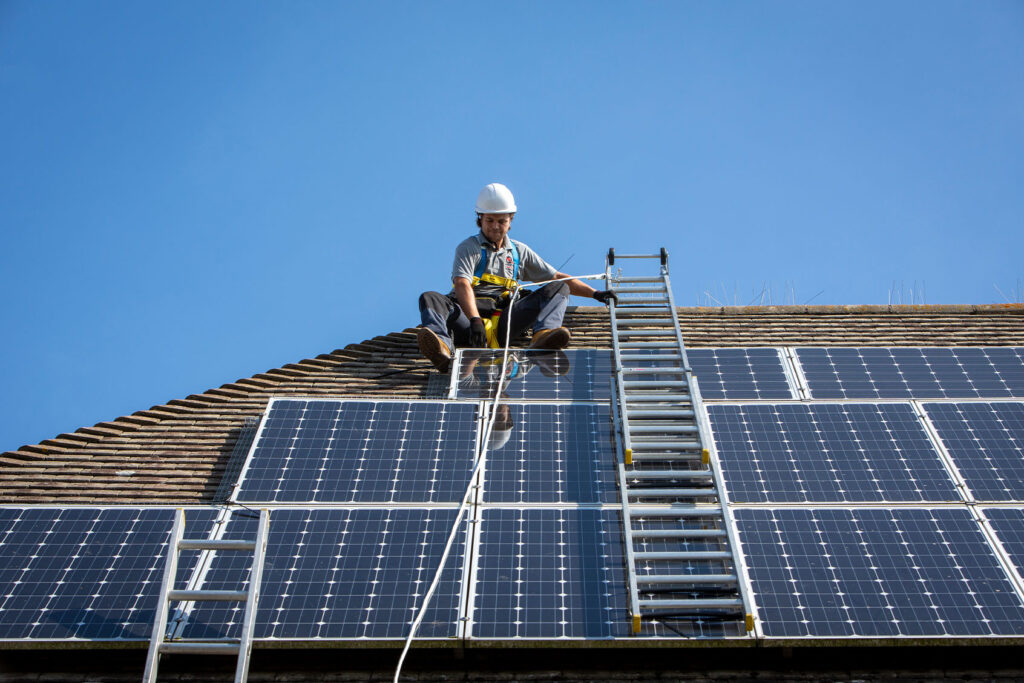
The new legislation, which Trump refers to as targeting the “green new scam,” phases out the 30 percent tax credit for residential rooftop solar panels by the end of 2025. This credit elimination extends to utility-scale solar and wind projects, although projects financed and approved by June 2026, or operational by 2027, will still qualify. Additionally, tax incentives for electric vehicles, chargers, battery storage systems, and other energy-efficient technologies are slated for elimination, potentially increasing consumer energy costs.
While a proposed excise tax on materials sourced from certain foreign countries was removed from the bill, experts predict that overall consumer energy prices may rise by eight to 10 percent due to the new legislation. These changes come as a stark contrast to the previous administration’s efforts, which included the $1.2 trillion Infrastructure and Jobs Act of 2021 and the 2022 Inflation Reduction Act (IRA), contributing significantly to the industry’s growth.
The clean energy industry’s growth and hefty economic impacts are due in part to former president Joe Biden’s signature $1.2 trillion Infrastructure and Jobs Act of 2021 and the 2022 Inflation Reduction Act (IRA), which he signed into law the following year.
The IRA allocated $369 billion towards clean energy and climate initiatives, promoting the development of renewable technologies such as electric vehicles, solar panels, and geothermal heating. Meanwhile, the Infrastructure Investment and Jobs Act funded the electrification of transportation and expansion of electric vehicle charging stations, making it easier for individuals to transition to clean energy solutions.
Advancements in technology have also played a crucial role in the economic benefits of the clean energy sector. For instance, bifacial solar panels, which absorb light from both sides, can deliver over 700 Watts per module with minimal degradation over 30 years. This technology has helped position solar power as a cost-effective alternative to traditional coal plants, which face lengthy construction timelines.
The clean energy industry supports 3.5 million American jobs and contributes $18 billion to the GDP annually, according to the American Clean Power Association (ACP). Despite the potential setbacks due to new legislation, the sector had added 400,000 jobs from 2020 to 2023, with projections suggesting significant contributions to the GDP and job market by 2030 if policies remained favorable.
Upon entering office, Trump declared a national energy emergency, citing inadequate energy supply and high prices. This move aligns with his administration’s efforts to reduce regulations on the fossil-fuel industry, despite the U.S. being a leading producer of oil and natural gas under Biden. Critics argue this approach overlooks the nation’s dependence on fossil fuels and the need for a transition to clean energy.
The executive order associated with the energy emergency seeks to weaken environmental regulations while emphasizing the need for a diversified and affordable energy supply. However, it omits considerations for clean and sustainable energy sources.
One example of the challenges faced by the clean energy sector is the xAI Colossus data center in Memphis, Tennessee. Owned by Elon Musk, the center relies on portable gas turbine generators, typically for short-term use, to meet its substantial power demands. This situation underscores the tension between the increasing energy needs driven by technological advancements and the environmental impacts of current energy practices.
Jason Grumet, Executive Director of ACP, highlighted the “skyrocketing demand” for power in the U.S., noting that the political landscape significantly impacts energy reliability. The clean energy industry has launched a $40 million lobbying effort to protect its interests and counteract the legislative challenges it faces.
Despite the setbacks introduced by the “One Big Beautiful Bill Act,” the clean power industry remains resilient. However, the changes are expected to slow growth and increase energy costs for American families and businesses.
Original Story at www.salon.com