US Clean Energy Investment Faces Significant Decline Amid Policy Shifts
In a surprising turn for the US clean energy sector, a decade of rapid growth has been met with a sudden deceleration. Despite global momentum in renewable energy investments, the United States is experiencing a notable slowdown, primarily attributed to recent policy changes.
The latest report from the clean energy think tank E2 highlights a concerning trend: last year, for every dollar dedicated to new clean energy projects, about three dollars’ worth of ongoing projects were canceled or scaled back. This resulted in the abandonment of approximately $35 billion in projects, a stark contrast to the $3.4 billion in cancellations seen in 2023 and 2024 combined.
“Trump’s policies discourage private investment: ‘No one knows what six months from now will look like.’”
Michael Timberlake, director of research and publications at E2, explains that the Trump administration’s stance on renewable energy is a significant factor in this trend. The shift began shortly after the November 2024 election, when President Trump indicated a preference for fossil fuels over renewables. In response, major companies like TotalEnergies paused projects, such as two offshore wind initiatives, due to the growing uncertainty.
Upon taking office, Trump enacted policies that included halting offshore wind leasing and permitting. This decision caused several developers to suspend or abandon their projects. Meanwhile, court rulings have recently favored wind companies, yet the delays have had a lasting impact.
The administration also rescinded billions in funding for clean energy projects and altered Biden-era policies that supported the industry, such as tax credits and loans for renewable energy infrastructure. Additionally, Congress passed the “One Big Beautiful Act,” which curtailed tax incentives for renewable production and struck a blow to the electric vehicle (EV) market by eliminating consumer tax credits.
Timberlake warns that it’s not just one policy causing the downturn. While the One Big Beautiful Act is a major indicator, the broader policy environment is creating uncertainty that deters investment. “It’s not an environment that encourages more investment because no one knows what six months from now will look like,” he said.
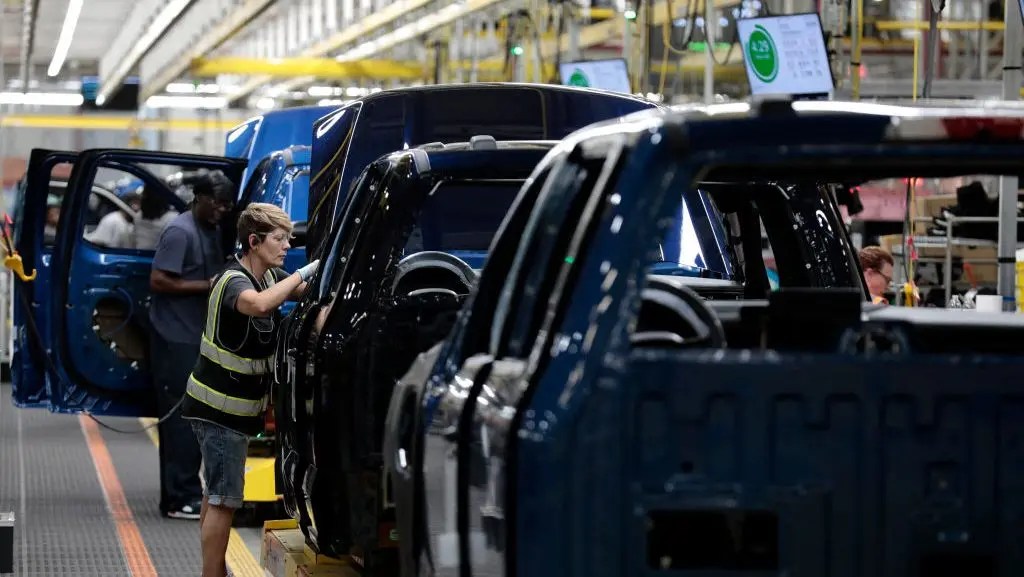
The EV and battery manufacturing sectors were particularly affected, losing around $21 billion in investments over the past year and an estimated 48,000 potential jobs. This decline was partly due to Congress repealing consumer tax credits, leading automakers to adjust their expectations and investment plans.
Some states have felt the impact more than others. In 2025, Michigan saw 13 clean energy projects worth $8.1 billion canceled, making it the hardest-hit state. Illinois, Georgia, and New York also experienced significant investment losses.
Despite these challenges, many automakers are not abandoning their plans entirely. Ford, for instance, originally intended to produce all-electric vehicles at its Ohio Assembly Plant but has since pivoted to gas and hybrid models. Timberlake suggests that these facilities could still pivot back to EV production if policies become more favorable.
“The silver lining view is they’re hopefully maintaining those facilities so that when there is certainty, those factories will still be available for making EVs down the road,” Timberlake commented.
Original Story at www.motherjones.com