
In the swiftly transforming automotive industry, the distinction between electric vehicles (EVs) and hybrid electric vehicles (HEVs) compared to traditional internal combustion engine (ICE) vehicles is becoming crucial. These differences are not just technical; they carry implications for repair processes, safety protocols, and cost assessments.
EVs, running solely on electricity, use high-voltage battery systems, whereas HEVs integrate a conventional engine with electric propulsion. This differentiation is paramount for damage estimators, who face unique challenges in repairing and diagnosing these vehicles. The rise of EVs is impacting not just manufacturing but also the insurance and collision repair sectors.
The Electric Vehicle Standardization Council (EV-SC.org) is at the forefront of setting and promoting repair standards for EVs. This initiative has been pivotal in crafting peer-reviewed guidelines for technicians, and now the focus is expanding to estimators. These professionals play a critical role in determining the reparability of EVs post-collision and in providing precise repair cost estimates.
Vale Training, as a founding board member, is spearheading the development of a training program for estimators, anticipating the future demands of the industry. This initiative is essential for insurance providers and their clients, who are navigating the increasingly intricate repair landscape to ensure safe, comprehensive, and cost-effective repairs. The program’s goal is to empower estimators with the skills needed to adeptly manage both EVs and HEVs.
Standardizing the procedures for damage assessment in electric vehicles is vital due to their complexity. As the EV market expands, research from the Alliance for Automotive Innovation indicates over 125 models of plug-in hybrid, fully electric, and fuel cell vehicles are available, with more expected by 2026. This diversity offers consumers groundbreaking options in energy-efficient vehicles that are safer, more environmentally friendly, and affordable.
The automotive sector is investing a staggering $1.2 trillion by 2030 to drive vehicle electrification, underscoring the pivotal role of EVs in both U.S. and global markets.
The EV Repair Challenge: Complexity and Risk
The high-voltage battery system presents one of the biggest challenges in assessing EV damage. This component is not only technically complex but also a safety hazard and financial variable. Mishandling can result in unnecessary total loss declarations, costly replacements, or even injury.
Vale’s training program equips estimators with knowledge on safely de-energizing EVs, evaluating battery integrity, and adhering to OEM procedures for high-voltage components. This expertise is crucial for avoiding premature total loss decisions and ensuring repairs are safe and financially viable.
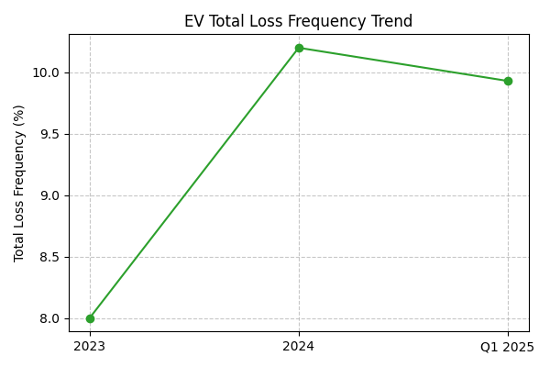
Data from Mitchell International reveals an increase in EV total loss frequency to 9.93% in the first quarter in the U.S., a 30% rise from Q3 2023.
These statistics emphasize the necessity for specialized training. EV repair costs are approximately 20% to 30% higher than those for ICE vehicles, driven by declining used EV values and escalating repair costs, notably for battery packs and advanced driver assistance systems (ADAS).
From 2016 through the second quarter of 2025, the ICE market share has steadily decreased, as reported by the Alliance for Automotive Innovation’s Get Connected EV Quarterly Report. In 2016, ICE vehicles accounted for over 97% of vehicle sales, but this figure has fallen to 73.5% in 2025.
Beyond safety and cost reduction, the ability to repair rather than replace is crucial for operational efficiency. A trained estimator can swiftly determine whether a damaged EV component can be repaired or requires replacement. This precision reduces labor hours, minimizes rework, and streamlines parts procurement.
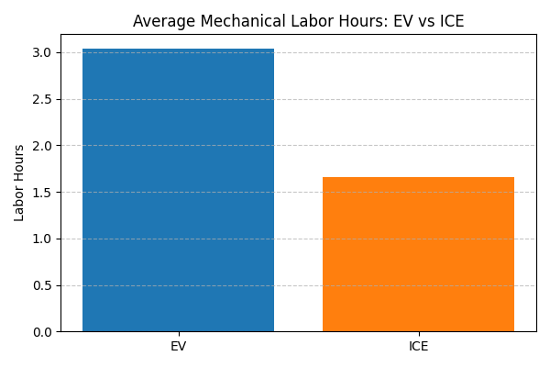
Mitchell’s data shows that EV repairs necessitate nearly double the mechanical labor hours compared to ICE vehicles (3.04 hours vs. 1.66 hours). Without adequate training, these hours can increase due to diagnostic uncertainties and procedural errors. Training standardizes workflows and helps provide rough repair time estimates, enabling technicians to proceed with confidence and speed.
This heightened efficiency directly impacts cycle times, a critical metric for both insurers and customers. According to CCC Intelligent Solutions, increasing vehicle complexity extends repair timelines, and EVs exacerbate this trend. Equipping estimators with EV-specific expertise helps mitigate delays.
The Cost of Delay
Cycle time isn’t merely a shop metric; it’s a customer experience concern. Every additional day a vehicle remains in the shop incurs rental car expenses for the insurer and inconvenience for the customer. With EVs, these delays can be even more financially burdensome due to limited parts availability and specialized repair needs.
Costs associated with vehicle downtime are climbing across all regions. While exact figures differ by area and insurer, industry reports indicate that average repair costs, including rental expenses, continue to rise due to inflation, parts shortages, and labor limitations. For insurers, reducing these costs starts with accurate, timely estimates, which are facilitated by well-trained estimators.
Customer satisfaction is also affected. Research from Loop in 2025 indicates that EV buyers report significantly lower satisfaction scores during sales and service processes compared to ICE vehicle owners, with a difference of 17.5 points. While this data pertains to the dealership experience, it highlights a broader expectation that EV customers have for superior service, with less tolerance for delays and errors.
Targeted training enables insurers and repair shops to meet these expectations. By reducing supplemental claims and enhancing first-time repair accuracy, the advanced EV training program supports a smoother claims experience, building trust, loyalty, and retention.
Why Estimators Matter More Than Ever
The increase in total loss declarations is among the most urgent challenges the industry faces. CCC’s data shows that total-loss frequency has risen to 20% to 22% of auto physical damage claims in recent years. For battery electric vehicles (BEVs), Mitchell reports a total-loss frequency of 10.2% in 2024, up from 8% in 2023.
These declarations are often swayed by the complexity of EV systems, particularly when battery damage is involved. Estimators must accurately assess these components to avoid unnecessary total loss resolutions. By correctly evaluating battery damage and knowing repair options, estimators can save insurers thousands per claim and keep vehicles operational.
A Strategic Investment in the Future
According to industry projections, EVs are anticipated to make up over 30% of new vehicle sales by 2030. This rapid adoption necessitates that claims professionals prepare for both current challenges and future innovations.
Dell is a vice president, executive leader learning & development, with Sedgwick.
Original Story at www.claimsjournal.com